What our hedge shear servicing covers
Our hedge shear servicing is built for tools that are used often, carried between jobs and exposed to sap, dust and coastal moisture. We clean, inspect and set the cutting components so the blades move properly and the cut stays neat, rather than tearing stems or leaving ragged tips. This matters in humid areas like Durban and Gqeberha, where light rust can set in quickly, and in drier inland conditions where dust and plant matter collect around the pivot.
Each service is suited to hand hedge shears used by home gardeners, grounds teams and landscapers. We focus on the parts that affect performance most: blade alignment, pivot tension, spring function, handle grips and the condition of the cutting edge. If needed, we can also replace worn parts and remove surface rust before it becomes a bigger problem.
- Blade cleaning and sap removal
- Pivot adjustment for smoother opening and closing
- Edge assessment and sharpening where suitable
- Spring replacement if the return action is weak
- Grip replacement for worn or split handles
- Rust removal and deep cleaning of working parts
How we service hedge shears step by step
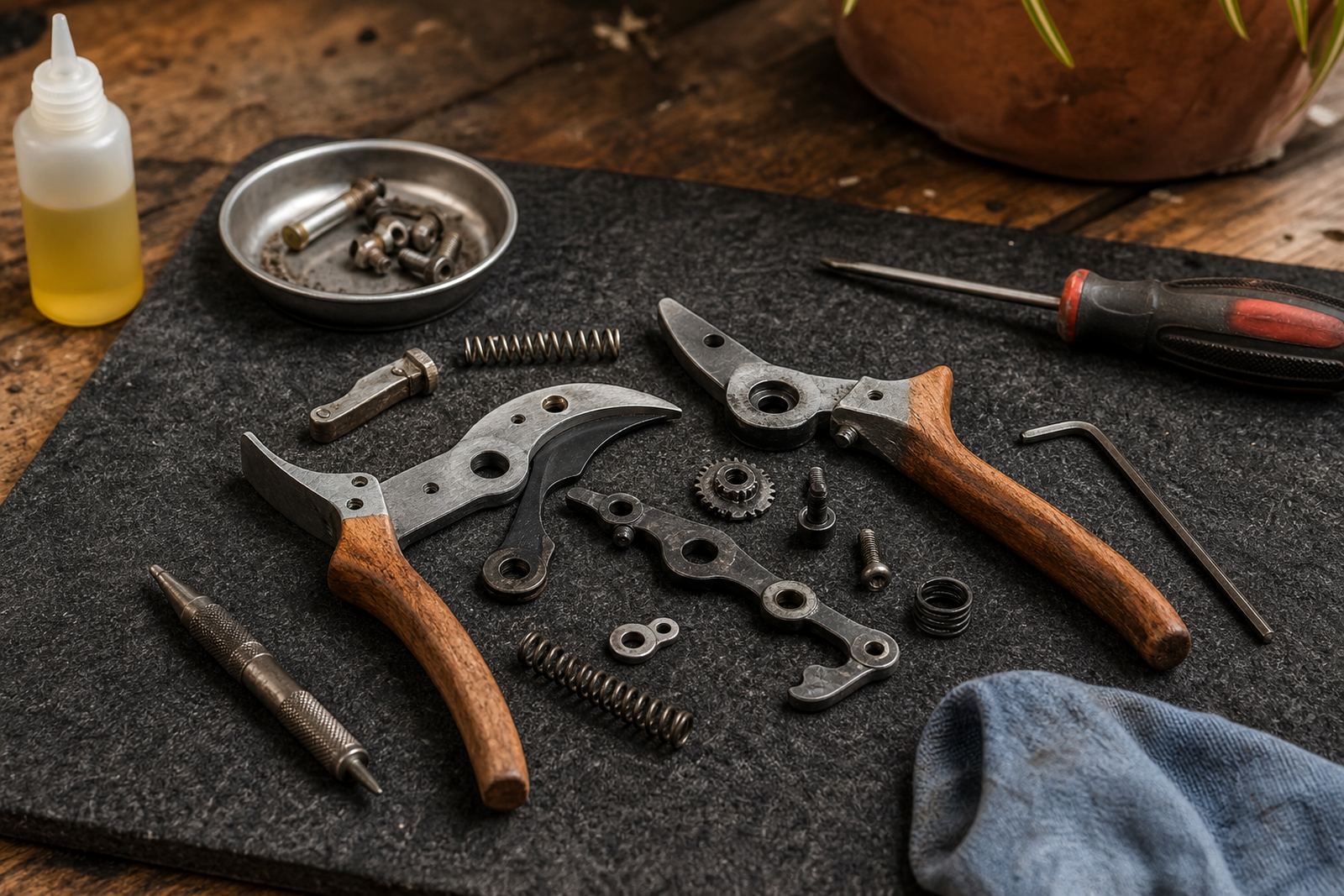
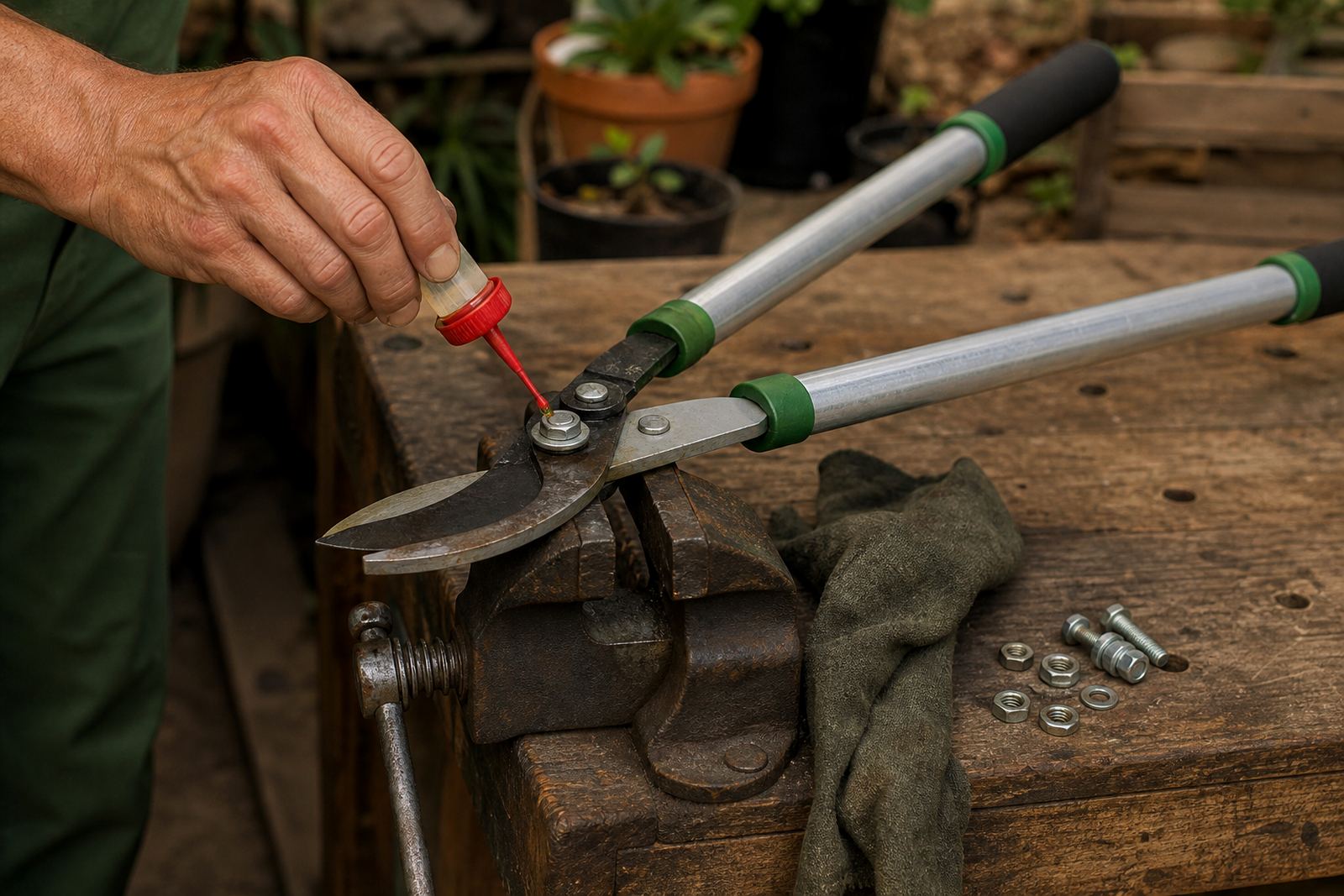
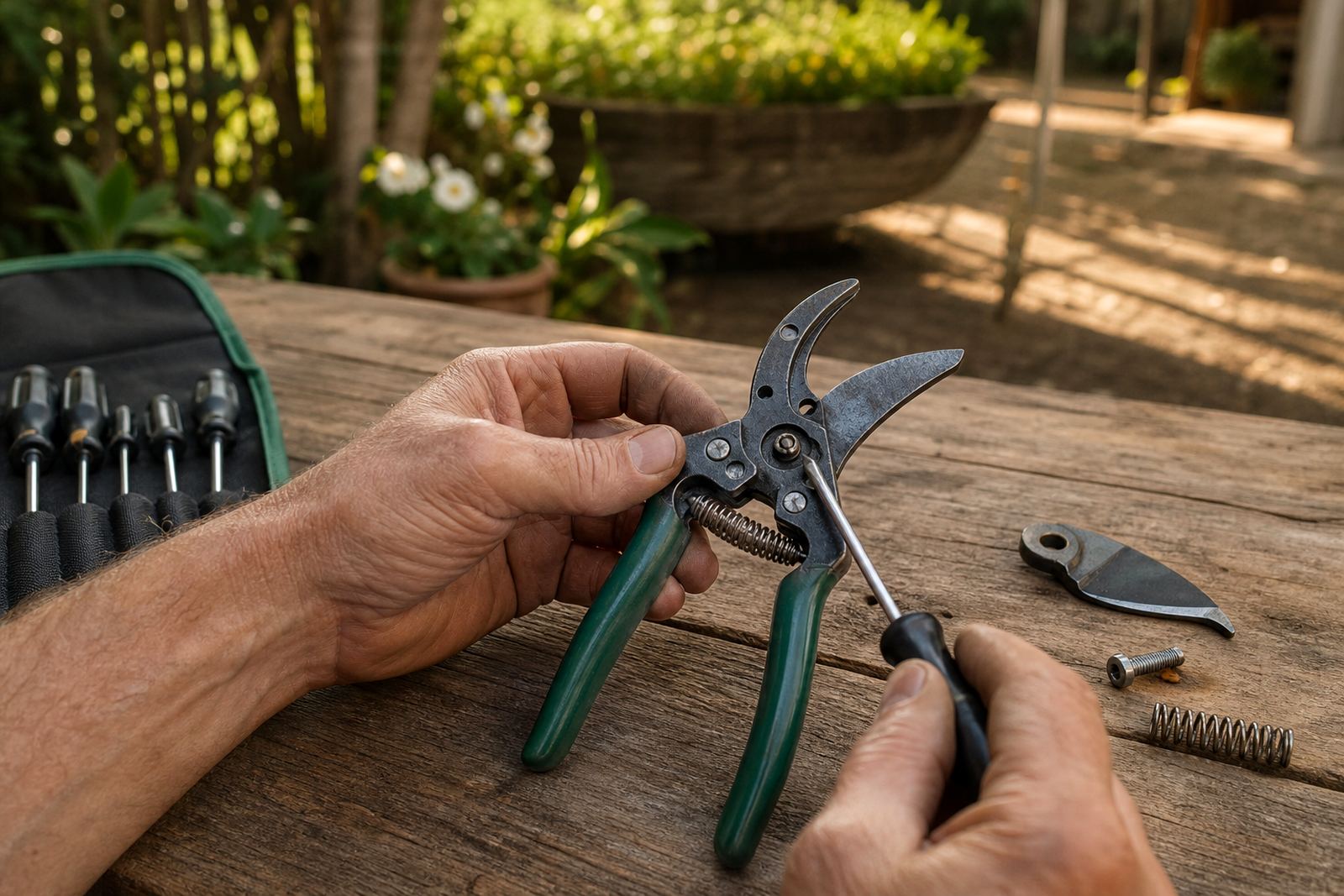
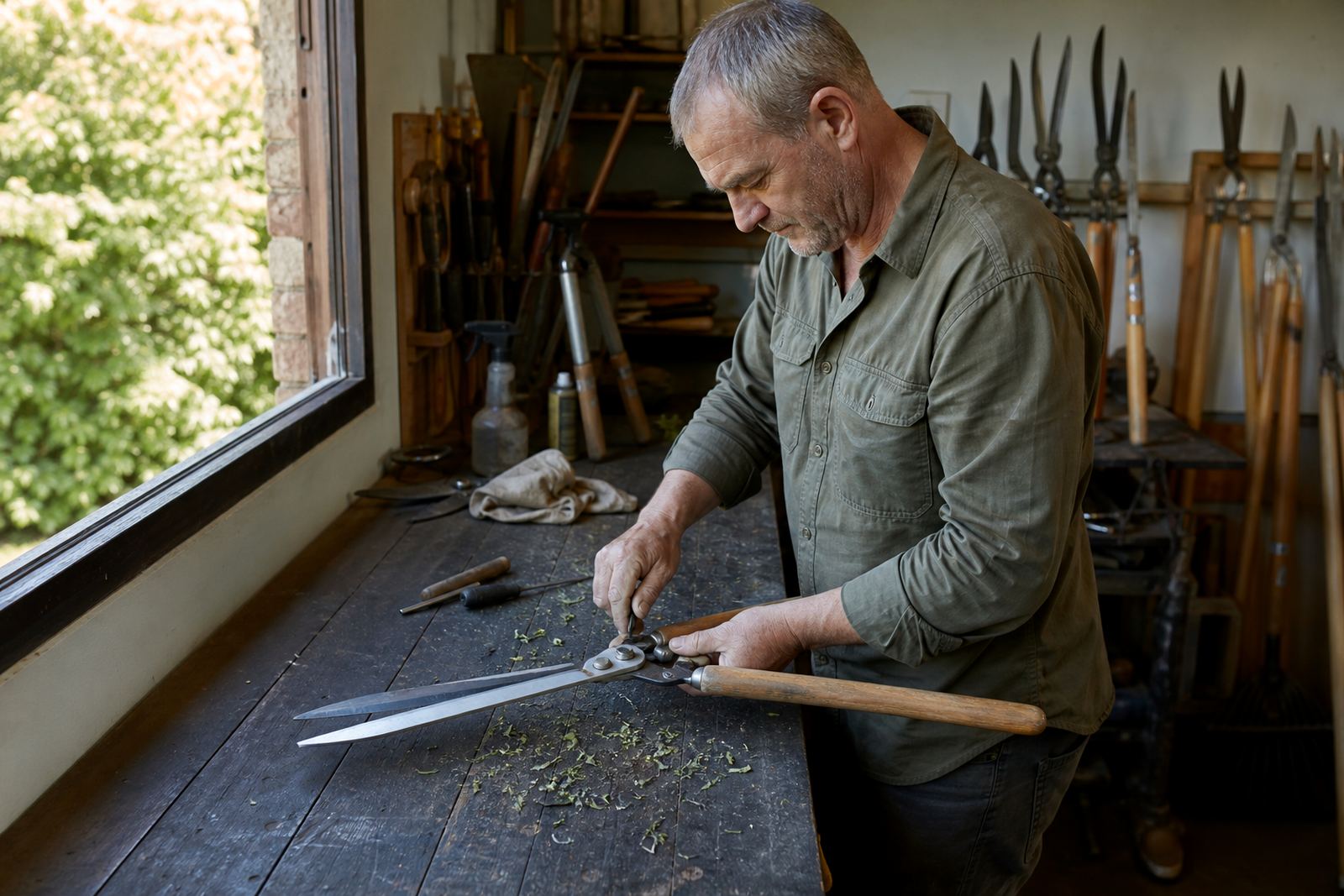
We follow a simple process so you know exactly what is being done to your tool. First we inspect the shears for wear, bent blades, loose fixings and damage around the pivot point. Then we strip out built-up dirt, dried sap and corrosion so the cutting action can be assessed properly. After that, we correct the pivot, check the spring and clean the blades to improve their movement. If the tool has edge wear or minor nicks, we work on the cutting edge so it can trim more evenly.
Before handover, the shears are checked again for smooth action and proper blade contact. If a part is too worn to service safely, we let you know and fit a replacement only if it makes sense for the tool's condition.
- Initial inspection and fault check
- Cleaning, rust removal and sap removal
- Pivot adjustment and tension setting
- Spring and grip checks
- Final action test and cut finish check
Turnaround times for home and fleet tools
Turnaround depends on the condition of the hedge shears and whether any parts need replacing. Simple cleaning and adjustment jobs can often be completed quickly, while heavily corroded or neglected tools may need extra attention. For regular users in Pietermaritzburg, Hilton and Howick, we try to keep the process efficient so tools are not out of service for long.
Landscaping teams that run multiple tools can also ask about fleet care plans, which help with scheduled servicing and reduce downtime during busy months. This is useful before the spring growth flush, when hedge trimming work increases and sharp, well set tools save time on site.
- Basic service: suitable for routine maintenance
- Standard service: for dull blades, loose pivots or tired springs
- Detailed service: for rust, heavy sap build-up or worn parts
- Fleet servicing: arranged for teams with ongoing use
Pricing that matches the work your tool needs
We price hedge shear servicing according to the condition of the tool, the amount of cleaning required and any parts that need fitting. A lightly used pair that only needs cleaning and adjustment will cost less than a tool with rust, damaged grips or a weak spring. This keeps pricing fair and linked to the actual work done.
For professional gardeners and municipal contractors, we can quote for multiple tools at once. If you bring in several hedge shears together, it is easier to plan servicing in batches and keep your kit in good working order. We will always flag any extra work before proceeding so there are no surprises.
As a practical guide, servicing is usually better value than replacing a tool that still has sound blades and handles. In many cases, a proper service restores enough function to keep the shears in use for another season or more.
When hedge shears should be serviced
Most hedge shears need attention once or twice a year, depending on how often they are used. Gardeners who trim monthly may need a check before peak growing periods and again after the heavy summer season. In coastal areas with higher humidity, a slightly shorter interval helps limit rust and sticking. For inland use around Johannesburg and Pretoria, dust and hard use are often the main reasons for servicing.
Look out for signs that the tool is ready for maintenance:
- The blades drag or stick during cutting
- The cut leaves bruised or torn stems
- The spring does not return the handles cleanly
- There is visible rust or pitting on the blades
- The grips are loose, split or uncomfortable
- The pivot feels wobbly or too tight
If you notice two or more of these signs, it is usually time to book a service rather than push the tool through another round of work.
Servicing for gardeners across South Africa
Based in Mkondeni, Pietermaritzburg, we support home gardeners and landscaping teams across South Africa, including Durban, Johannesburg, Pretoria, Cape Town and Gqeberha. We also work with customers linked to our local stockist areas in Pietermaritzburg, Hilton and Howick. Because many users work around load-shedding schedules and early morning jobs, a dependable set of hedge shears makes a real difference to day-to-day work.
Whether you are trimming a small courtyard hedge or managing regular estate maintenance, serviced hedge shears help produce a cleaner line and make the job less tiring. Better blade movement means less force on your hands and wrists, and the result is neater from the first pass. That is especially helpful on finer hedging where a rough cut can stand out for weeks.
To book a hedge shear service, use the enquiry form on our contact page and tell us what tool you have, what problem you are seeing and how often it is used. We will guide you on the next step and let you know what sort of service is most suitable.
Key facts
| Service type | Hedge shear servicing for hand-held garden tools |
|---|---|
| Typical tool condition | Dull blades, sticky pivots, weak springs, worn grips, light rust |
| Suitable users | Home gardeners, landscapers, estate teams and grounds staff |
| Core work | Cleaning, pivot adjustment, spring checks, rust removal and blade care |
| Turnaround | Depends on condition and parts needed, with quick jobs on routine maintenance |
| Maintenance interval | Usually once or twice a year, more often in humid or heavy-use conditions |