Why storage matters after every cut
Garden cutting tools work best when they are put away clean, dry and protected from knocks. In Pietermaritzburg, Durban and other coastal areas, humidity can leave a fine layer of rust on blades overnight. Inland, dust and dry air can work into the pivot and make the tool feel stiff the next time you use it.
Good storage is not only about keeping tools tidy. It protects the cutting edge, keeps springs and locking parts working properly, and reduces the chance of someone grabbing an open blade by mistake. If you use your tools often, a basic routine after each gardening session will save time and money later.
Clean off sap, soil and moisture before you pack away
Never store pruning shears, loppers or hedge tools with sap on the blades or damp soil on the handles. Sap hardens quickly, then the blades start to drag and the cut becomes rough. A quick clean after use is usually enough, and it helps prevent the small bits of residue that turn into bigger maintenance jobs.
- Wipe blades with a dry cloth after every use.
- Remove grass, sap and soil from joints, springs and locking clips.
- If the blades are sticky, use warm soapy water, then dry fully.
- For stubborn sap, use a light cleaning solvent made for tools.
- Never leave water sitting in the pivot or around the spring.
If you have been cutting wet hedges or thick stems, give the tool an extra check before storage. Moisture often hides inside the moving parts where you cannot see it straight away.
Keep blades oiled and edges protected
Once the tool is clean and dry, a light coat of oil helps guard the metal surface from rust. Apply a small amount to the blades and pivot, then wipe off the excess so dust does not stick. This is especially useful if tools are stored in a garage, a garden shed or a bakkie canopy that gets warm during the day and cools at night.
Store each tool with the blades closed or locked, depending on the design. If the blade edge is exposed, use a guard, sleeve or wrapped cloth so it does not chip against other tools. Do not toss sharp tools into a bucket with spades, wires or hoses. One knock can ruin an edge or bend a tip, and then the cut quality drops straight away.
- Use only a light oil, not heavy grease on cutting surfaces.
- Cover sharp edges before placing tools in a box or rack.
- Keep blades away from fertiliser bags, damp rags and chemical containers.
- Inspect the edge for nicks before long-term storage.
Store in a dry, shaded place with airflow
Pick a storage spot that stays dry and out of direct sun. Heat can dry out grips and make plastic parts brittle over time, while constant moisture encourages rust. In coastal towns like Durban or Gqeberha, a ventilated cupboard or wall rack is better than a closed box on a damp floor. In colder inland areas, avoid storing tools where condensation forms overnight, such as near an outside wall or under a leaking roof sheet.
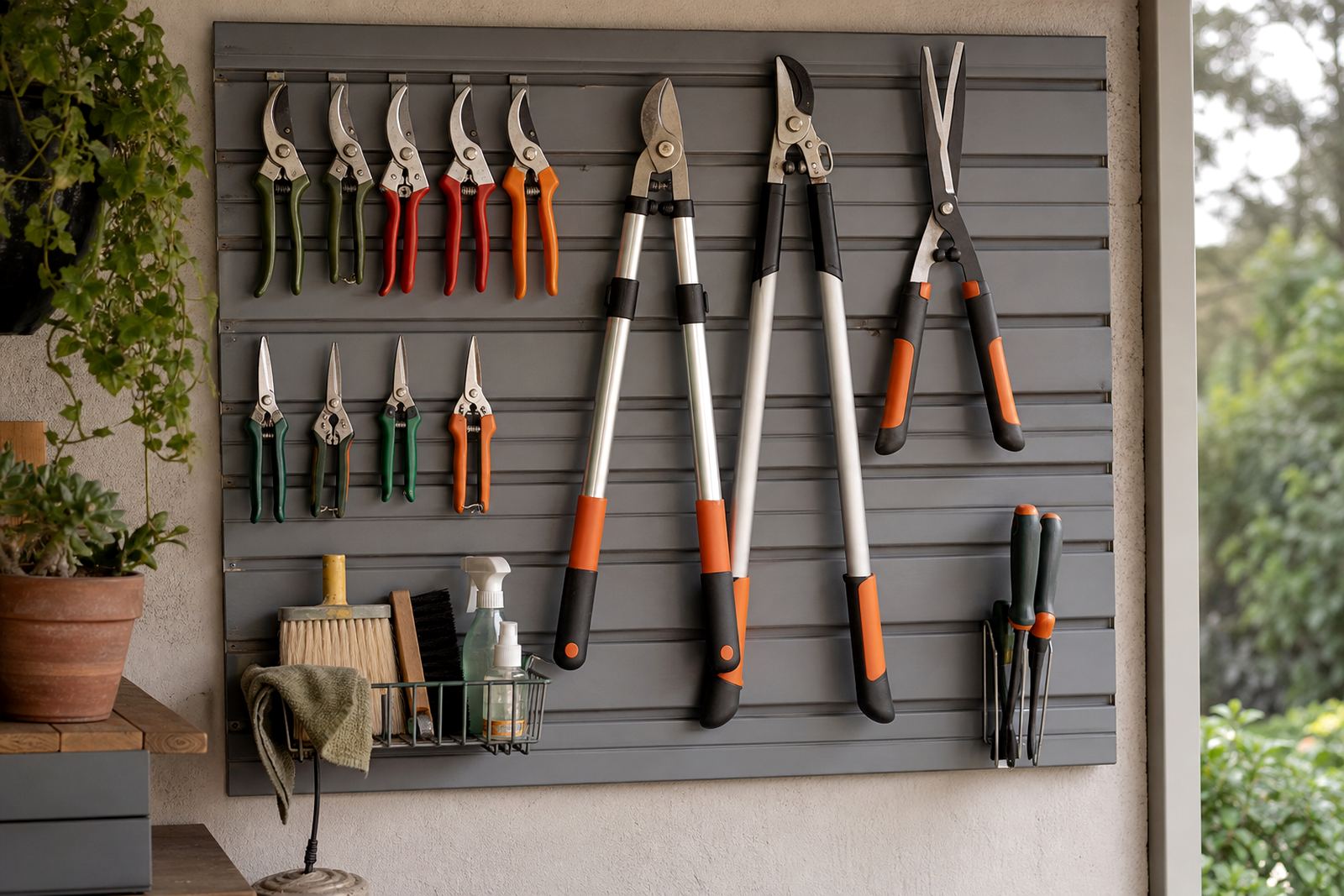
Hanging tools is often the neatest option. It keeps blades off the ground, makes inspection easier and prevents handles from warping. If you use a storage crate, line the base with a dry mat or shelf liner and keep the tools separated so they are not rubbing together.
- Choose a shaded, dry space with some airflow.
- Avoid floors that collect water after rain or washing.
- Do not store tools in direct sun for long periods.
- Keep tools away from pool chemicals, paints and fuel.
Check the moving parts before long breaks
If your tools will not be used for a few weeks or through the rainy season, do a slightly deeper check before storing them away. Open and close the handles a few times to make sure the pivot is smooth. Look at the spring, the locking catch and the grip covers. Small problems are much easier to sort out now than after a season of neglect.
For loppers and hedge tools, confirm that bolts and fasteners are snug but not overtight. A loose pivot can cause uneven cutting, while a damaged spring can make the tool tiring to use. If the handles feel rough, the blade does not close properly or the cut is no longer clean, book a servicing job before the tool goes back into regular use.
- Test the lock and release action.
- Check for rust spots around the pivot and spring.
- Look for cracked grips, loose bolts or bent parts.
- Set aside any tool that is sticking, wobbly or hard to close.
Separate daily-use tools from seasonal stock
If you keep more than one pair of shears or several hedge tools for a gardening team, group them by use. Daily tools should be easy to reach, while spare or seasonal tools can be stored a little deeper in the cupboard. This helps during busy periods when jobs need to move quickly, and it also makes stock checks simpler for landscapers managing work in suburbs, estates or municipal spaces.
Labeling storage spots also helps with accountability. A simple shelf label, hook number or container tag makes it easier to see which tool is due for sharpening, which needs a spring replacement, and which one still needs inspection. For larger teams, this kind of order reduces losses and keeps the better tools in service for longer.
A simple storage checklist for home gardeners and crews
Use this short checklist at the end of the day, or before a long break from garden work. It takes only a few minutes and it protects the parts that wear out fastest.
- Wipe off sap, soil and moisture.
- Dry blades and moving parts fully.
- Oil the pivot and cutting edge lightly.
- Close the tool or fit a blade cover.
- Store in a dry, shaded place with airflow.
- Keep sharp tools separate from other equipment.
- Inspect for rust, loose fasteners or damaged grips.
If a tool is already stiff, rusty or leaving ragged cuts, storage will not fix the problem on its own. That is the point to arrange blade sharpening, pivot adjustment, rust removal or a full inspection. A tool in good condition is easier to store, safer to handle and far more reliable on the next job.