How to tell when your blades need attention
Most gardeners wait until a blade is really dull, but the signs usually show earlier. If your secateurs start crushing soft stems, a lopper needs extra force on thicker branches, or hedge cuts look ragged instead of clean, the edge is likely tired. You may also notice the tool snagging, leaving torn bark, or slipping slightly before it bites.
For home gardens in Pietermaritzburg, Durban and other humid areas, rust can dull a blade faster than expected. Coastal moisture, sap and dusty storage in the shed all shorten cutting life. A quick check after each use helps you catch problems before they affect your plants.
- Check for shiny flat spots on the cutting edge
- Look for rust, sap build-up or pitting
- Test the tool on a small stem or twig
- Watch for extra hand fatigue during normal cutting
- Inspect the pivot for looseness or grit
Sharpening schedule for garden pruning tools
There is no single timetable that suits every garden. A gardener trimming roses once a month will not need the same sharpening routine as a landscaper doing daily maintenance in Johannesburg or Pretoria. The right time depends on how often the tool is used, what it cuts, and how it is stored.
As a practical guide, light home use often needs sharpening every few months, while regular professional use may call for attention much sooner. Hedge shears that cut soft growth can go longer between services, but they still need inspection if they are used on tougher branches or if the blades hit wire, stones or dry bark.
- After every heavy pruning session, wipe and inspect the blade
- Sharpen as soon as cutting feels rough or slow
- Do a full service before busy growing seasons
- Check tools after cutting storm-damaged or woody growth
- Store sharp tools clean and dry to slow rust
A simple sharpening process that gives cleaner cuts
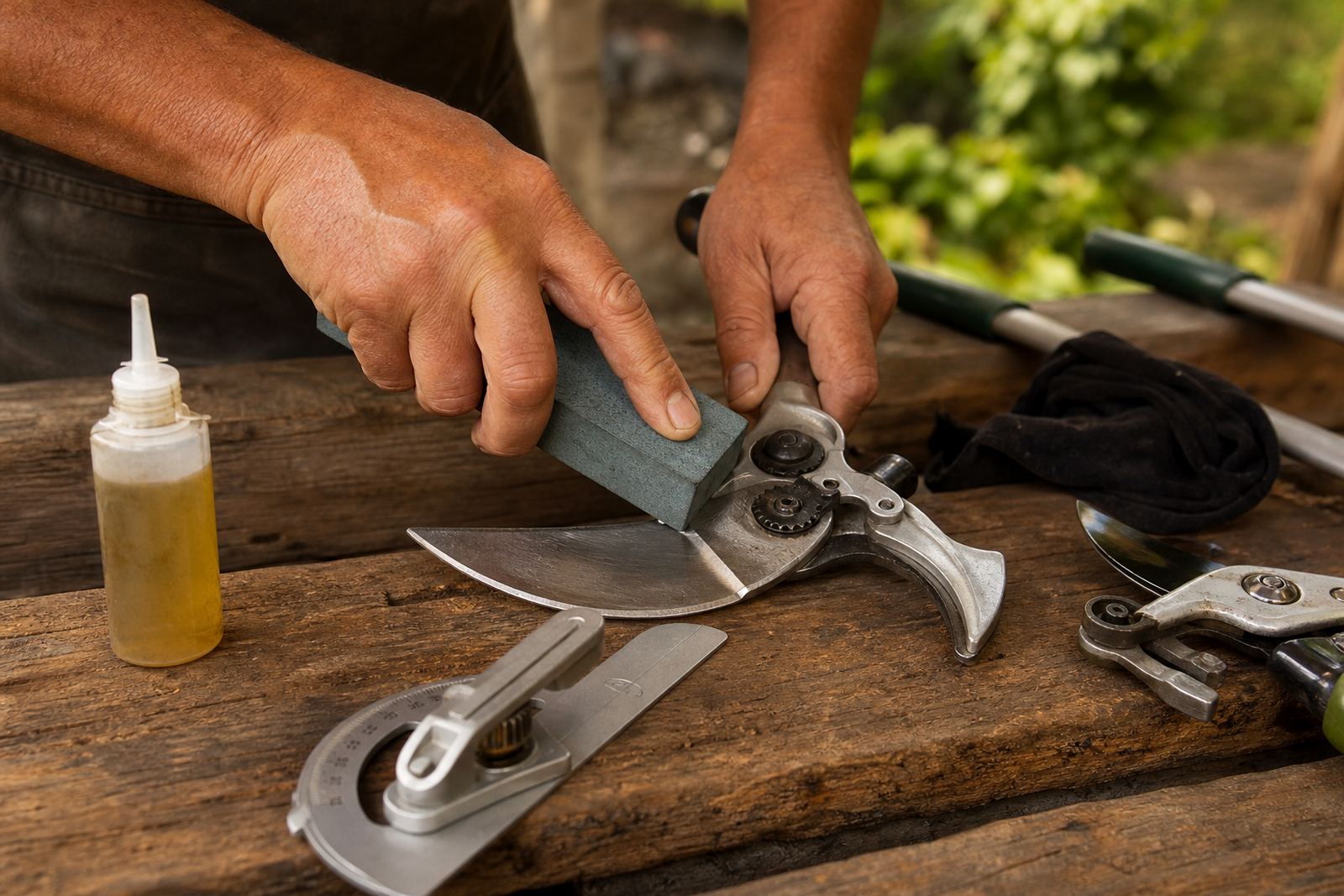
Before you start, clean off sap, dirt and plant residue. A clean blade is easier to sharpen and gives a truer edge. Secure the tool safely, then work only on the bevelled side of the cutting blade. Keep the angle steady and use even strokes so you do not round off the edge.
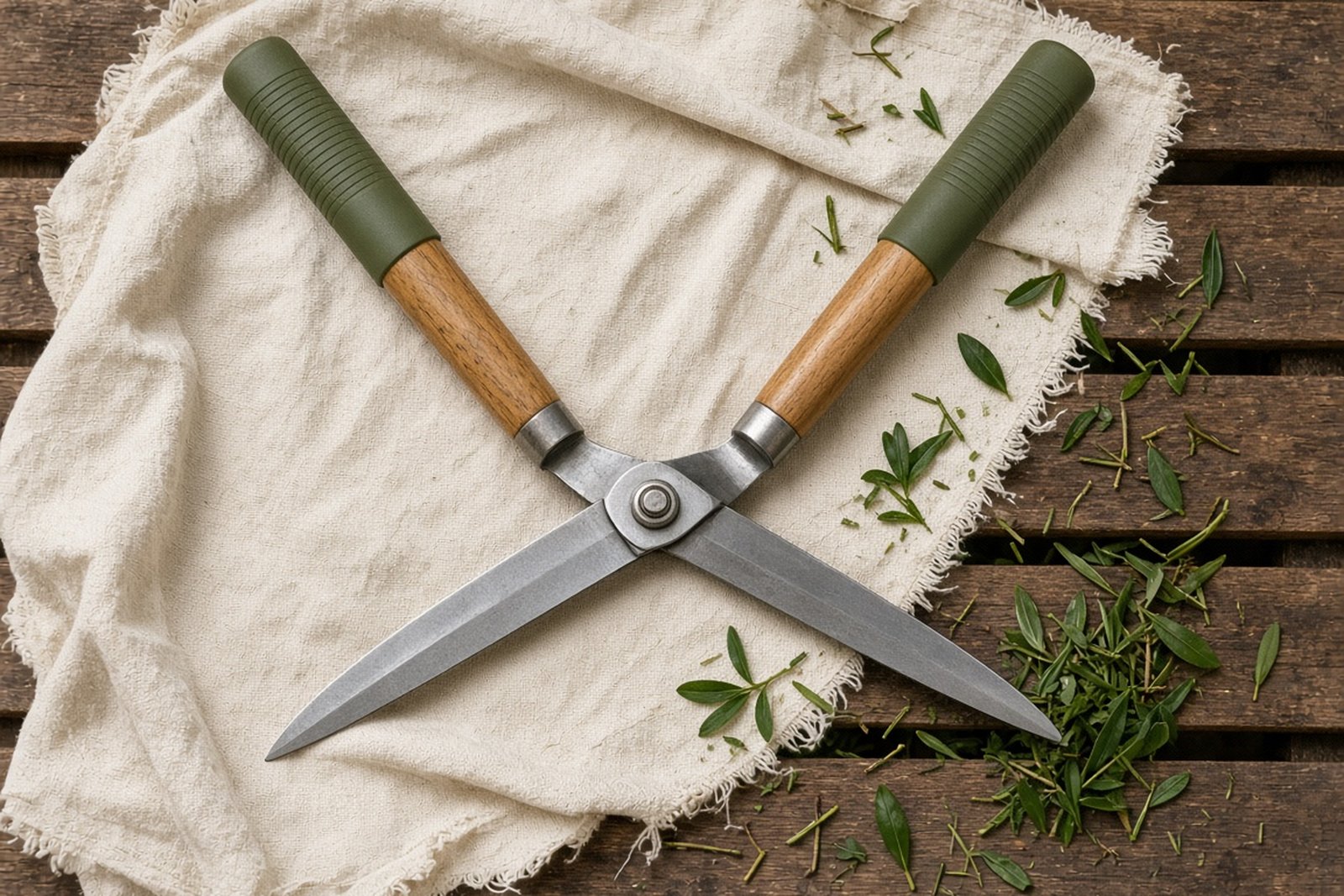
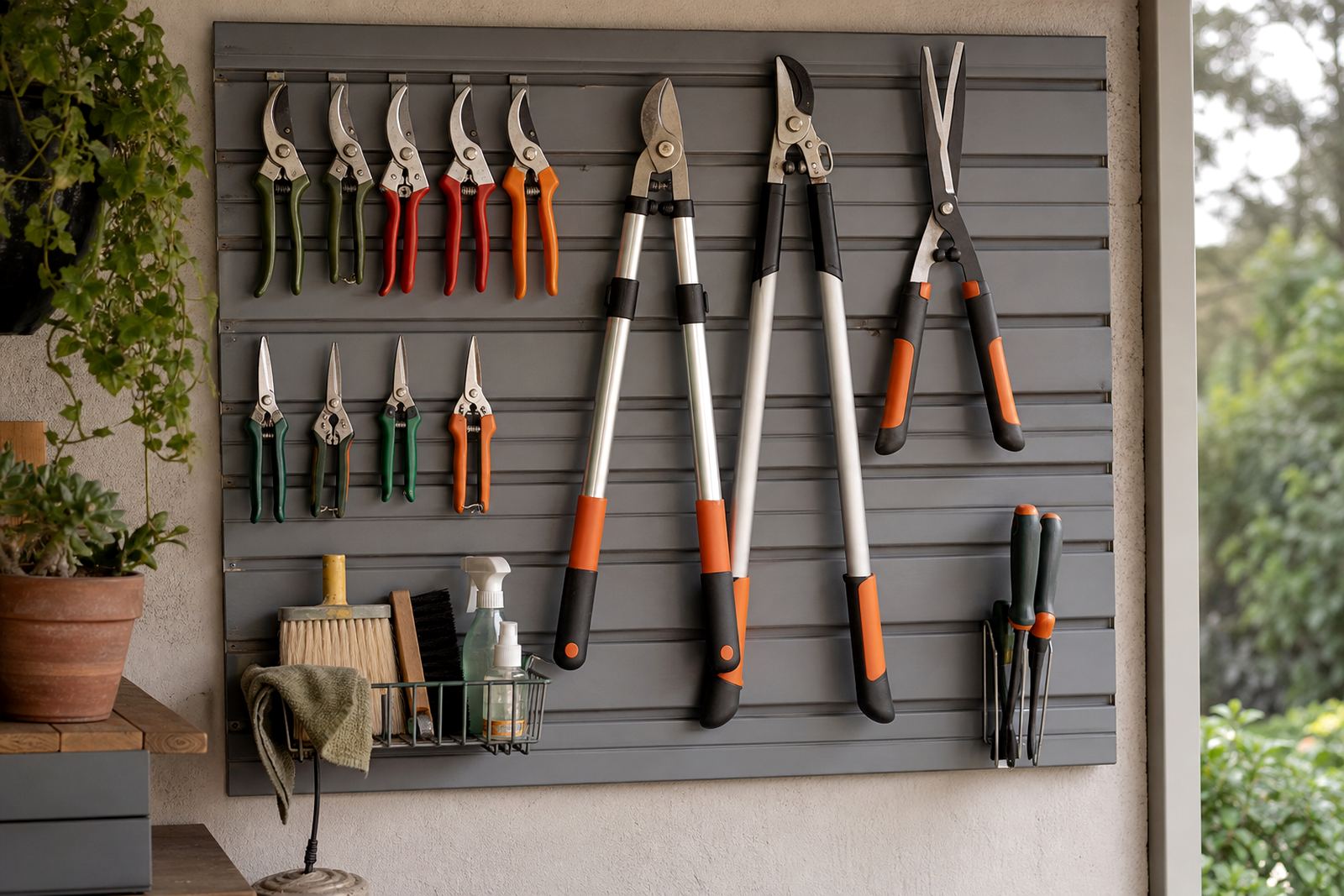
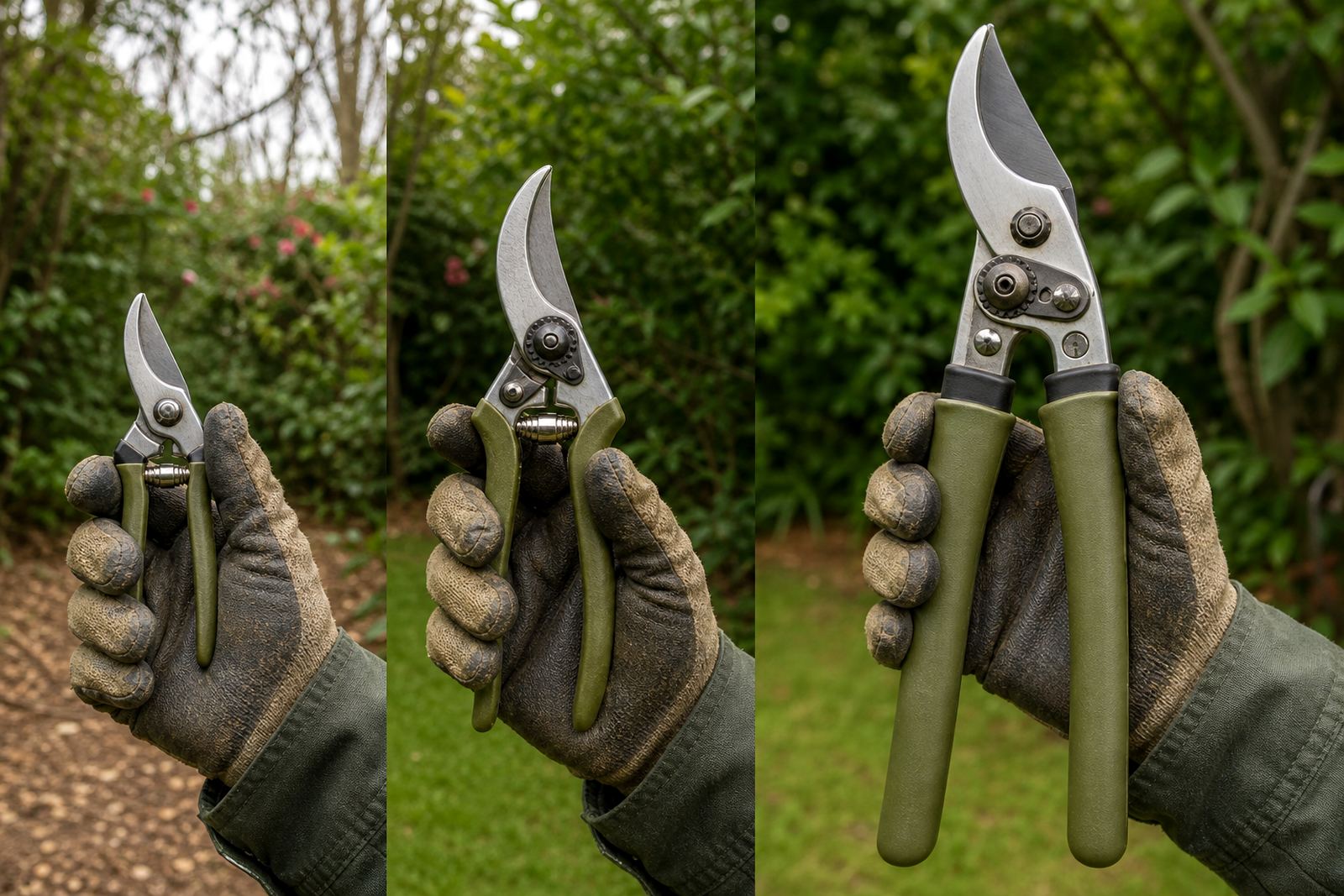
For bypass secateurs and loppers, sharpen the main cutting blade rather than the anvil side. Hedge shears need both blades checked, especially where the blade meets near the tip. If the edge is nicked, very uneven or deeply rusted, it may need a more careful service than a quick touch-up.
- Clean the blade before sharpening
- Hold the correct sharpening angle throughout
- Use light, even strokes instead of hard pressure
- Remove metal burrs from the back of the edge
- Oil the pivot and moving parts after sharpening
What to check before and after sharpening
A sharp blade will only perform well if the rest of the tool is in good condition. Loose pivots, damaged springs and worn grips can make even a well sharpened secateur awkward to use. This is especially important for landscapers and grounds teams who rely on the same tools throughout the day.
After sharpening, test the tool on a few soft stems first. The cut should be smooth, with no tearing or crushing. If the blades do not meet evenly, there may be a pivot issue or a bent component that needs adjustment.
- Check blade alignment before cutting again
- Look for spring tension that feels weak or uneven
- Make sure the locking mechanism works properly
- Inspect grips for cracks, wear or slipping
- Confirm the pivot opens and closes without grinding
Common mistakes that shorten blade life
Many sharpening problems come from rushing the job. Over-sharpening removes too much metal and can shorten the working life of the blade. Using the wrong file or stone can leave a rough finish that catches on stems. Some users also sharpen both sides of a blade when only one side should be worked, which changes the cutting angle and affects performance.
Another common issue is putting damp tools away after use. In KwaZulu-Natal humidity, that is a fast way to encourage rust and staining. A quick wipe-down and a light coat of oil go a long way, even if the tool is only used in a small backyard.
- Do not sharpen a dirty blade
- Do not change the original cutting angle
- Do not force a tool through hard, dry branches
- Do not store tools wet after washing
- Do not ignore loose bolts or bent parts
When a professional service makes more sense
Some blades can be touched up at home, but deeper wear needs proper attention. If a tool has heavy rust, repeated chips, poor alignment or a damaged pivot, it is worth sending in for a full inspection. That is often the better choice for hedge tools used on larger properties, body corporate gardens and municipal work where clean cuts matter on every visit.
Cut Tools Garden supports gardeners and landscapers across South Africa with blade sharpening, secateur servicing, lopper servicing, hedge shear servicing and related repairs. For tools used often in coastal towns like Durban or in busy garden crews around Pietermaritzburg, regular care helps keep the cut clean and reduces strain on the user.
- Choose professional service for rust removal and deep cleaning
- Book repairs if springs, grips or pivots are worn
- Use service support for fleet care plans and inspection schedules
- Ask for parts fitting when a component is no longer holding properly
- Keep a spare tool ready if the main one is out for service