What a telescopic lopper does on site
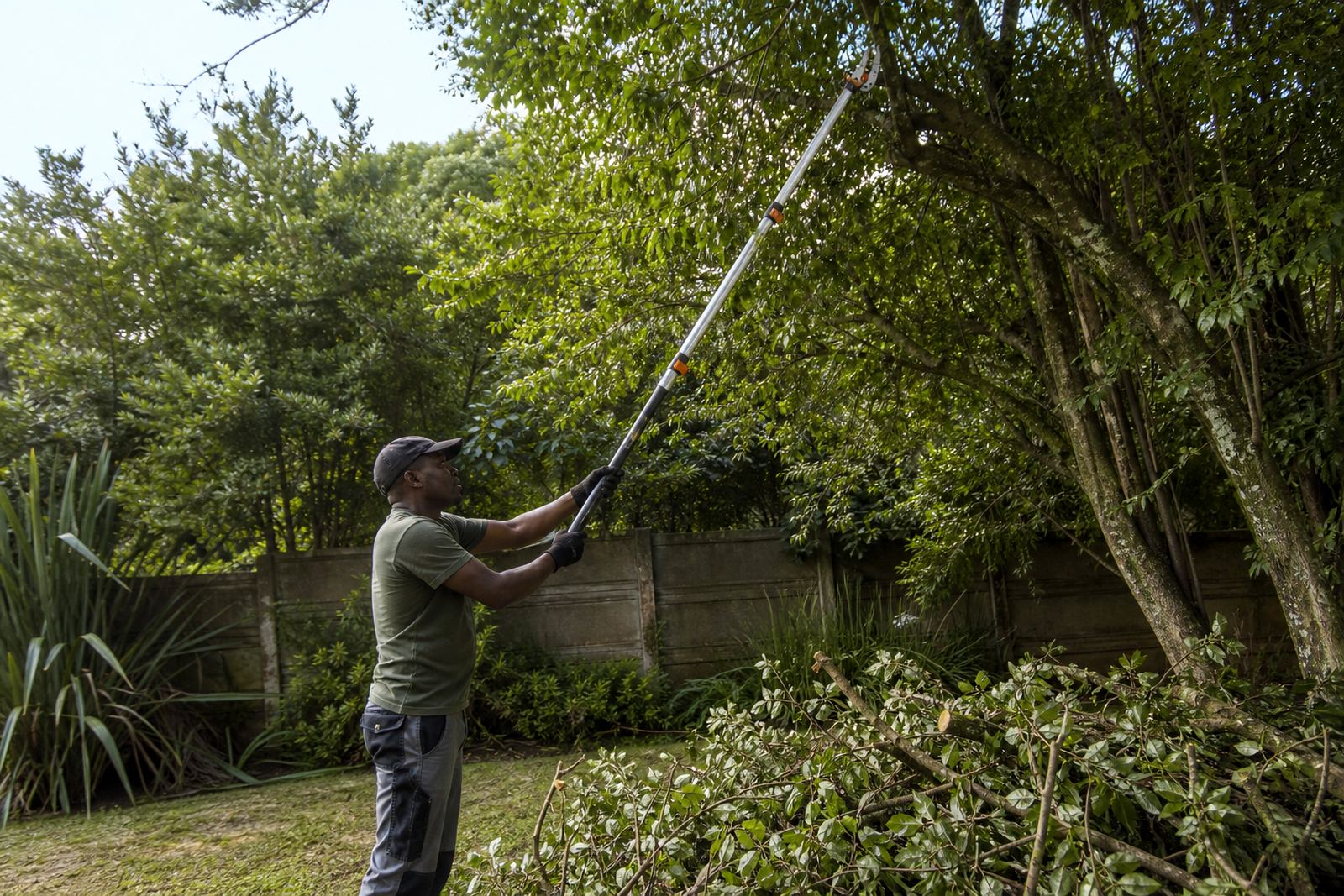
A telescopic lopper is a long handled cutting tool with an adjustable shaft and a jaw style cutter at the end. It is used for branches that are too high for hand pruners and too awkward for short loppers, giving you more reach for shaping trees, clearing overgrowth and taking down thick stems in one controlled cut. In Pietermaritzburg, Durban and other humid areas, this is handy for fast growing hedges and fruit trees that need regular attention before they get out of hand.
It is a manual tool, so no power, fuel or charging is needed. That makes it useful during load shedding, in remote estates and on jobs where you want quiet work near homes, schools or municipal edges. The operator stands on the ground and works with a pull or lever action, which reduces the need to climb and helps keep the work area safer. A good telescopic lopper should feel balanced, not front heavy, and the handle should stay firm at full extension.
Sizes, reach and cutting options
Telescopic loppers are usually chosen by reach and blade type. Shorter models are easier for tight gardens, while longer models help with overhead branches on larger plots, roadside verges and estate maintenance. For most general garden use, a reach of about 1.5 m to 3 m is practical. Longer options are useful for higher canopies, but they need more strength and a steadier hand.
- Adjustable length: choose a shaft that locks firmly at more than one position.
- Cutting diameter: check the maximum branch thickness the blade can handle cleanly.
- Blade style: bypass blades are best for live green growth, while anvil styles suit harder or drier material.
- Handle grip: a comfortable grip matters when you are working for longer periods.
- Weight: lighter models are easier for overhead work and repeated cuts.
For clients in coastal areas like Durban and Gqeberha, a coated blade and rust resistant finish are worth having. Inland, where dust and heat are common, a smooth locking system and easy cleaning after use matter more than looks alone.
Where it suits best in South African gardens
This tool suits home gardens, townhouse complexes, schools, landscaping crews and small estates. It is especially useful for trees with low to mid level branches, boundary hedges, and shrubs that have started to push beyond eye level. In Pietermaritzburg and Howick, where gardens can grow quickly after summer rain, a telescopic lopper helps keep pathways, driveways and fence lines clear without needing extra equipment.
It also works well where access is awkward. Narrow side passages, pool areas, retaining walls and slopes can make ladder use inconvenient. A telescopic lopper lets the operator work from a steady stance on level ground. That said, it is not the best tool for very thick limbs or for branches directly over power lines. For those jobs, use the right tool or call a trained arborist.
- Home gardens with fruit trees and mixed shrubs
- Complexes and estates with regular maintenance schedules
- Landscapers working on verges and boundary lines
- Schools, churches and municipal open spaces
Installation, power and gas requirements
There is no installation in the usual sense. A telescopic lopper is ready to use once the shaft is extended, locked and the blade is checked for free movement. There are no power cords, chargers, batteries or gas canisters to manage, which makes it simple for teams working across different sites in one day.
If you are ordering for fleet use, make sure the tool suits your crew’s handling style. Some operators prefer a compact unit that stores easily in a bakkie, while others want extra reach for taller hedges and trees. When the tool arrives, test the locking collars, the cutting action and the overall balance before putting it into daily service. If the shaft slips under pressure, it can make the cut uneven and tiring. A proper first check saves time later, and it avoids hassle on site.
Care, sharpening and servicing between jobs
Regular care keeps the cut cleaner and extends the working life of the tool. After use, wipe sap and dirt off the blade, dry it before storage and keep the moving parts lightly oiled. In KwaZulu-Natal humidity, this is important because moisture can lead to rust quicker than many users expect. If the tool has been used on resinous or wet growth, a deeper clean is worth doing before it goes back in the rack.
We also recommend checking the pivot, spring tension and grip condition on a routine basis. If the cut starts to crush rather than slice, the blade may need sharpening or adjustment. A dull blade makes the job harder and can damage plant tissue. For teams that use the same tools day after day, our servicing options include blade sharpening, pivot adjustment, spring replacement, rust removal and parts fitting. That keeps the tool ready for the next round of pruning, not sitting idle for weeks.
- Clean sap off after every job
- Store dry and out of direct weather
- Check lock points and fasteners monthly
- Sharpen before the blade starts tearing stems
What to check before you order
Before ordering, confirm the branch size you need to cut, the height you want to reach and how often the tool will be used. A homeowner trimming once a month has different needs from a landscaping crew moving through several properties in a day. Also check whether the tool will mainly be used on soft green growth or on harder, thicker wood. That affects the blade style and the level of leverage needed.
It is also worth checking the lock mechanism, handle length at full extension and the overall weight. A tool that feels fine in the hand at the counter can feel very different after ten minutes overhead. If the tool will be shared between staff members, choose something with a simple adjustment system and a grip that suits different hand sizes. For coastal and inland work alike, rust resistance and easy servicing should be part of the buying decision, not an afterthought.
- Maximum branch thickness
- Minimum and maximum reach
- Blade type and replacement parts availability
- Weight at full extension
- Storage space in the vehicle or storeroom
- Need for regular servicing on a fleet basis
Key facts
| Product type | Manual telescopic lopper for pruning branches from ground level |
|---|---|
| Reach | Adjustable extension, typically suited to 1.5 m to 3 m working reach |
| Cutting capacity | Best for small to medium branches, depending on blade and leverage |
| Power requirement | None, fully manual operation |
| Maintenance | Sharpening, pivot adjustment, spring replacement, cleaning and rust care |
| Best use | Home gardens, estates, landscapers and municipal maintenance work |