Built for fruit tree pruning, not general rough cutting
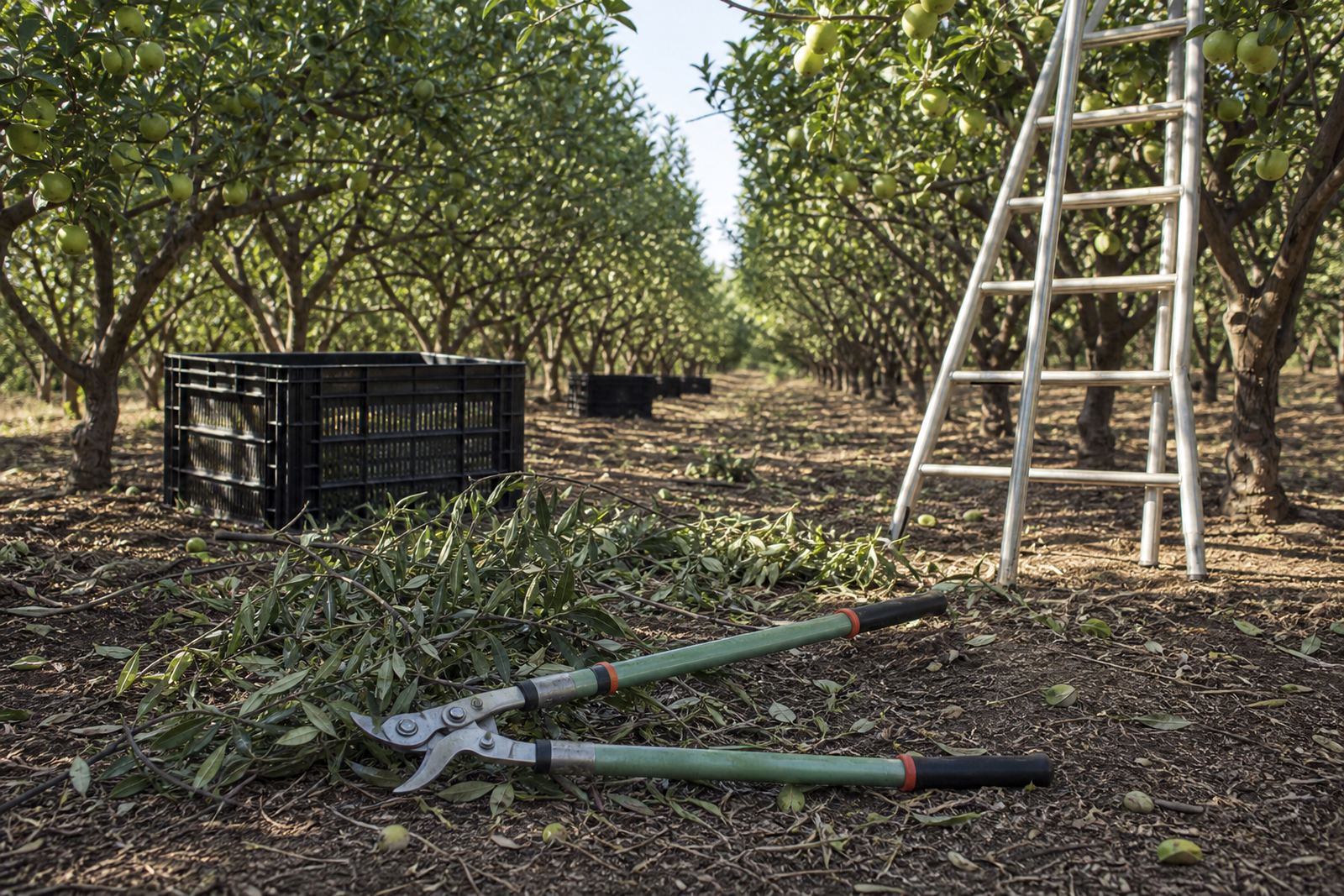
An orchard lopper is a long handled cutting tool used for fruit tree work where you need more reach than a secateur and more control than a saw. It is the right choice for removing live branches, shaping young trees, thinning growth and clearing back crowded limbs before the season changes. In orchards and home gardens alike, the aim is a neat cut that helps the tree recover quickly and keeps the canopy open for light and air.
Our orchard loppers are selected for South African conditions, from humid coastal gardens in Durban and Gqeberha to drier inland sites in Pretoria and Johannesburg. The frames are made for repeat use, the grips are shaped for comfort, and the cutting action is set up to reduce strain on the hands and shoulders. If you are pruning granadillas, citrus, naartjies or stone fruit, a proper lopper makes the job easier and more accurate.
These tools are not for cutting thick dry timber or hacking at storm damage. They are best used on live wood within the stated cut capacity, where the blade can close cleanly without crushing the branch.
Sizes and cutting options that suit different tree heights
Orchard loppers are available in different lengths and jaw capacities so you can choose the version that suits your trees and working style. Shorter models are handy for low branching trees and tighter garden spaces, while longer handles help when you need extra reach into the centre of the canopy or slightly higher up without climbing. For many South African gardens, one mid length lopper is enough for routine work, but larger properties often keep two sizes on hand.
Cut capacity matters. A light lopper may handle branches up to about 25 mm, while heavier duty models can manage around 35 mm depending on wood type and the user’s grip strength. Soft green growth cuts easier than hard older wood, so the same branch size can feel very different from one tree to the next. If you are not sure, choose a lopper that gives you a little headroom rather than working at the very edge of its capacity.
Some orchard loppers use bypass blades for a cleaner cut on live branches. Others have an anvil style action suited to harder material, though bypass remains the better choice for most fruit tree work. The correct option depends on the trees you prune and how often you service them.
Where the orchard lopper suits best in South African gardens
This tool suits home orchards, farmstyle gardens, lifestyle properties and landscaped sites where fruit trees are pruned regularly. It works well on trees that need shaping after flowering or after harvest, and on branches that grow into driveways, paths or boundary lines. Landscapers also use orchard loppers for maintenance around schools, complexes and municipal open spaces where neat pruning is part of the upkeep.
In coastal areas the tool should be wiped down after use because damp air can leave moisture on the blade and pivot. In inland towns with dusty conditions, fine grit can build up in the joint and make the cut feel stiff. That is why regular cleaning matters. A lopper that is well cared for stays smoother in the hand and lasts longer, even when it is used often through the season.
If you work in Pietermaritzburg, Hilton or Howick, the tool is well suited to gardens with mixed fruit trees, hedges and ornamental planting. For Durban, it is useful where humidity, salt air and frequent growth mean pruning is needed more often. In Johannesburg and Pretoria, it helps with dry season tidying and shaping before strong spring growth kicks in.
No power or gas needed, just good handling and the right technique
The orchard lopper is a manual tool, so there is no electricity, fuel or gas required. That makes it useful during load-shedding and on sites where extension leads are awkward or unsafe. You can move through the garden without worrying about charging, cords or starting problems, which is a real help when pruning early in the morning or on busy workdays.
Because it is manual, the tool depends on good handling. Keep both hands on the grips, place the branch deep enough into the blades and cut in one steady motion. Do not force a branch that is beyond the stated size because that can bend the handles, damage the pivot or leave a rough wound on the tree. A clean cut is always better than a crushed one.
If the lopper is used on green growth after rain, wipe the blades afterwards and store it dry. A quick oil on the pivot helps keep movement smooth. A little care goes a long way, and it saves money over time.
Servicing that keeps the cut smooth and the handles steady
Like any pruning tool, an orchard lopper works best when it is maintained properly. Our servicing support includes blade sharpening, pivot adjustment, spring replacement, grip replacement, rust removal, deep cleaning, parts fitting and tool inspections. For landscapers and garden crews, fleet care plans can also be arranged so the tools stay in good order through the busy season.
If the cut starts to feel chewy, the pivot is loose or the handles no longer close squarely, it is time for a check. Rust can develop quickly where tools are left outside or packed away damp, especially in coastal KwaZulu-Natal. A small issue caught early is easier and cheaper to fix than a damaged blade or seized joint. We see it often with tools that are used hard and put away in a hurry.
Regular servicing also helps keep the tool safe. Worn grips can slip in wet hands, and a stiff spring can make repeated cuts tiring. For gardeners who prune several trees in one session, that extra strain adds up fast.
What to check before you place an order
Before ordering an orchard lopper, check the branch size you need to cut, the height you need to reach and how often the tool will be used. If your trees are young and flexible, a lighter model may be enough. If you manage mature fruit trees with thicker growth, choose a stronger frame and a higher cut capacity. The right choice depends on the job, not just the price.
Also check handle length, blade type and grip comfort. Longer handles give more leverage, but they can feel bulky in a small garden. Shorter handles are easier to steer, but they may not give enough reach. If more than one person will use the tool, look for a balanced design that suits different hand sizes. A good lopper should feel steady in the hand and not twist when closing on the branch.
When buying for a landscaper or maintenance team, it helps to keep a list of the trees, the average branch thickness and whether the job is seasonal or year round. That makes it easier to match the tool to the site and avoid buying something under specced.
Key facts
| Product type | Orchard lopper for fruit tree pruning |
|---|---|
| Cut capacity | Typically 25 mm to 35 mm depending on model and wood type |
| Blade style | Bypass cutting for clean live-wood pruning |
| Power requirement | None, manual operation only |
| Common use | Fruit trees, orchard maintenance, garden shaping |
| Service support | Sharpening, pivot adjustment, spring and grip replacement |