What wavy hedge shears are used for
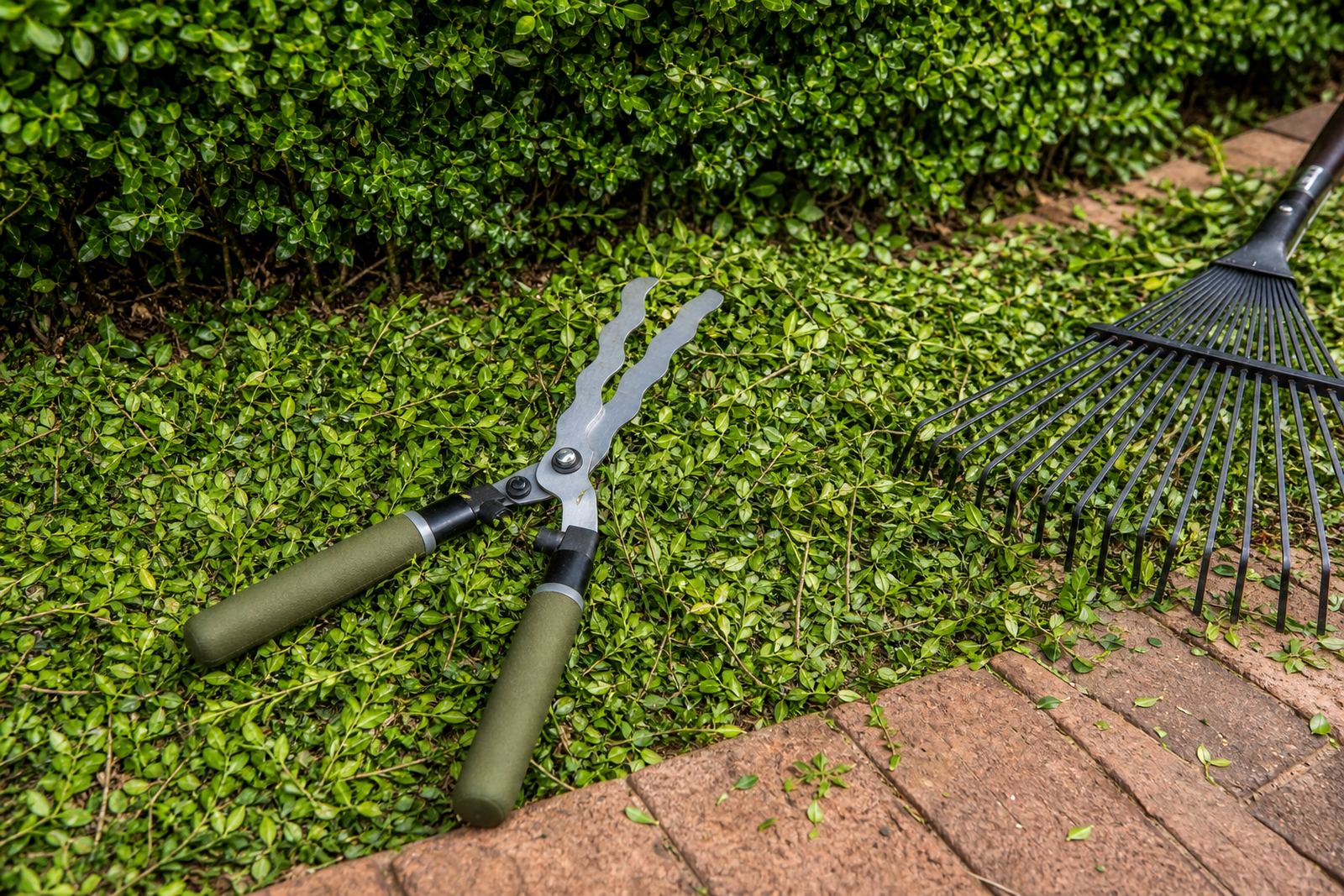
Wavy hedge shears are hand tools with a shaped cutting blade that grips stems a little better than a plain straight edge. That extra hold helps reduce slip when you are trimming soft hedge growth, light woody tips and uneven tufts around formal hedges, boundary lines and clipped garden features.
For South African gardens, they are useful where hedges grow quickly after rain, in coastal humidity along the KwaZulu-Natal coast, and in inland areas where regular shaping keeps shrubs from becoming leggy. They are also handy for quieter work where a powered trimmer is not practical, such as early morning estate maintenance or small courtyards in Pietermaritzburg and Howick.
The wavy profile does not replace a powered hedge cutter for large scale clearing, but it does give cleaner hand finishing and better control on detail work. If you want a more even face on a box hedge, waterwise screen or decorative border, these shears make the job less tiring and more accurate.
Sizes and handle options for different hands
We supply wavy hedge shears in practical lengths that suit both home use and professional rounds. Shorter versions are easier to control on small hedges and topiary, while longer blades cover more width on established hedges and reduce the number of cuts on straight runs.
When choosing a size, think about the hedge height, the thickness of the growth and how long the operator will be working at one time. A landscaper cutting several properties in Durban or Pretoria may prefer a longer reach and cushioned grips, while a homeowner in Hilton may want a lighter pair for monthly shaping.
- Blade length: 200 mm to 250 mm for fine shaping, 250 mm to 300 mm for general hedge trimming
- Overall length: about 500 mm to 700 mm depending on model
- Handle finish: straight or comfort grip options for better hold in warm weather
- Weight: lighter models for frequent use, heavier models for tougher stems
Longer handles give more leverage, but they can also feel bulkier on tight garden beds. For detailed work around paths, walls and municipal verge edges, a mid-length pair is usually the best all-round choice.
Where wavy shears suit best in South African gardens
These shears suit hedges with soft to medium growth, including informal screening shrubs, boundary hedges and shaping work around driveways and front gardens. They are also useful where access is tight and you cannot easily bring in a machine, such as side passages, townhouse courtyards and school grounds.
In coastal areas like Gqeberha and Durban, salt air can leave residue on blades more quickly, so a hand tool that is easy to wipe down after use is a real advantage. In Johannesburg and Pretoria, where dust and dry wind can build up on tools, quick cleaning after each job helps keep the cutting action smooth.
Use wavy hedge shears on growth that is still flexible. If the stems are thick and woody, step up to loppers or remove the larger sections first. That saves blade wear and gives a cleaner cut, which matters when hedges are being shaped for show or for boundary privacy.
- Best for box hedges, formal shrubs and light hedge finishing
- Good for detail trimming after a powered hedge cut
- Useful for quiet work in residential areas with noise limits
- Handy where load-shedding or fuel use makes powered tools less practical
For mixed gardens, many teams keep wavy shears for finishing and hand corrections, then use other tools for heavier clearing. That gives more control over the final line and helps the hedge recover evenly.
No power or fuel needed, just proper handling
Wavy hedge shears are manual tools, so there is no electricity, battery charging or fuel required. That makes them suitable for properties affected by load-shedding, as well as sites where noise or exhaust fumes are a concern.
There is no installation as such, but it helps to pair the shears with proper gloves, a clean work area and a stable stance. For larger properties, work from one end of the hedge to the other and keep the blade line level with the top of the growth. Small, repeated cuts are better than forcing the blades through hard stems.
If the hedge is tall, use a safe step platform or suitable ladder setup on firm ground. Do not overreach because that puts strain on the wrists and shoulders and can spoil the cut. A neat result comes from steady rhythm, not from rushing.
- No power supply needed
- No petrol, oil or charging equipment
- Quiet hand tool for estates, schools and residential areas
- Easy to carry between sites in Pietermaritzburg, Durban and surrounding towns
For landscapers, this makes the tool practical for quick finishing jobs and after-care visits. For home gardeners, it means you can keep trimming whenever the hedge starts to lose shape, without waiting for a machine service or battery to recover.
Care, sharpening and servicing that extend blade life
Good hedge shears last longer when they are wiped clean after every use. Sap, dust and damp clippings can dull the edge faster, especially in humid conditions. A dry cloth and light cleaning solution are usually enough for regular maintenance, and the pivot should be kept free of grit.
Cut Tools Garden supports blade sharpening, deep cleaning, pivot adjustment, spring replacement, grip replacement and rust removal through our service work. If a pair starts to feel stiff, loose or uneven, it is better to have it checked before the cutting edge becomes damaged.
Do not leave the shears wet in the back of a bakkie or in a shed that gets damp. Coastal air and garden moisture can lead to surface rust quickly, and once rust builds up the cutting action becomes rough. A light protective coat after cleaning helps keep the blades in better condition.
If you work on multiple sites, keep one pair for clean trimming and another for rougher finishing or back-up use. That simple habit can reduce wear, and it also means one tool is always ready when the other is in for servicing.
What to confirm before placing an order
Before you order, check the hedge type, the average stem thickness and the size of the area you cut most often. Also check whether the user wants a lighter tool for quick home upkeep or a stronger pair for regular landscaping work.
It helps to confirm the following details so the right shears are supplied:
- Blade size: short for detail work, longer for wide hedge runs
- Handle style: standard or comfort grip
- Cutting use: soft hedge growth, finishing work or regular maintenance
- User preference: lighter feel or extra leverage
- Service needs: replacement parts, sharpening or cleaning support
If you are buying for a team, consider the mix of operators and the sites they service. A pair that works well in a private garden may feel different on long municipal verge jobs or body corporate rounds, where repeated use makes grip comfort matter more. We can also help with fleet care plans for teams that need ongoing tool checks and servicing.
Clients across South Africa can reach us through the enquiry form on our contact page, whether they are in Pietermaritzburg, Hilton, Howick, Durban, Johannesburg, Pretoria, Cape Town or Gqeberha. Our team in Mkondeni, Pietermaritzburg handles sales, dispatch, tool care and after-sales support with practical advice on the right tool for the job.
Key facts
| Product type | Manual wavy hedge shears |
|---|---|
| Blade style | Wavy cutting blade for steadier stem hold |
| Typical blade lengths | 200 mm to 300 mm |
| Overall length | About 500 mm to 700 mm |
| Power requirements | None, hand operated |
| Best use | Hedge shaping, finishing and light trimming |