

Estate hedges in Howick needed a practical maintenance plan
This project came from a private estate in Howick, KwaZulu-Natal where the hedges had become dense along boundary lines, driveway edges and shared garden sections. The client wanted neat, even lines without making the work hard on the hands and shoulders, especially on the longer runs that took several passes to complete.
The brief was straightforward: keep the hedge faces crisp, reduce tearing on soft growth, and make the weekly and fortnightly trimming cycle easier for the gardening team. Because the property sits in a moisture-heavy part of the Midlands, the hedges were holding strong growth after rain and the cut surfaces were showing signs of rough finishing from older tools.
- Town: Howick, KwaZulu-Natal
- Client type: Private estate garden team
- Main hedge lengths: long boundary and access-run sections
- Primary goal: cleaner cuts with less arm strain
What was making the hedge work slower
The main challenge was not just the size of the hedge. The team had to work around uneven growth, thicker woody sections at the base, and softer new growth near the top. In some areas the hedge was narrow enough for detail work, but in others it needed repeated passes to keep the profile level. That puts strain on ordinary cutters fast, and it can leave the finish looking patchy.
There was also the usual KwaZulu-Natal weather factor. Morning dampness meant the foliage stayed wet for longer, which can make blades drag and increase the chance of corrosion if tools are not cleaned and dried properly. Power was not a big issue on this project, but the client still wanted hand tools that were dependable when the team was working early and had limited time. On days with load-shedding nearby, that kind of equipment matters more than people often think.
- Dense growth at the base needed stronger cutting force
- Wet foliage increased drag and residue build-up
- Long runs meant repeated use, so comfort mattered
- Finish quality had to stay even from one section to the next
Tools supplied for cleaner cuts and easier handling
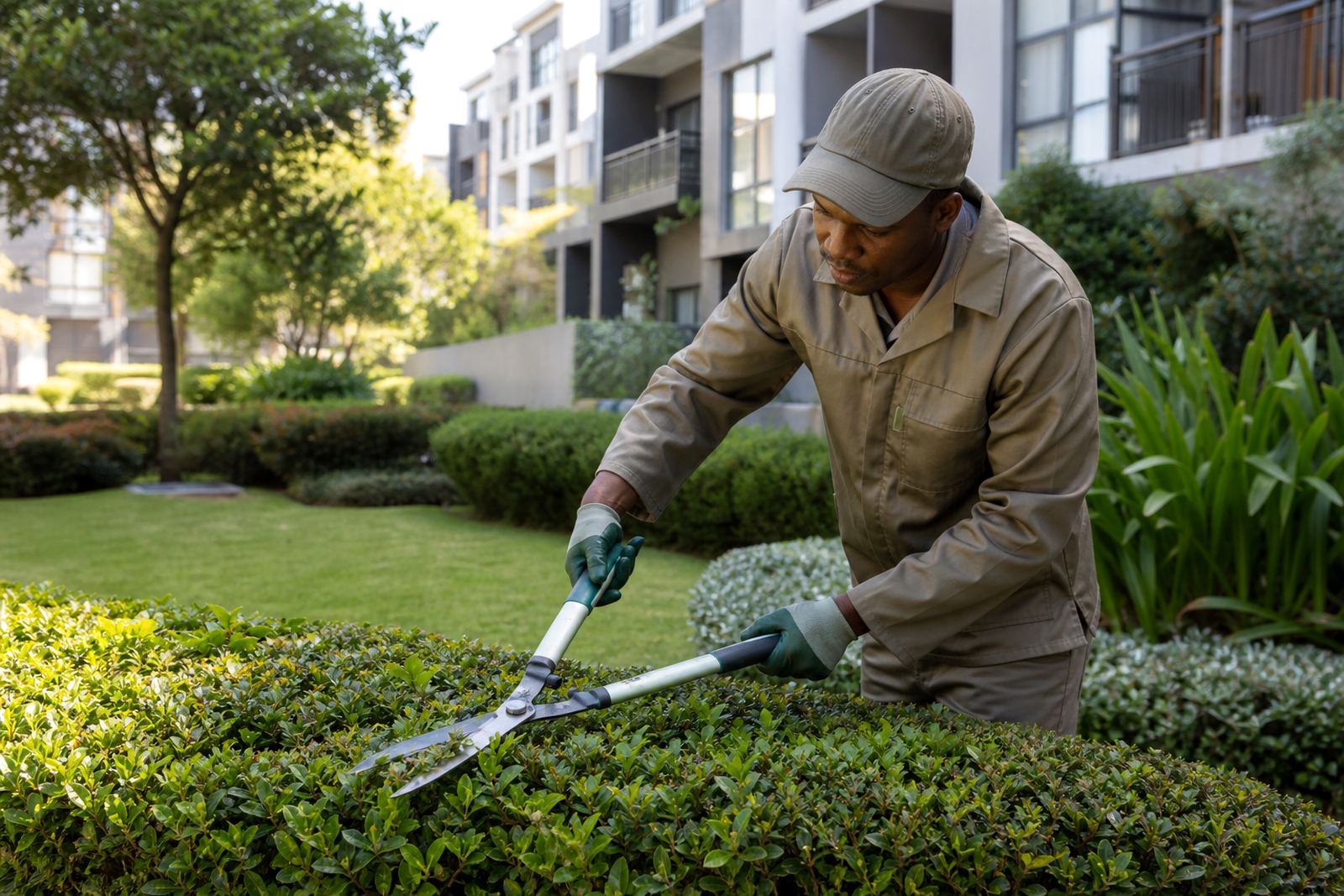
We supplied comfort-focused hedge shears, bypass-style pruning shears and long-reach loppers suited to estate maintenance. The shears were chosen for controlled trimming on the hedge face and top line, while the loppers handled thicker stems and the occasional woody section that would otherwise slow the job down. The key was to match the tool to the cut rather than forcing one tool to do everything.
The handles were selected for a secure grip and reduced hand pressure over longer sessions. That helps when a team is trimming for several hours at a time, especially in humid conditions where gloves can start to feel slippery. We also checked blade alignment and pivot action before handover so the team could start with a clean, easy stroke rather than fighting stiff movement.
- Hedge shears for straight, controlled surface trimming
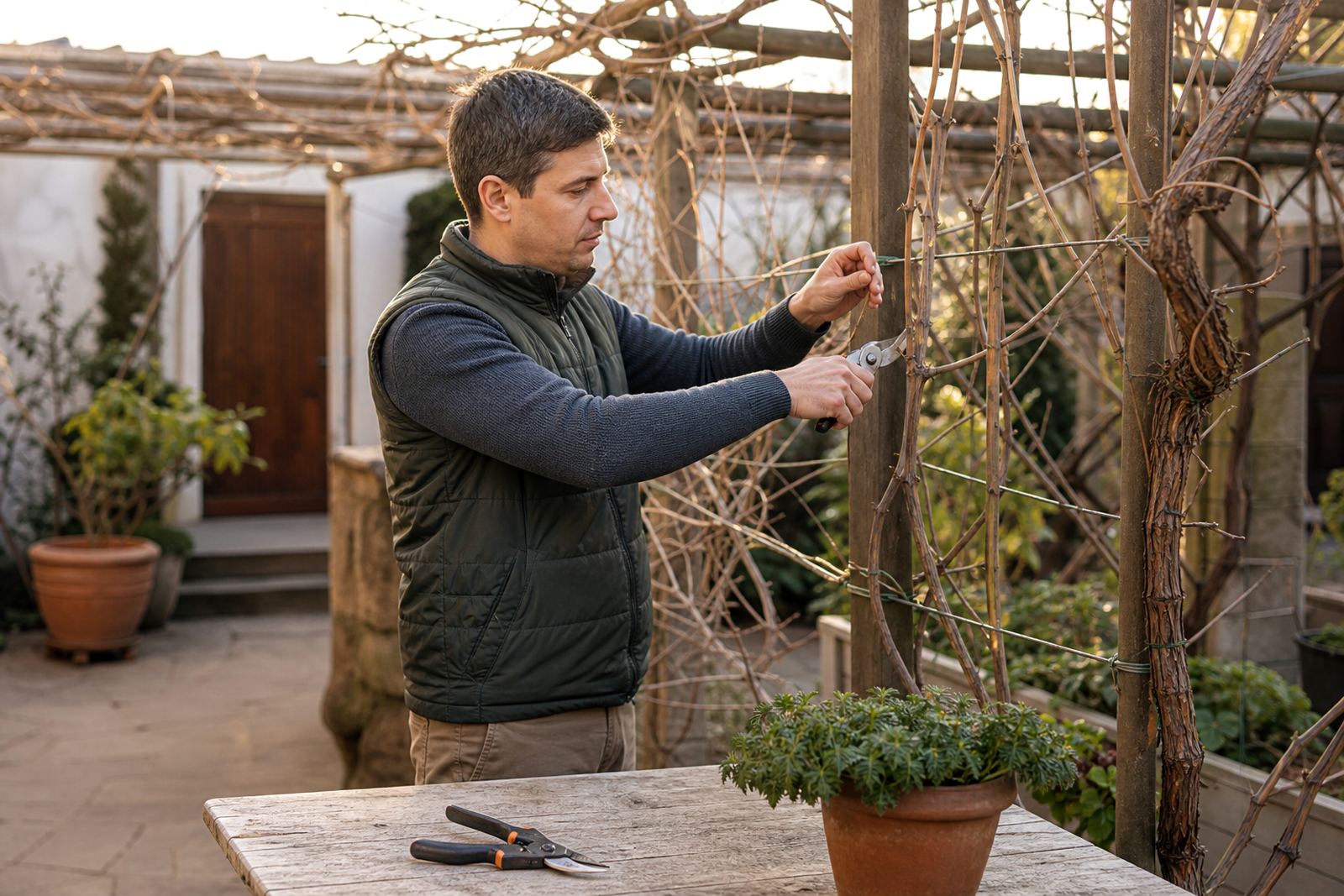
- Bypass pruning shears for finer correction cuts
- Loppers for thicker stems and hidden woody growth
- Grip-friendly handles for longer work sessions
- Pre-check on blade alignment and pivot tension
How the maintenance job was carried out
The work was completed in stages over 2 weeks, with the hedge lines being tackled section by section to keep the overall shape consistent. The team started with the longer boundary stretches, then moved to the entrance and internal garden edges where visibility mattered most. After each section, the cut surfaces were cleared of loose clippings so the hedge could be assessed properly before the next pass.
Because the property had mixed hedge heights, the team used the shears for the upper and outer faces, then switched to loppers where thicker growth had crept through. That saved time and reduced strain. We also advised on simple post-use care: wiping down blades, checking pivots and storing the tools dry after use. It sounds basic, but on coastal and Midlands-adjacent properties it makes a big difference over the season.
- Timeline: 2 weeks from assessment to final pass
- Section-by-section trimming kept the profile even
- Clippings were cleared between passes for better visual checks
- Post-use care reduced rust risk and kept action smooth
The result on the ground
Once the correct tools were in use, the hedge lines looked far more even and the team reported less fatigue by the end of the day. The clean cutting action reduced tearing on the softer growth and gave the estate a neater finish along the full run. The difference was most visible on the longer boundary sections where poor tools usually show up quickly.
The client also noted that the tools handled well in damp conditions and stayed comfortable during repeated use. That matters for estate work, because a hedge that is only half finished by noon can quickly become a messy job if the team is battling with heavy or awkward tools. Here, the work stayed controlled and the final result was tidy enough for routine maintenance rather than emergency rescue trimming.
- Smoother hedge faces with less tearing
- Less hand and shoulder fatigue during long runs
- More consistent line from end to end
- Routine maintenance became quicker to schedule
What we would repeat on the next estate hedge
If we were to do the same job again, we would keep the same mix of hedge shears, loppers and servicing checks, because that combination matched the work properly. For estate hedges in Howick and similar humid areas, the best outcome comes from tools that are comfortable, sharp and easy to keep in step. We would also build in a mid-job clean-down on any longer run so sap and moisture do not slow the blades.
For larger properties, we would continue recommending a simple tool care plan that includes blade sharpening, pivot adjustment, spring replacement where needed and rust removal before the busy season. That keeps the team moving and helps avoid surprises when the hedge growth picks up after rain. It is a practical approach, not fancy, just the kind of maintenance that holds up in the real world.
- Keep a mixed set of shears and loppers on hand
- Sharpen blades before peak growth periods
- Check pivots and springs before long hedge runs
- Wipe down and dry tools after use in wet weather
Key facts
| Project location | Howick, KwaZulu-Natal |
|---|---|
| Client type | Private estate garden team |
| Project duration | 2 weeks |
| Tools supplied | Comfort-focused hedge shears, pruning shears and loppers |
| Key challenge | Long hedge runs with dense, damp growth |
| Core result | Cleaner cuts, less fatigue and neater hedge lines |