Courtyard vines in central Stellenbosch
This project was for a private homeowner in Stellenbosch, in the Cape Winelands, where climbers had filled a paved courtyard and started to crowd windows, paths and overhead supports. The brief was straightforward: reduce bulk, improve airflow, restore clear lines and keep the vines healthy enough to carry on through the season.
The site had the usual tight courtyard conditions seen in older Stellenbosch properties, with narrow access, hard paving, reflective heat off walls, and limited room to step back and assess the growth. There was also the concern of keeping the space tidy for daily use, because fallen cuttings in a small court can make surfaces slippery and untidy fast.
What the client needed from the cutback
The homeowner wanted a clean result without a harsh look. The vines had to be shortened and guided, not hacked down. They also asked for enough opening in the canopy to let light move through the area, while still keeping coverage over the courtyard edges and trellis lines.
- Reduce crossing stems and heavy tangles
- Lift low growth away from walkways and seating edges
- Improve airflow to reduce damp pockets after rain or overnight dew
- Keep the vines tied in neatly to the existing support structure
- Remove damaged material and dead tips from earlier seasons
Because the property sat in a settled residential area, the work had to be done quietly and in stages. No loud fuss, no mess left behind, and no long interruption to the household routine.
Constraints we worked around on site
The biggest constraint was access. The courtyard could not take bulky equipment, and there was no extra storage space for offcuts. We used compact hand tools and stepped through the work in sections so the main paths stayed open. The paving also meant we had to manage debris carefully, since small leaves and stems can spread quickly over smooth stone.
Another factor was the local growing pattern. In Stellenbosch, vines can push strong spring growth and then tighten up in warmer, drier spells. That means a light but accurate trim is often better than one heavy round of cutting. We also checked the structure of the support points before any major shortening, to make sure the remaining vine weight would sit properly.
- Restricted courtyard access and limited working space
- Need to protect paving, walls and planted edges
- Maintain vine form while allowing more air movement
- Keep the space usable on the same day
Tools and work carried out over 2 weeks
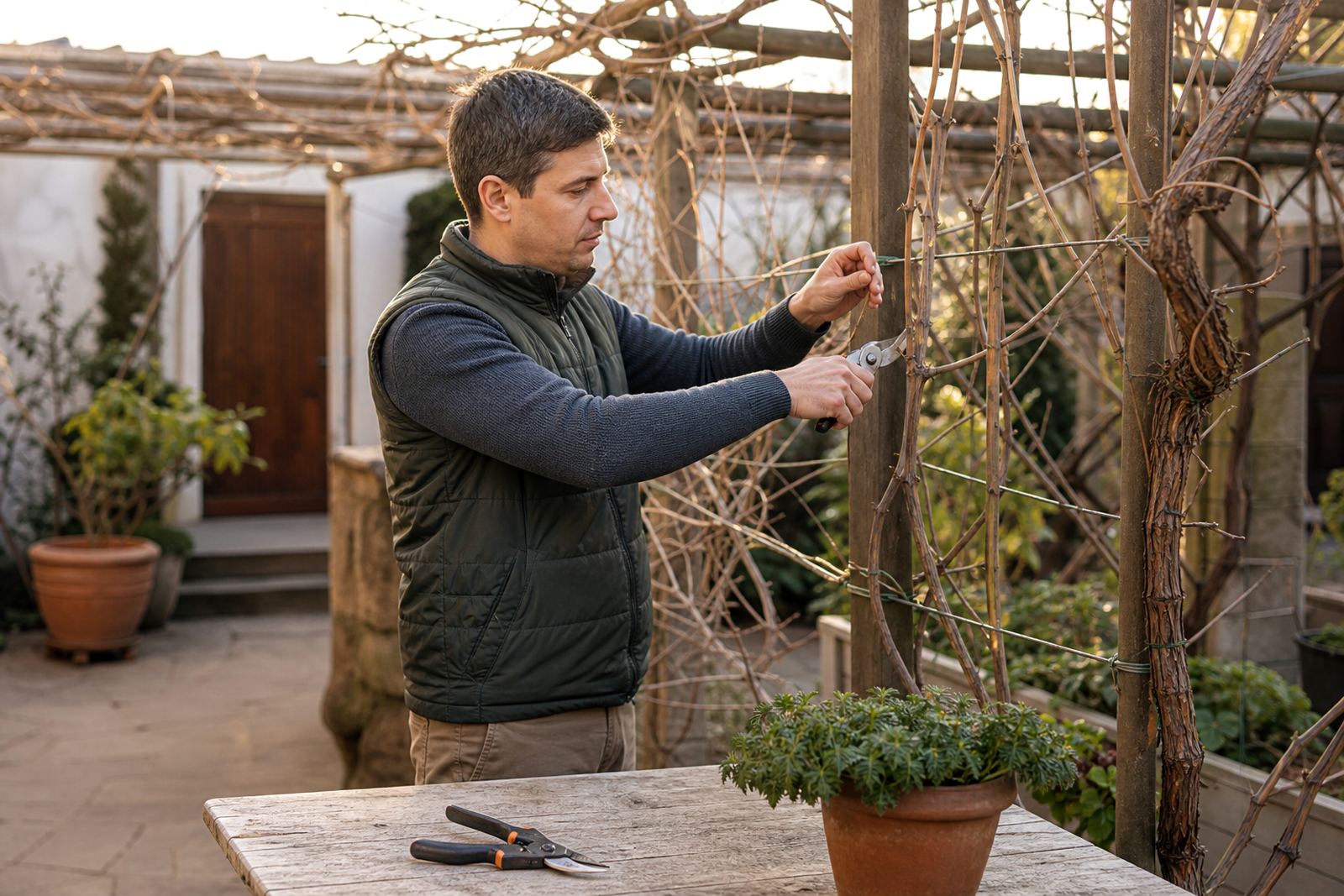
We scheduled the job over 2 weeks to allow for a first shaping visit, then a follow-up check after the vines had settled. The first visit focused on thinning, shortening long runners, and cleaning out dead and crossing growth. We then adjusted the remaining stems onto the support lines and tidied the overall line of the courtyard planting.
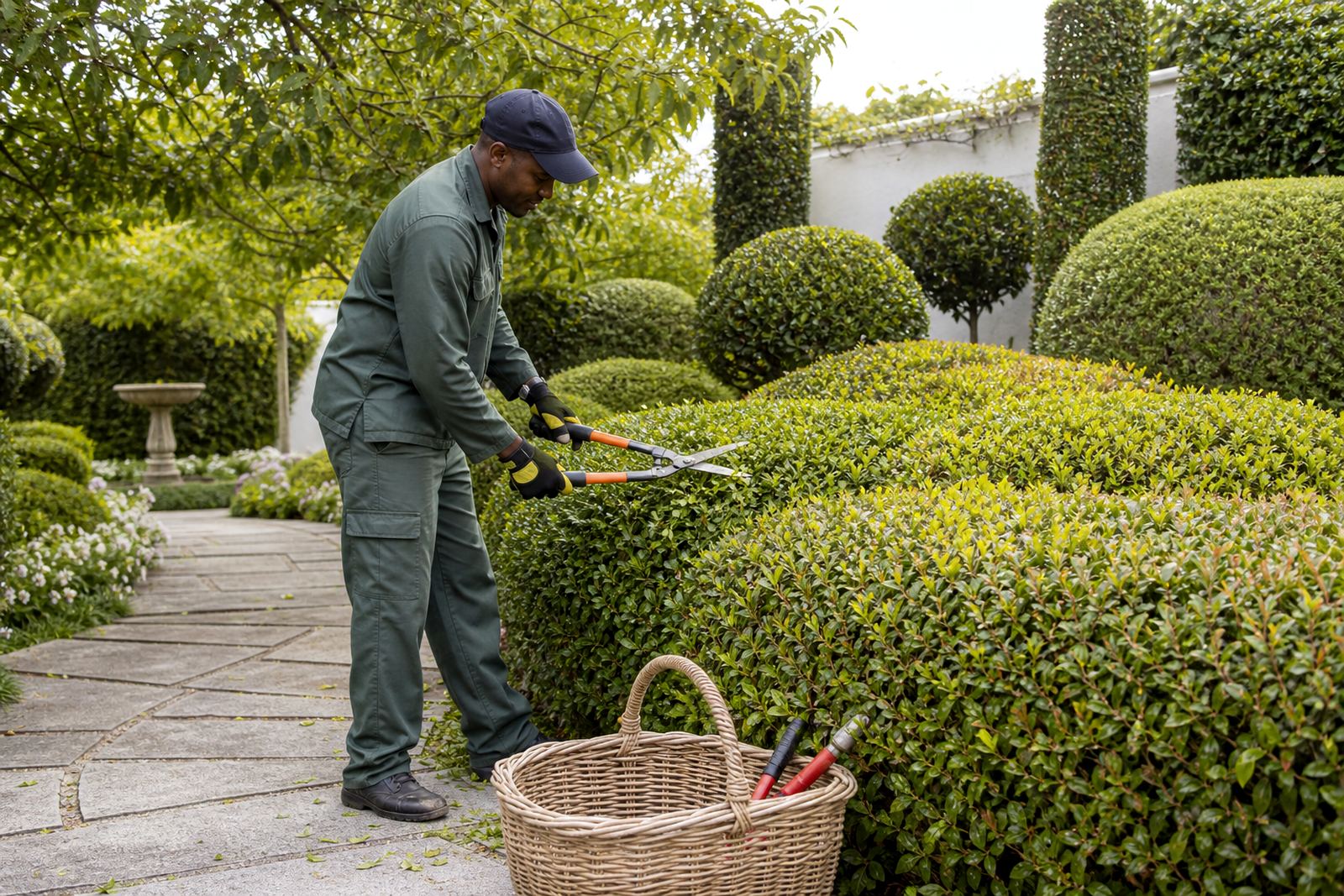
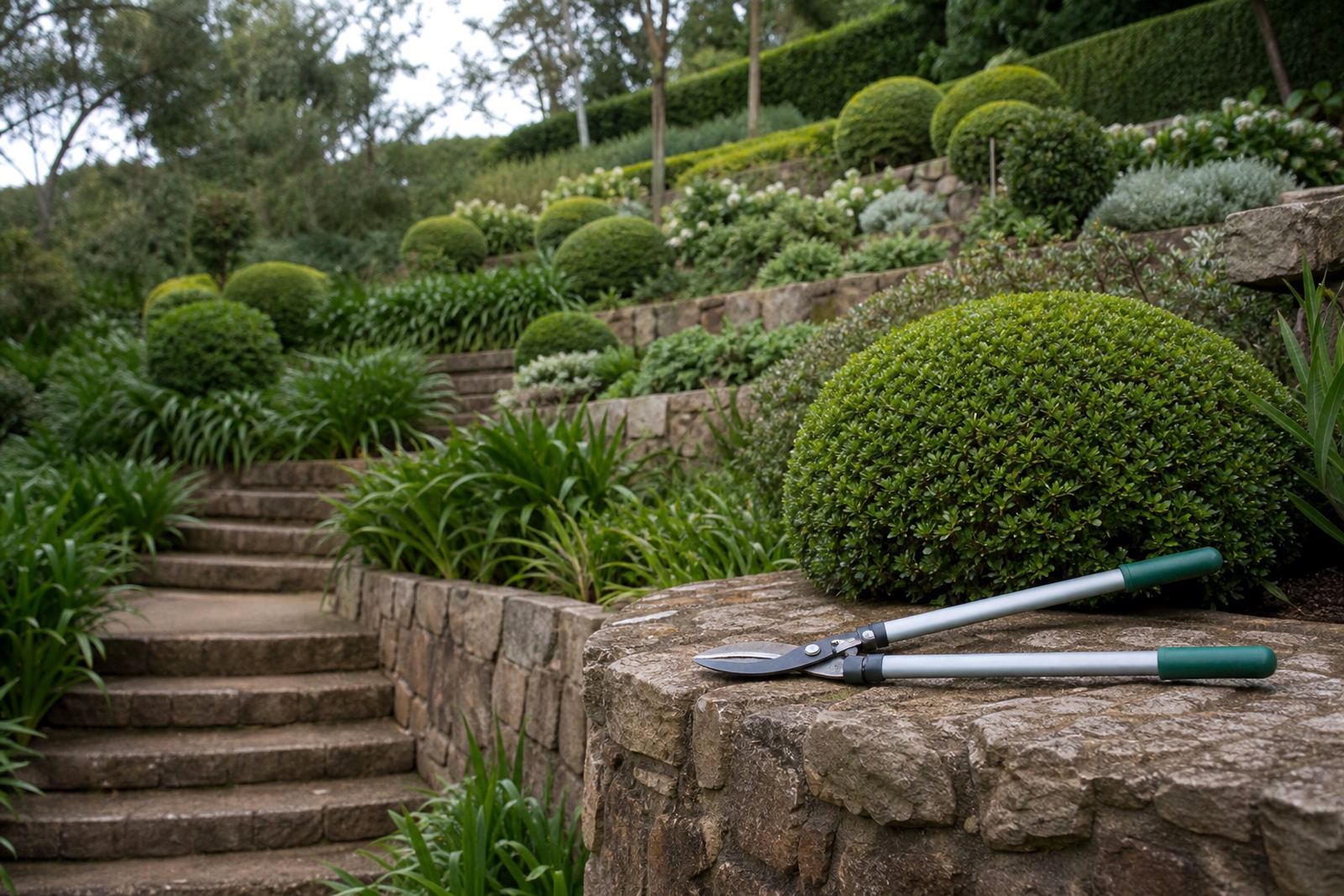
For the actual cutting and finishing, we used pruning shears for fine work, loppers for thicker stems and hedge tools for the outer face where a uniform edge was needed. Grips were checked during the session so the tools stayed comfortable during repeated use, and the blades were kept clean for tidy cuts. There was a fair bit of hand work involved, because courtyards like this need care more than force.
After the main shaping was done, we carried out a light inspection for weak growth points and small tears in the wood. Where needed, stems were re-secured and the wound points were left clean so the plant could recover well. The site was then cleared fully, including fine trimmings from the paving joints. The finish was neat, not overworked.
Results in the courtyard
By the end of the project, the vines had a much clearer structure and the courtyard felt more open. Air moved through the space better, and there was less of that heavy, trapped feeling that comes with dense climbing growth. The client also had better sight lines across the court, which made the area feel ordered again.
The plantings still gave coverage, but they no longer drooped over the walkways or crowded the corners. That balance is important in a small urban courtyard, especially in Stellenbosch where warm afternoons can dry surfaces quickly yet shaded corners can stay damp. The owner said the space was easier to use day to day, and easier to keep clean too.
- Improved airflow through the centre of the courtyard
- Cleaner edges along paths and seating areas
- Healthier looking framework for future growth
- Less debris dropping into the paving joints
What we would do again for similar work
If we were called back to a similar courtyard project, we would follow the same sequence: inspect first, trim in stages, then return for a light correction once the plant has settled. That approach suits climbing growth because it avoids sudden overcutting and helps the plant keep its shape. It also makes the final result easier to manage through the next season.
We would also repeat the practice of using the right tool for each cut instead of forcing one tool to do everything. In tight spaces, that matters. A clean cut on a stem is quicker to heal than a ragged one, and a tidy service is easier for the homeowner to maintain between visits. For courtyards, order comes from small details done properly.
Key facts
| Project name | Stellenbosch Courtyard Vines |
|---|---|
| Town | Stellenbosch, Western Cape |
| Client type | Private homeowner in a residential courtyard |
| Timeline | 2 weeks |
| Key work | Training, pruning, tidying and support-line adjustment |
| Main outcome | Better airflow, neat form and easier upkeep |