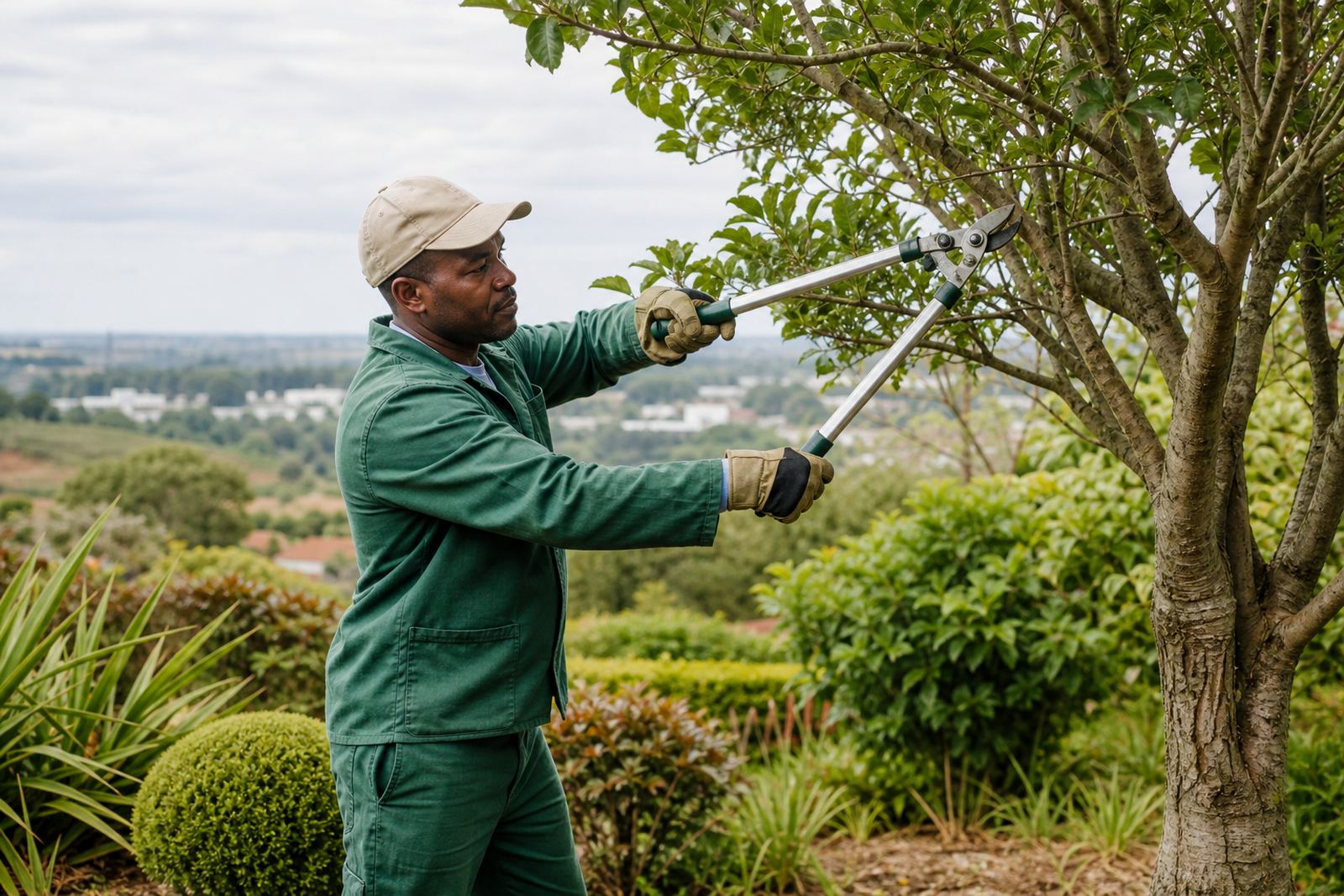
Start with the cut, the feel and the safety
Most gardeners know the warning signs long before a tool fails completely. A secateur that crushes stems instead of slicing them, a lopper that takes too much effort to close, or a hedge shear that binds halfway through a cut is telling you something important. Some problems are simple wear, while others mean the tool is no longer safe or cost effective to keep in service.
In Pietermaritzburg and the humid coastal belt, rust moves quickly if tools are left damp after use. A blade can look only slightly dull yet still drag through soft growth, which puts strain on your hands and gives a poor finish. For landscapers working in Durban, Umhlanga or Ballito, that extra strain adds up fast over a full day.
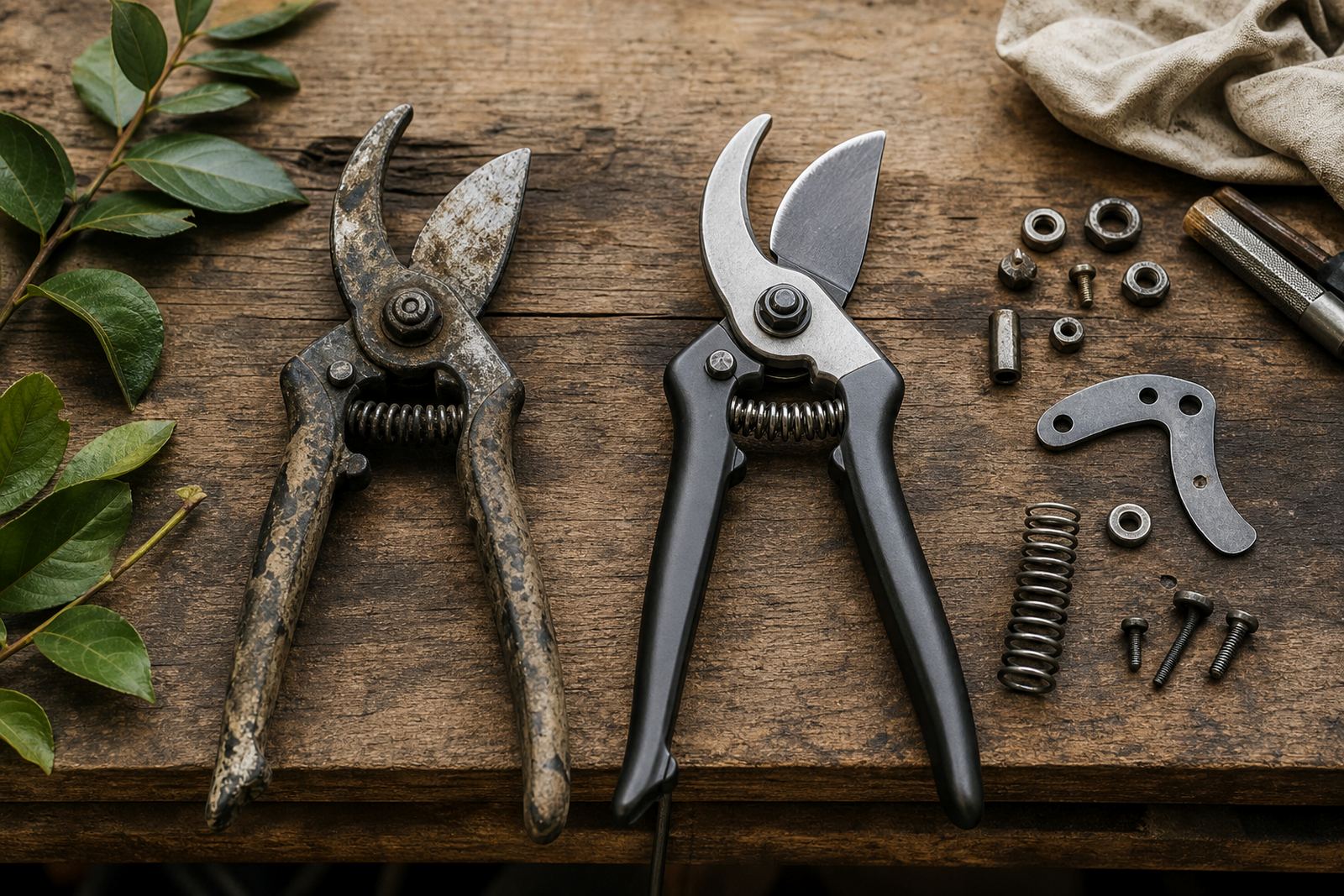
- Check for cracked handles, loose pivots and missing springs.
- Look at the blade edge for chips, heavy pitting or bent tips.
- Open and close the tool several times. If it sticks, scrapes or rattles, it needs attention.
- If there is any wobble at the joint, the tool may be unsafe for regular use.
When servicing is the smarter option
Servicing works best when the body of the tool is still sound. If the handles are intact, the pivot can be adjusted and the blade still has enough material left for sharpening, repair is usually the better option. This is often the case with good quality secateurs, hedge shears and loppers that have simply seen hard use over a few seasons.
A full service can include blade sharpening, rust removal, deep cleaning, pivot adjustment, spring replacement and grip replacement. For many home gardeners in Hilton or Howick, that is enough to bring a favourite tool back to proper working order. For crews managing estate gardens or municipal verge work, regular servicing also keeps downtime down and helps crews stay productive.
- Choose servicing if the tool still closes cleanly after adjustment.
- Choose servicing if the blade can be sharpened without losing its shape.
- Choose servicing if the frame and handles are solid and comfortable in the hand.
- Choose servicing if the repair cost is clearly below buying a new tool of similar quality.
Signs the tool has reached the end of the line
There are times when repair is simply not sensible. If a blade is severely worn down, the metal has deep cracks, or the handles have started to split around the joints, replacement is usually the safer choice. The same applies when a tool has been bent after being used on material it was never meant to cut, such as thick wire or hard timber. That kind of damage is often beyond practical repair.
If the tool has already needed repeated fixing and still performs badly, it is costing you twice. You spend money on parts and labour, then you still deal with poor cutting and sore hands. For a landscaping crew in Pretoria or Johannesburg, that can slow the whole job and affect the finish on site.
- Replace the tool if cracks are visible in the blade or frame.
- Replace the tool if the pivot hole is worn out and cannot hold tension.
- Replace the tool if the handles are bent beyond proper alignment.
- Replace the tool if repairs would cost close to a new unit and still leave you with an older tool.
Why comfort matters as much as cutting power
Good tools should reduce fatigue, not create it. A worn grip, poor spring action or a stiff pivot can make a simple pruning task much harder than it should be. This matters for older gardeners, regular home users and professional teams alike. When your hand is working against the tool, the chance of slips and bad cuts goes up.
Comfort is also important in hotter areas and during long days in the sun. In places like Gqeberha, where wind and coastal air can dry out moving parts and grips, regular inspections help prevent the small faults that turn into bigger problems. A tool that feels right in the hand is easier to control and easier to use for longer periods.
- Check whether the grips are still secure and not turning in the hand.
- Test the return spring on secateurs and hedge tools.
- Make sure the cutting action feels smooth, not stiff or jerky.
- Watch for hand fatigue after only a few minutes of use.
A Pietermaritzburg example that saves time and money
Consider a small landscaping team working out of Mkondeni and covering gardens across Pietermaritzburg and Hilton. The secateurs are still good, but the blades are dull, the pivots are loose and two grips have started to split. Instead of replacing everything, the practical move is to inspect each tool, service the sound ones and only replace the units that are too far gone.
That approach keeps the cost under control and avoids throwing away tools that still have years left in them. It also helps with load-shedding planning, because you can do the work in stages and keep the kit ready for the next job. A simple inspection before the busy season can save a lot of hassle later on.
- Sort tools into three groups: service now, service later, replace.
- Track which tools are used daily and which only come out for heavier pruning.
- Set aside damaged tools immediately so they do not go back into circulation.
- Keep spare springs, grips and fastening parts where possible.
A practical rule for home gardeners and crews
If a tool can be restored to safe, clean cutting with reasonable parts and labour, repair it. If it has structural damage, persistent misalignment or ongoing poor performance, replace it. That simple rule works for backyards, body corporate gardens, school grounds and larger landscaping contracts across South Africa.
For many customers, the decision becomes clearer after a proper inspection. A blade can often be sharpened, a spring can be replaced and rust can be removed. But once the frame is damaged or the tool no longer holds adjustment, replacement becomes the better long term call. The goal is not to keep every tool forever, but to keep only the ones that still work properly.
When you are unsure, start with an inspection. It gives you a clear answer before the cost or the damage gets worse.