Start with the branch, not the handle
Before you start cutting, look at the branch itself. Dry wood, green growth, old fruiting wood and storm-damaged stems all behave differently. A branch that is 18 mm thick and soft may cut cleanly with a smaller lopper, while a hard, mature stem of the same size can bind and crush if the blade is too light for the job.
For home gardens in Pietermaritzburg and surrounding suburbs, a common mistake is to grab the biggest tool in the shed and force it through. That puts strain on the pivot, makes the cut ragged and can leave a split that takes longer to heal. For thicker material, work with the grain of the branch and choose a lopper with enough leverage to do the work for you.
- Green, fresh growth cuts easier than old, dry wood
- Thicker stems need more leverage, not more force
- Ragged cuts can invite dieback and slower recovery
Use bypass loppers for cleaner cuts on live wood
When cutting live branches, bypass loppers are usually the better option. The blades pass each other like scissors, which helps produce a neater cut on living stems. That matters for ornamentals, fruit trees and shrubs that need to recover quickly after pruning.
Anvil-style tools can be useful on dead or very dry wood, but on live material they can crush the stem if the blade is not sharp or the branch is too thick. If the tool starts pinching halfway through the cut, stop and assess. A clean, one-pass cut is better than a hard squeeze that tears fibres.
In humid coastal areas like Durban and Gqeberha, a clean cut also helps reduce the chance of surface damage holding moisture. That does not replace good pruning practice, but it does help the branch heal properly.
- Choose bypass loppers for live stems and shrubs
- Use anvil-style tools mainly for dry or dead material
- If the blade pinches, the branch is too thick or the tool needs servicing
Set up for leverage before you squeeze
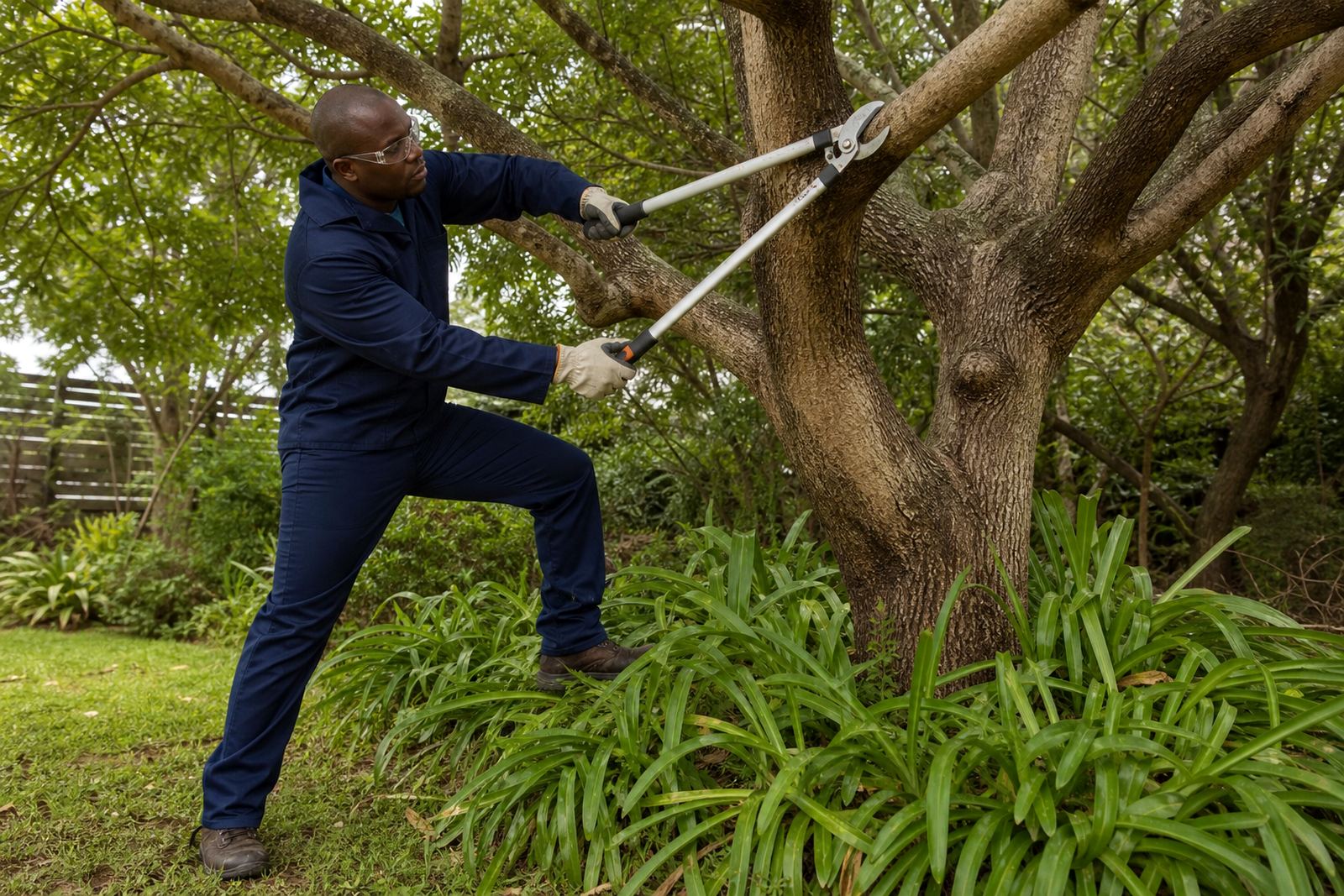
Thick branches are easier to manage when your body is positioned correctly. Stand close enough to the cut so the lopper arms open fully without overreaching. Keep both feet planted and use your shoulders and core, not just your hands. Short, rushed cuts often lead to poor control.
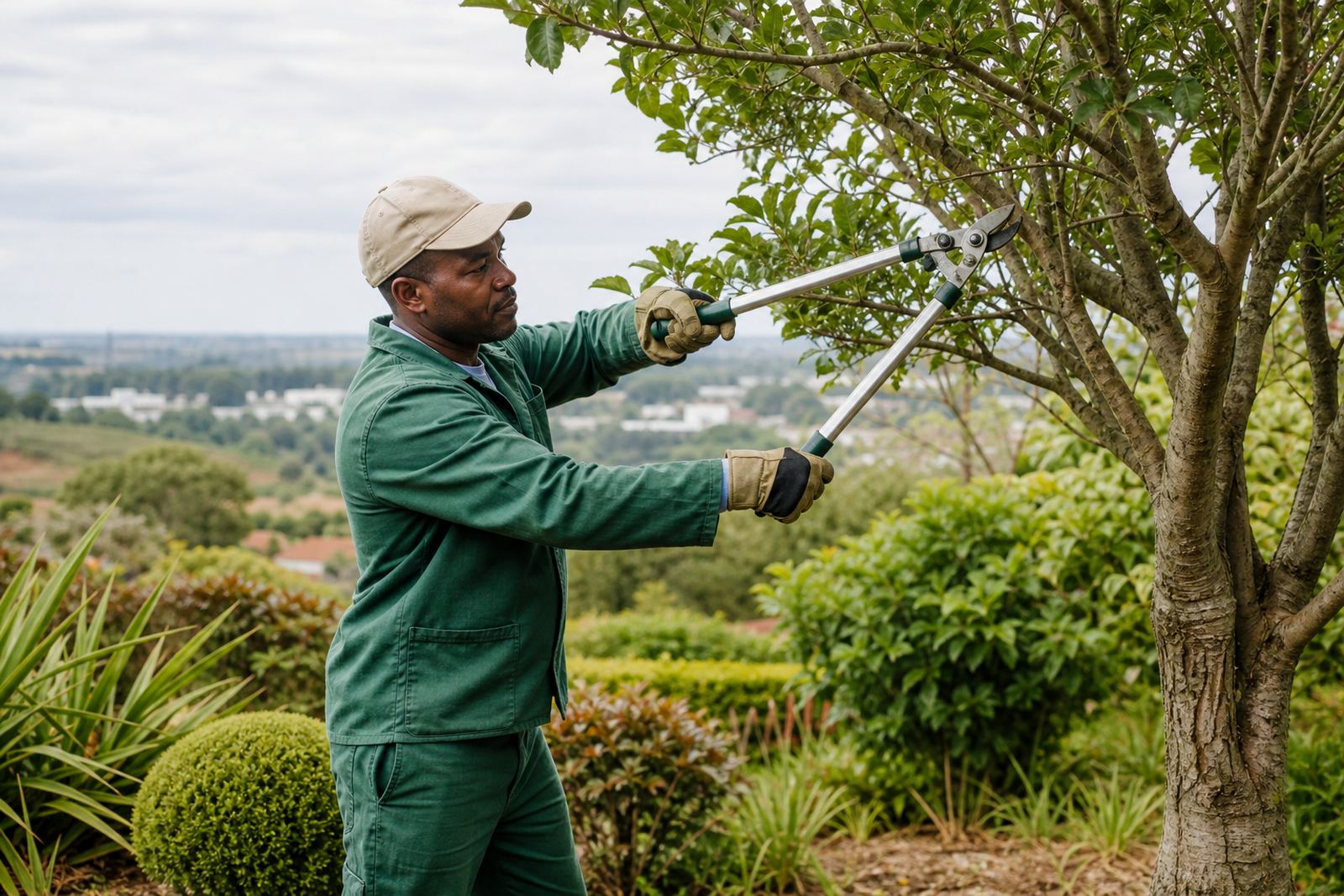
If you are working overhead, use a stable step platform and keep the branch at a comfortable height where possible. Long handles give extra leverage, which is useful on larger shrubs and small tree limbs. Just make sure the tool stays balanced, because long handles can become awkward in tight hedges or between walls and paving.
- Keep the branch at chest to waist height where possible
- Open the handles fully before the cut
- Use the handle length to gain leverage, not speed
Do not fight the wood when the cut is too heavy
If the branch is beyond the safe cutting range of your lopper, do not keep forcing it. You may bend the blade, loosen the pivot or damage the grips. In those cases, reduce the branch first by taking off smaller side shoots or cut back in stages. That is safer than pushing one heavy cut through in a single squeeze.
For landscapers working across Pretoria or Johannesburg, this approach also saves time on repeat tool repairs. A lopper that is regularly overloaded loses its edge faster and starts to feel stiff. If the tool needs a hard yank to close, it is already telling you something is wrong.
- Take thick branches down in stages if needed
- Stop before the tool starts to twist or bind
- Do not use a lopper as a substitute for a saw on oversized wood
Keep the blade sharp and the pivot clean
A sharp blade does most of the work. Dull blades crush the stem, leave fibres hanging and make each cut harder than it should be. After pruning, wipe off sap and dirt, especially after working near dusty driveways or around irrigation lines. In coastal towns, salt and moisture can cause rust quicker than many people expect, so drying the tool properly matters.
Check the pivot, spring and grips before the next session. If the pivot has play, the blades may not meet properly. If the spring is weak, the tool feels sluggish and can close unevenly. Regular servicing keeps the cut smoother and helps the tool last longer, particularly for gardeners who use their loppers every week.
- Wipe blades after use to remove sap and grit
- Dry tools fully before storage
- Check pivot tension and spring action regularly
A Pietermaritzburg example: clearing storm growth after summer rain
After heavy summer rain in Pietermaritzburg, many gardens throw up fast, woody growth on hibiscus, duranta and fence-line shrubs. A homeowner in Mkondeni may see branches thickening near a boundary wall and try to cut them all at once with a light hand tool. That is when the blade starts to chew instead of slice.
The better approach is to identify the thicker stems first, then use a properly sized lopper with clean, sharp blades. Cut from the outside in, remove crossing growth and leave the main framework stable. If the garden also needs hedge finishing, do the thicker wood first and the fine shaping last. It keeps the work tidy and prevents repeated stress on the tool.
For larger properties and regular maintenance teams, a fleet care plan can help keep tools ready between sites. That includes blade sharpening, pivot adjustment, spring replacement, rust removal and parts fitting when needed. If a tool starts to struggle, it is usually faster to service it than to keep fighting the same branch all afternoon.