Why balcony herbs need regular cutting
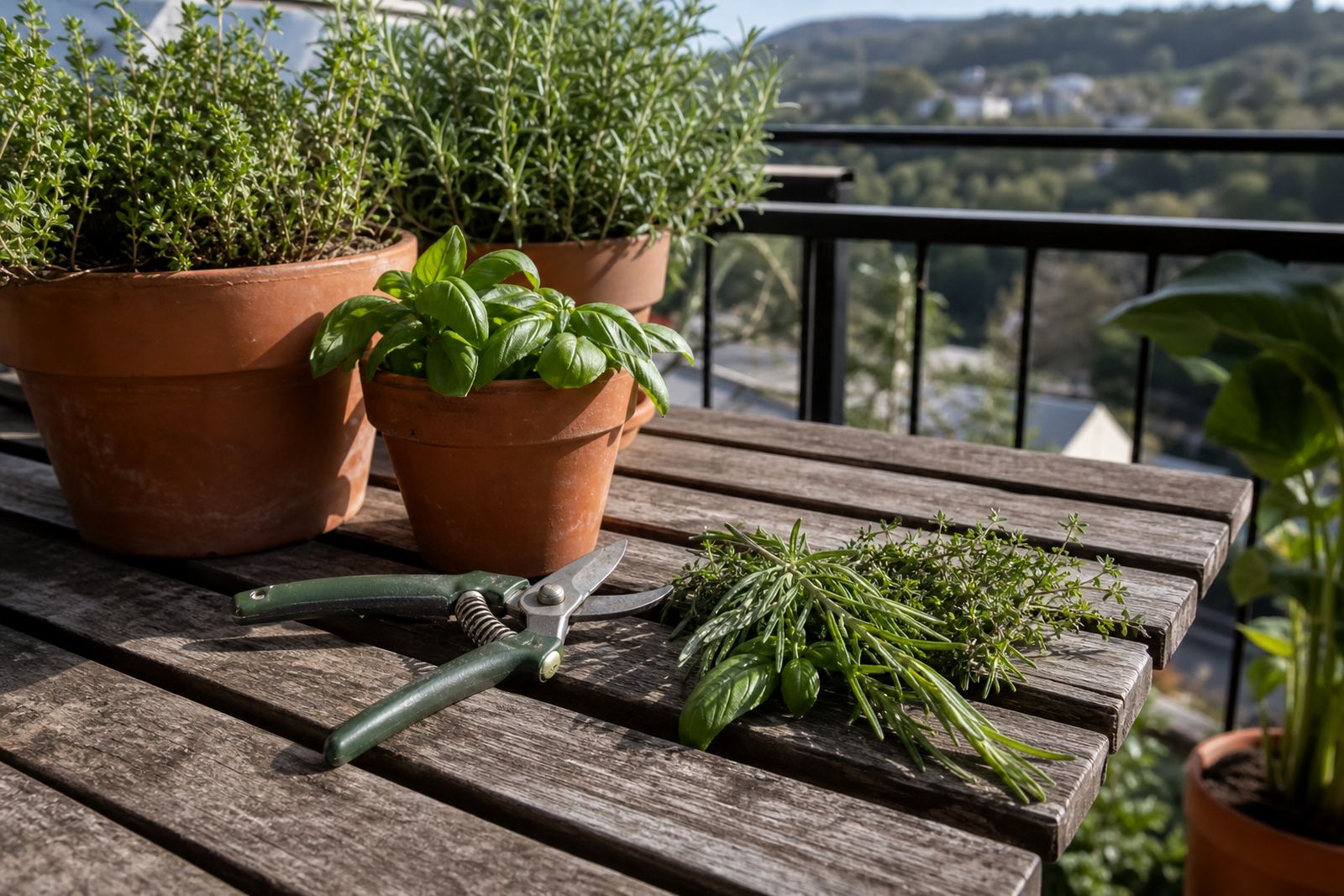
Potted herbs grow fast when they get enough sun, water and feed, but they can also turn leggy very quickly. On a balcony in Pietermaritzburg, the morning sun and afternoon heat can push new growth hard, then the plant throws energy into stems and flowers instead of leaves. That is why regular trimming matters more than a once-off hard cut.
Herbs grown in containers do not have the same root room as garden beds, so they recover best from small, frequent cuts. If you leave them too long, the lower stems go woody and the plant starts looking tired. A tidy trimming routine helps keep the shape compact, encourages fresh leaves, and makes the pot look neater too. It also makes harvest easier when you just want a few sprigs for supper.
For home gardeners and landscapers working with restaurant balconies, townhouse courtyards or apartment planters, the goal is simple: cut enough to stimulate new growth, but never so much that the plant is shocked. A clean cut is always better than a torn stem, and that is where a well-kept pair of pruning shears or small hedge tools comes in.
Match the cut to the herb type
Different herbs respond in different ways, so it helps to treat each one on its own terms. Soft herbs need frequent pinching and light trimming. Woody herbs need less frequent but more considered cuts. If you are growing a mixed herb tray, watch the growth habit of each plant rather than cutting everything the same way.
- Basil: Pinch above a pair of leaves to stop flowering and keep the plant bushy.
- Mint: Cut stems back hard enough to control spread, then remove weak growth.
- Parsley and coriander: Harvest outer stems first so the centre keeps pushing new leaves.
- Rosemary and thyme: Trim lightly, taking only soft tips and avoiding old woody parts.
- Chives: Cut the whole clump to a few centimetres above the soil for fresh regrowth.
A small cut made at the right point does more good than removing random leaves. When the herb starts to flower, leaf production usually drops. If you want the plant for cooking, cut early and often. If you leave it untended, the flavour can become sharper or the stems more fibrous, which is not ideal for frequent kitchen use.
Simple tools that make tidy cuts easier
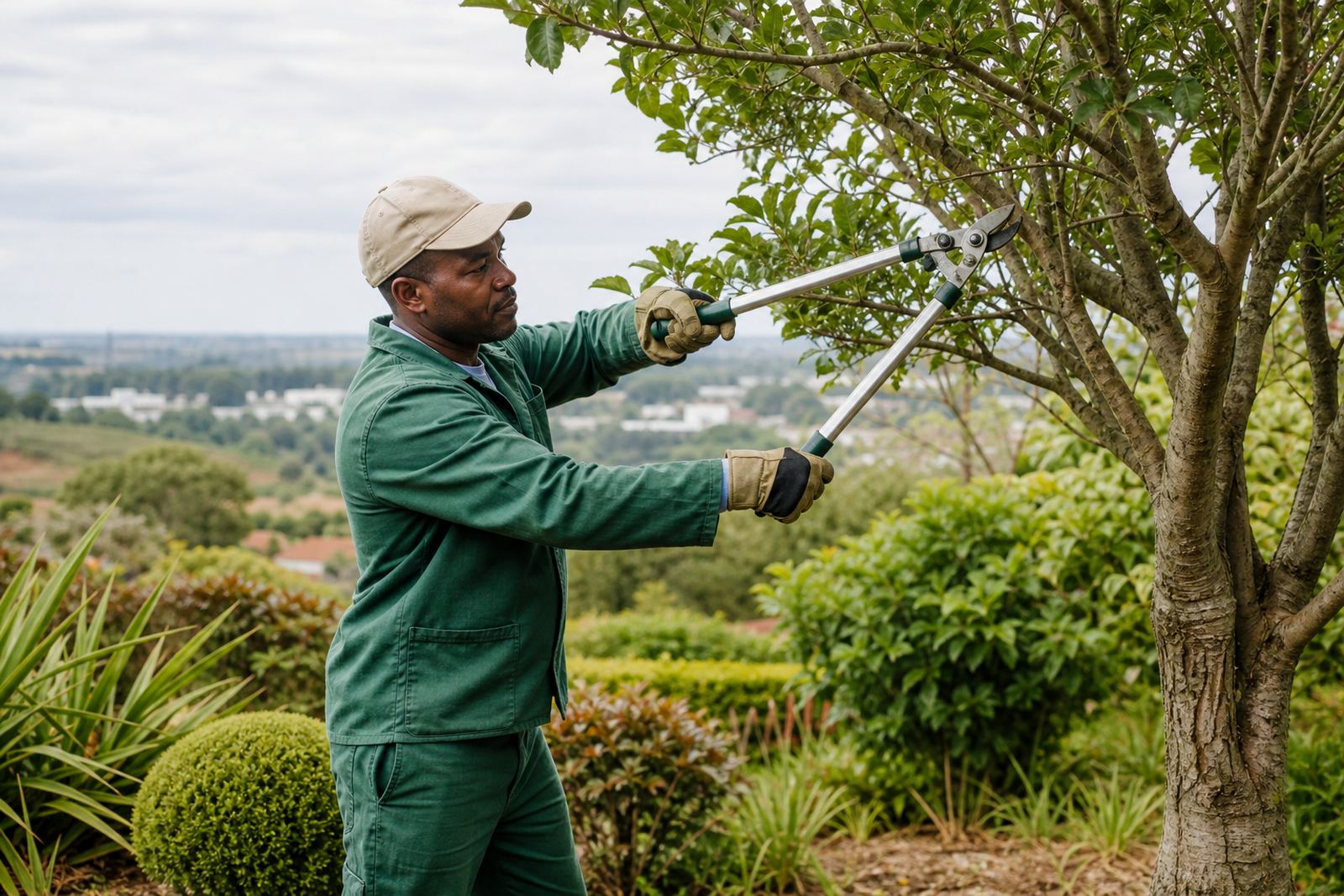
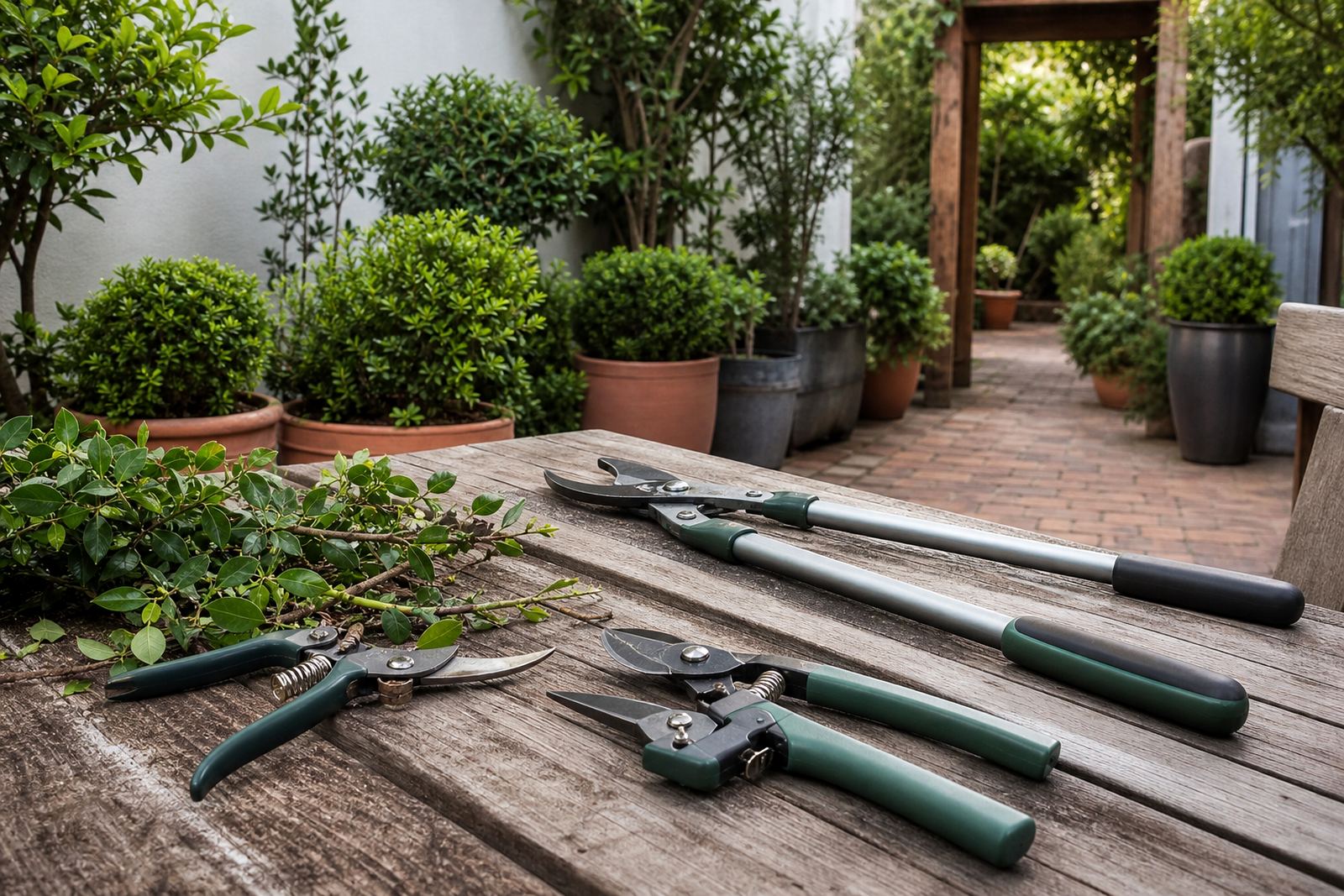
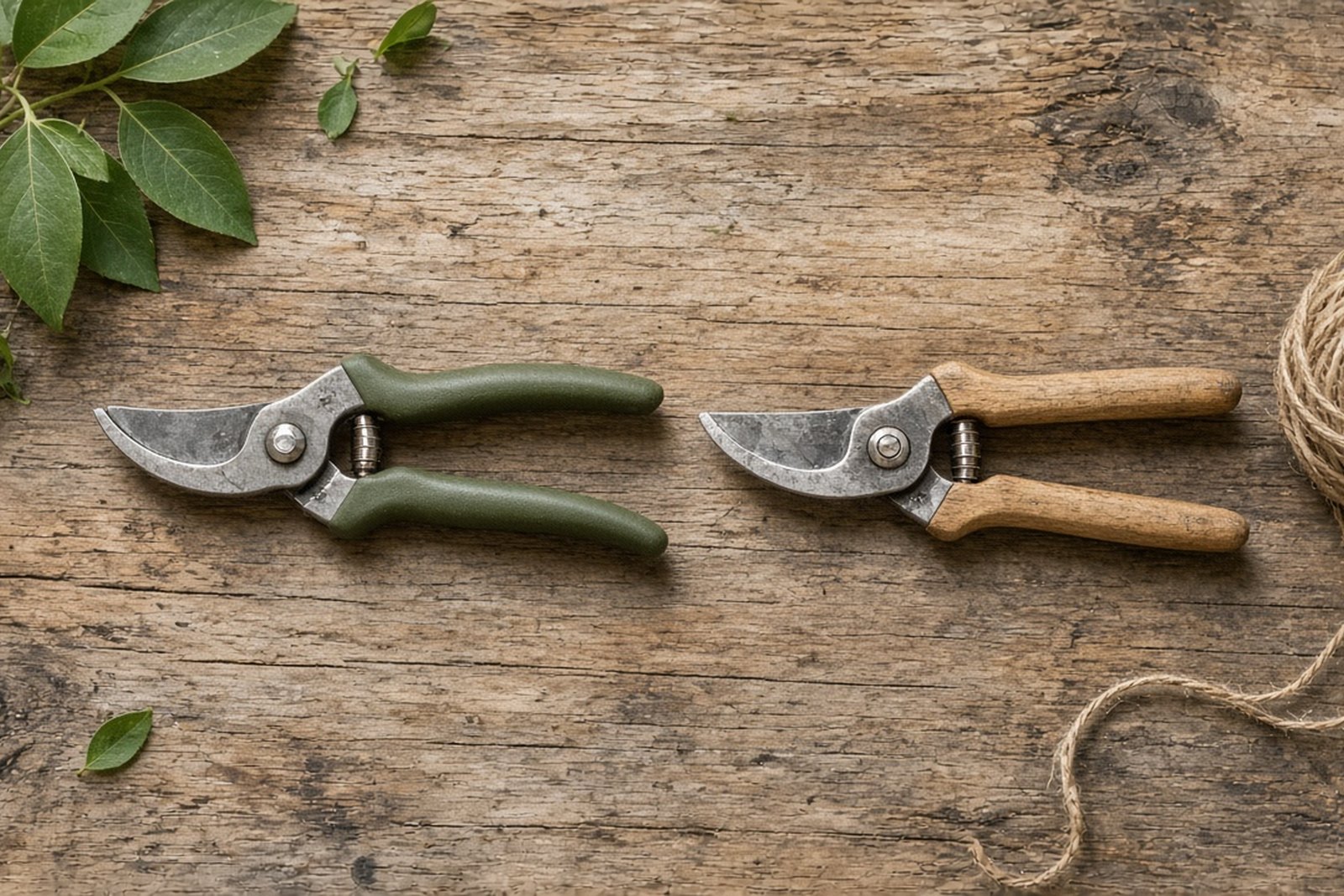
Good herb care does not need heavy equipment. In most balcony setups, a compact pair of pruning shears, fine loppers for larger planters and neat hedge tools for shaped herbs will handle the job. The key is sharp blades, comfortable grips and a size that suits close work around pots, railings and drip trays.
For small leaves and soft stems, a light hand tool gives more control than using garden scissors that crush the stem. For larger rosemary bushes in deep containers, a stronger cutter helps keep the cut clean without bruising the plant. If you are maintaining multiple pots for a rental block in Durban or a courtyard in Pretoria, having one clean, sharp tool set aside for herbs saves time and keeps the work tidy.
- Use sharp blades so the stem is sliced, not squashed.
- Wipe tools between plants to reduce the spread of disease.
- Choose a grip that stays comfortable when hands are wet.
- Store tools dry, especially in coastal humidity where rust starts fast.
- Check springs and pivots so the tool opens and closes smoothly.
Cut Tools Garden supplies pruning shears, loppers and hedge tools suited to this kind of careful work, with servicing support that includes blade sharpening, spring replacement, grip replacement and pivot adjustment. For gardeners who cut often, a quick service now and then keeps the tool action easy and the finish cleaner.
A weekly routine for small herb pots
The easiest way to keep balcony herbs productive is to make trimming part of the weekly watering routine. Look over the pots while the soil is still moist and the leaves are upright. Remove damaged tips, snip back any stem that is running too far, and harvest enough for the kitchen at the same time. This prevents the plant from becoming too tall and top-heavy.
In summer, especially during hot spells and load-shedding days when watering can be missed, herbs can dry back quickly in containers. After a stressed period, do not cut hard straight away. First water properly, let the plant settle, then remove only the worst material. In cooler months you can usually trim a bit more often because growth is slower and the plant keeps its shape better.
- Check soil moisture before cutting, not after.
- Remove yellow or damaged leaves first.
- Take no more than one third of the plant at a time.
- Rotate the pot so all sides get even light and growth.
- Harvest early in the morning when leaves are crisp.
This routine works well for balconies in Pietermaritzburg, where rain, sun and wind can change from one week to the next. It also suits larger terrace planters in Cape Town where salt air and coastal breeze can dry leaves out faster than expected. Little, regular cuts keep the pot looking cared for without making the herbs look stripped back.
How to avoid woody stems and bare centres
One of the most common balcony herb problems is a plant that looks full from above but bare in the middle. This usually happens when the gardener only harvests the outer tips and leaves the centre alone. Over time the inner stems shade out and the plant becomes patchy. The answer is to cut above active leaf nodes and encourage branching closer to the base.
When trimming basil, mint or lemon balm, look for a pair of leaves below the cut and take the stem just above it. That tells the plant where to push new growth. With rosemary and thyme, keep the plant in shape by trimming soft stems often, rather than trying to force old hard wood into new leaf growth. Once those stems are too woody, they do not recover well.
If the herb has become too tall for the pot, a staged reduction is safer than one severe chop. Cut back a little, wait for new shoots, then reduce again later. This gentler method is especially useful for plants in shallow balcony boxes where roots are already under pressure. It keeps the plant alive and tidy instead of leaving it shocked and thin.
When to replace, service or sharpen your cutting tools
Herb cutting is only tidy when the tool is in good condition. If you notice crushed stems, sticky blades, rust marks or handles that do not sit comfortably in the hand, the tool needs attention. A sharp edge should glide through soft stems without tearing them. When it does not, the plant takes longer to recover and the cut looks ragged.
Cut Tools Garden supports South African gardeners with blade sharpening, secateur servicing, lopper servicing, hedge shear servicing, spring replacement, grip replacement, pivot adjustment, rust removal, deep cleaning, parts fitting, tool inspections and fleet care plans. That is useful for home gardeners as well as landscapers who work across Durban, Johannesburg, Pretoria, Cape Town and Gqeberha, where equipment gets used hard and often.
Keeping a small herb garden neat is mostly about rhythm: observe, cut lightly, clean the tool, then let the plant respond. When that routine is in place, the balcony stays green, the herbs stay useful and the pots do not get untidy by midseason.