What waterwise garden care calls for
Waterwise planting is usually built around slower growth, tougher leaves and a tighter watering routine. That means the work changes too. Instead of constant mowing and heavy shaping, you are mainly thinning, cutting back spent growth, keeping paths clear and stopping shrubs from becoming woody at the base. In Pietermaritzburg, Durban and other humid areas, you also have to stay ahead of fast regrowth after summer rain, while inland gardens often deal with dry, brittle stems and dust that can wear tools down quicker than expected.
For this kind of maintenance, the right hand tools matter more than most people think. A sharp blade gives a clean cut that heals quicker, which is useful when plants are under water stress. Good grip design also helps if you are working through long sessions, or if your hands get sore from repeated snipping. If you manage a small home yard in Howick or a larger commercial site in Johannesburg, the aim is the same: keep the garden neat without overcutting and without wasting time on tools that fight you.
The everyday tool set for hardy shrubs
A practical waterwise kit does not need to be complicated. Most properties need a mix of fine cutting for soft growth, stronger leverage for thicker stems and a shearing tool for shaping hedges and boundary lines. For landscapers, it also helps to keep a few spare tools in the truck so one blunt blade does not delay the whole job. In coastal areas such as Durban and Gqeberha, rust resistance and regular cleaning are especially important because humidity and salt air can shorten tool life.
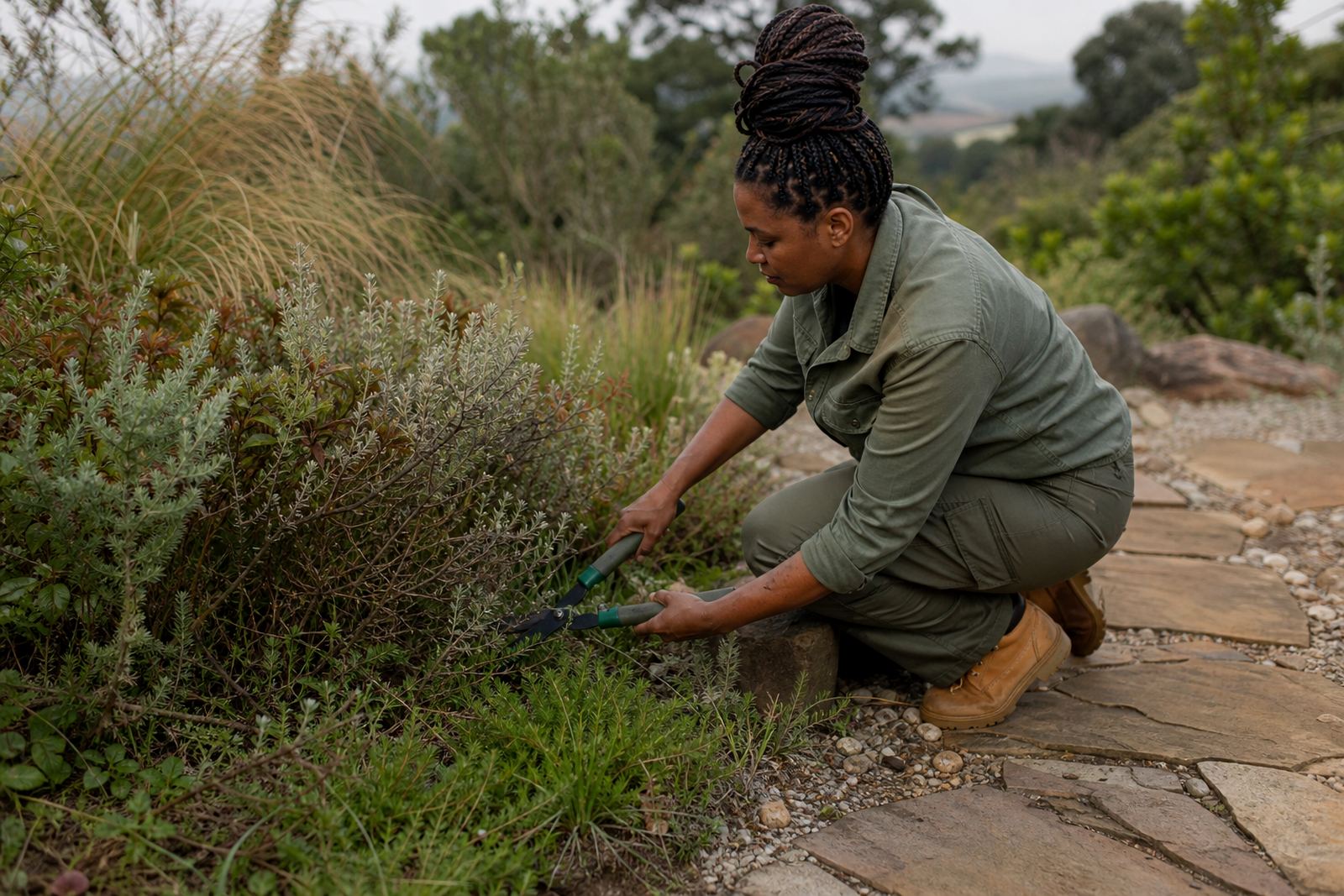
- Secateurs for deadheading, soft pruning and light shaping around shrubs and herbs.
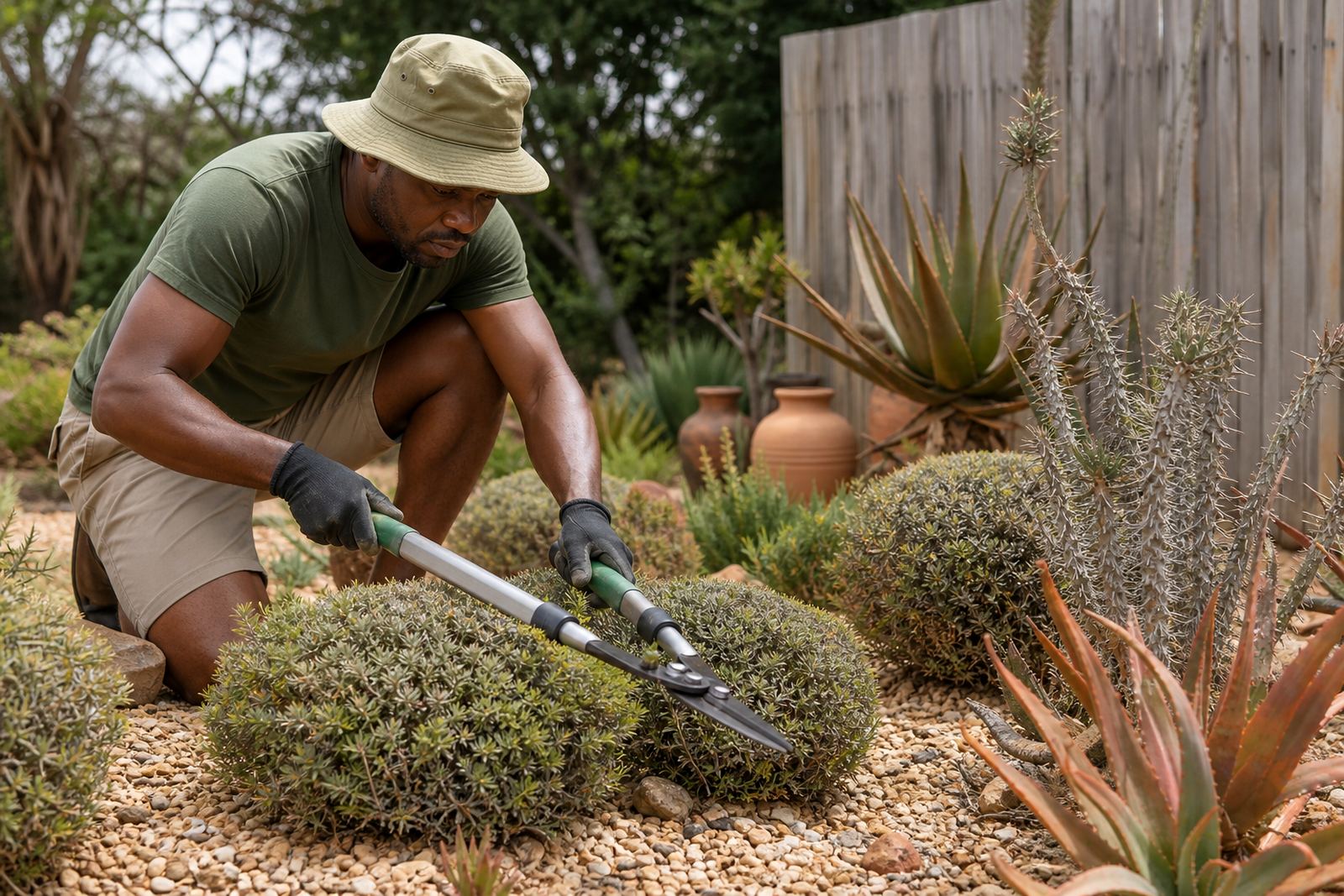
- Loppers for thicker branches, woody growth and harder to reach stems at the back of beds.
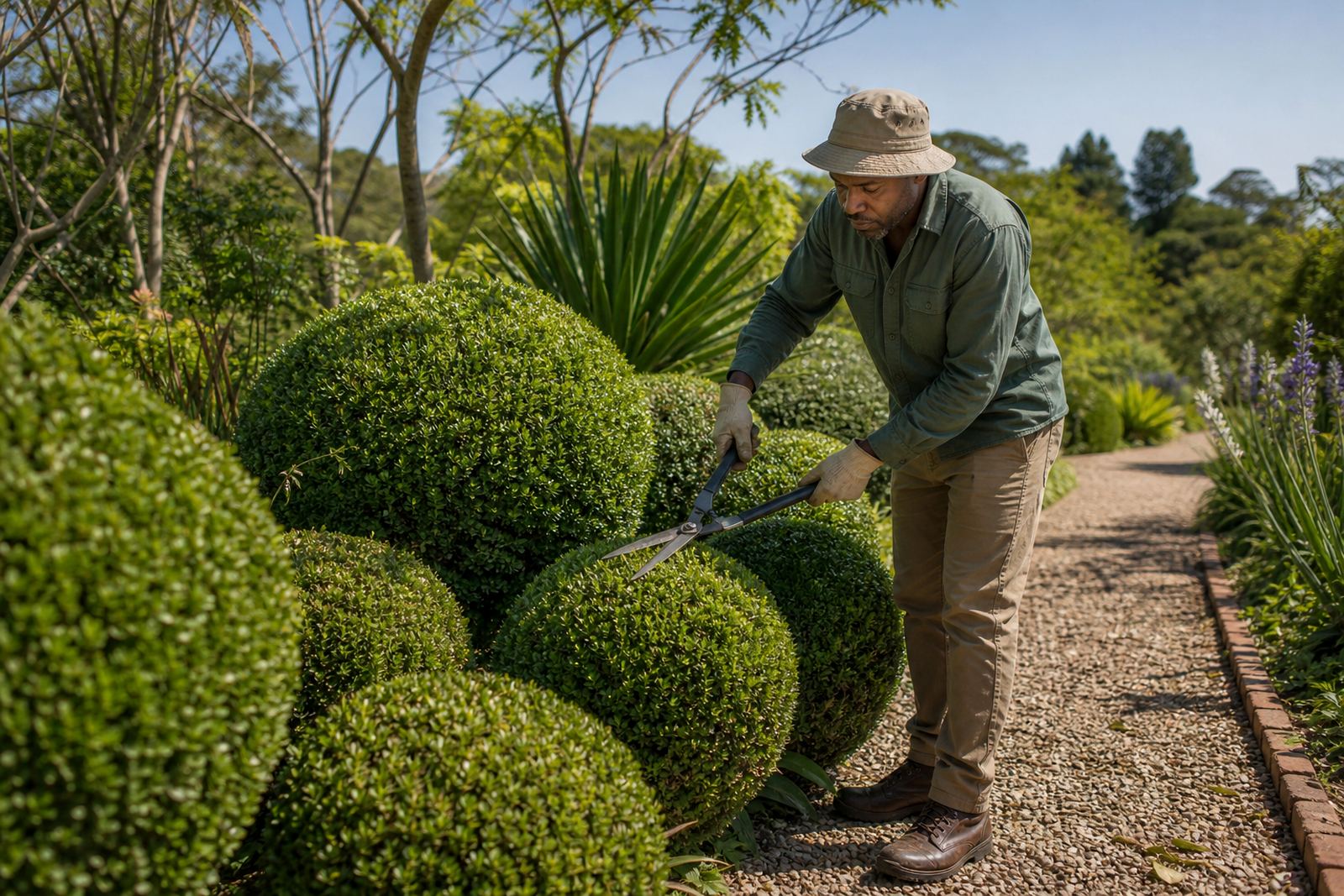
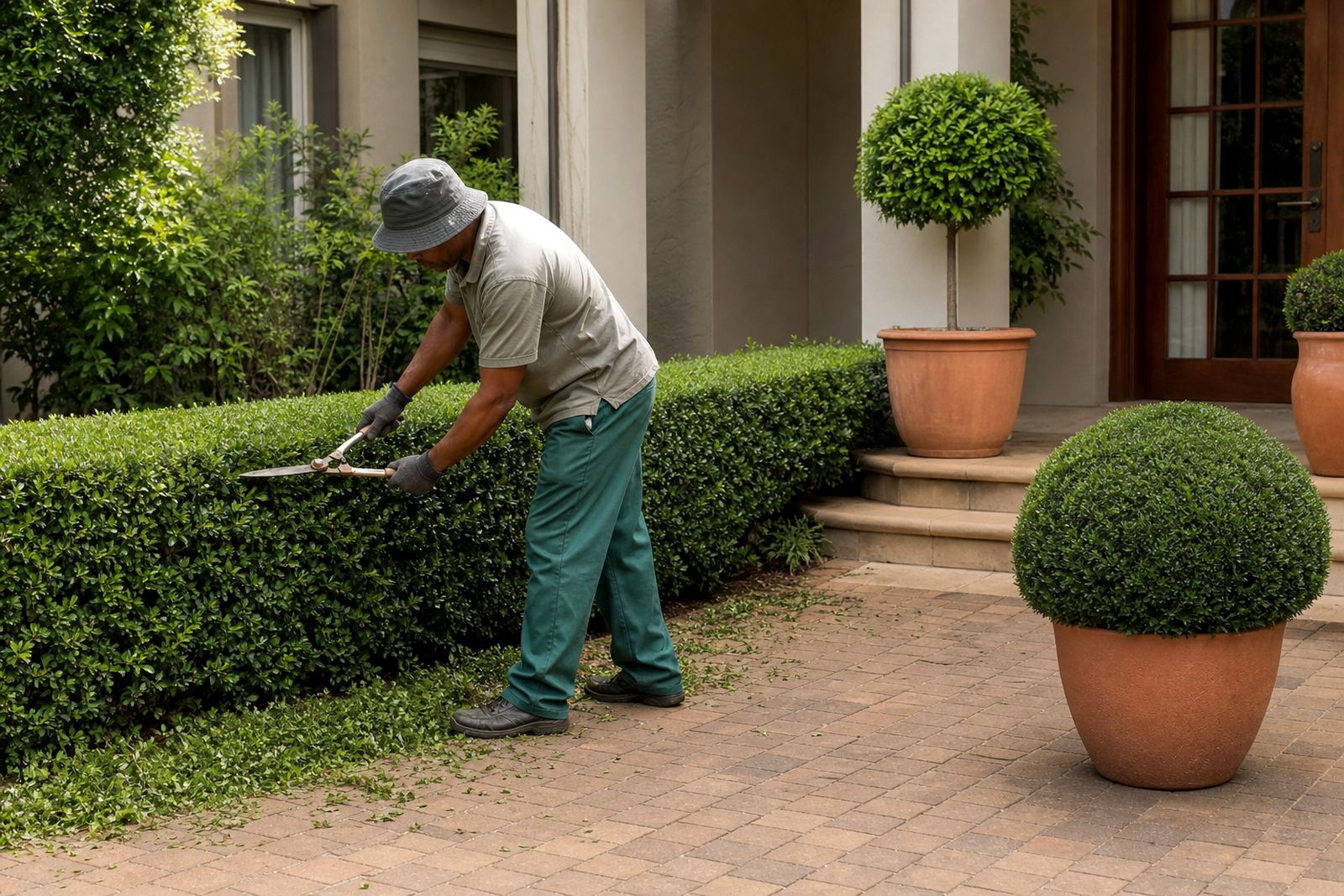
- Hedge tools for straight lines, formal edges and controlled trimming of screening plants.
- Replacement springs and grips to keep frequently used tools comfortable in daily service.
- Pivot adjustment and blade servicing for smoother action when tools start binding or loosening.
A well matched set saves time. It also prevents the common habit of using one tool for every job, which usually leads to rough cuts and unnecessary strain on the wrists and shoulders.
Planning the layout before you start cutting
Good waterwise maintenance begins with the layout. Walk the garden and mark the plants that need regular shaping, the ones that should be left to grow naturally, and the areas where access is tight. Around driveways, paving and municipal verges, you may need cleaner vertical lines to keep growth from spilling onto walkways or blocking sight lines. In suburban Pietermaritzburg or Pretoria, that can make the difference between a tidy finish and a garden that looks unmanaged after only two weeks.
It helps to split the site into zones: light touch areas, medium maintenance beds and hard cutback areas. Keep your best cutting tools for healthy growth and reserve stronger loppers for older wood. If you are working around drip lines, garden borders or mulched beds, plan the cut path before you start so you do not damage irrigation fittings or drag debris through the planted area. A little planning also means less backtracking, which is useful when the day is hot and the crew is short-handed.
- Start with dead wood and crossing stems before shaping the plant line.
- Cut back from the outer edge first, then step in if more detail is needed.
- Keep the finished height consistent across repeated beds or hedge runs.
- Check for hidden wire, irrigation or garden lighting before using loppers near the base.
Common mistakes in dry-tolerant gardens
One of the biggest mistakes is overcutting. Waterwise shrubs often look sparse after a hard trim, and if you remove too much at once the plant may struggle to recover, especially in the hotter months. Another mistake is leaving dull blades in service too long. A crushed stem takes more effort to heal than a clean slice, and the plant can end up looking ragged even when the work was done carefully. Dirty blades are another issue because they move sap, grime and rust from one plant to another.
People also forget that pruning needs to change with the season. In rainy months, growth may be soft and fast, so regular light trimming is better than one heavy cut. In dry spells, it is smarter to reduce stress and only remove what is necessary. If you are in a coastal zone or near industrial dust, give the tools a proper wipe-down after each use. That small habit can add months to the life of the blade and keeps the action smoother too.
- Do not trim too deeply into old wood unless the plant is known to reshoot well.
- Do not use blunt hedge tools on thick stems that should be cut with loppers.
- Do not store damp tools in a closed crate after rain or early morning work.
- Do not ignore loose pivots or worn grips, because the strain adds up quickly.
Budget ranges for home gardens and landscape crews
Budget depends on how often the tools are used and whether they are for a single home garden or a team that works across multiple sites. For a homeowner maintaining a small drought-tolerant garden, a sensible starter setup might be R350 to R900 for a basic pruning combination, depending on the size and comfort level needed. If you want a stronger set for a larger yard, thicker shrubs or regular hedge lines, expect around R900 to R1 800 for a more complete mix.
For landscapers and estate teams, the spend usually shifts toward durability and service support. A working kit for repeated weekly use can sit in the R1 800 to R4 500 range, especially if you factor in replacement springs, grip parts and periodic servicing. Fleet Care Plans make sense when several crews are sharing the load because they help keep tools inspected, sharpened and ready instead of failing halfway through a job in Hilton or Cape Town. Spending a little more upfront often reduces downtime later, which is usually where the real cost hides.
Keeping tools sharp in humid and dusty conditions
Maintenance matters just as much as the initial purchase. In KwaZulu-Natal humidity, blade edges can lose their bite if they are not cleaned and dried properly. In inland dust, moving parts can clog up and make the tool feel stiff or uneven. Regular blade sharpening, rust removal and deep cleaning keep the cutting action neat and reduce fatigue on the hands. That is especially helpful for gardeners who spend long mornings shaping beds before the heat builds up.
Cut Tools Garden offers servicing that suits the way South African gardens are actually maintained. That includes secateur servicing, lopper servicing, hedge shear servicing, spring replacement, grip replacement, pivot adjustment, parts fitting and tool inspections. For teams that need a dependable schedule, the aim is simple: less force, cleaner cuts and fewer delays. When tools are looked after properly, they are easier to use, safer to handle and more likely to last through the seasons.