When topiary work starts to show its value
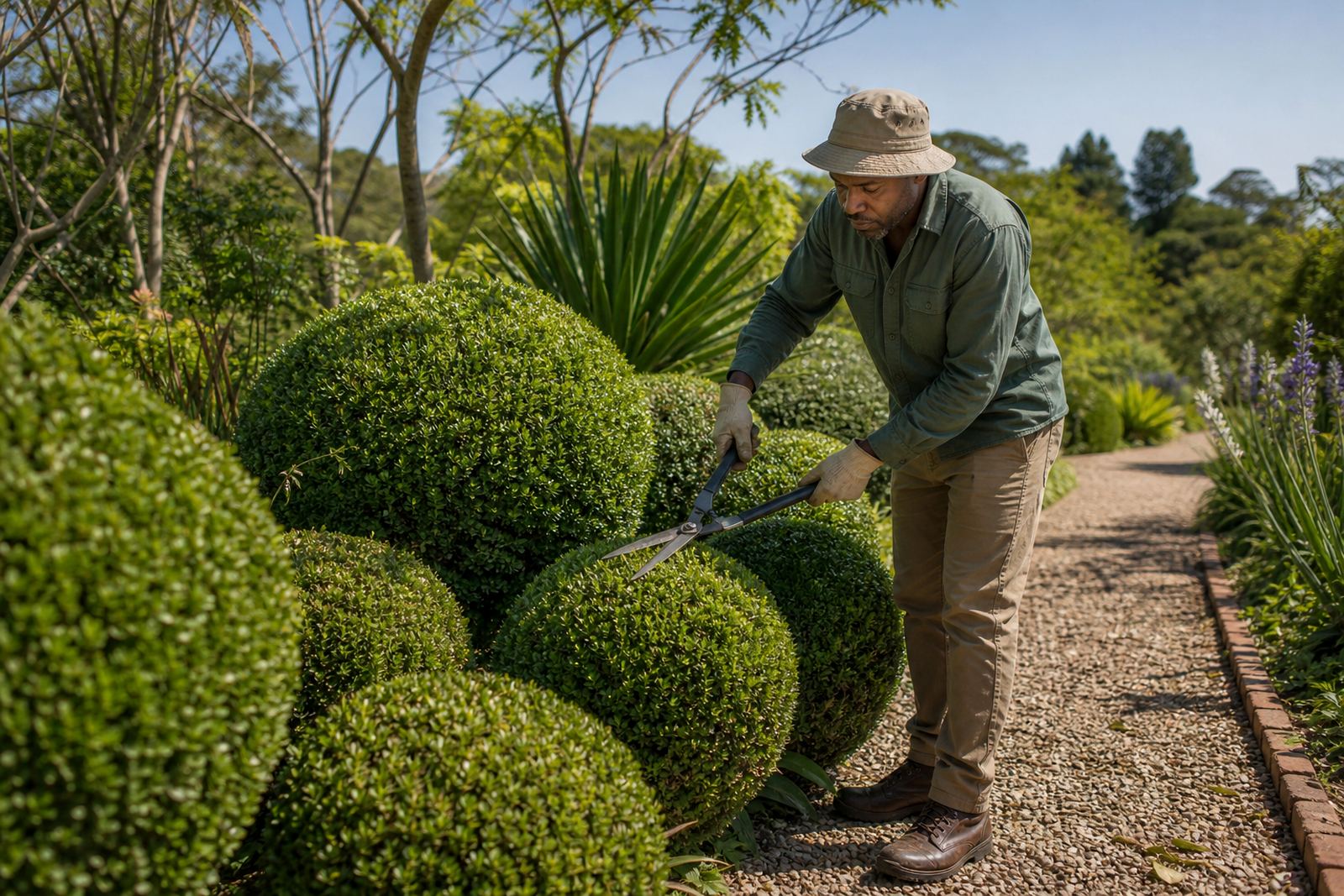
Topiary trimming is not the same as general hedge cutting. A clipped sphere, cone or spiral needs small controlled cuts, especially on fine growth at the outer edge. In Pietermaritzburg gardens, where summer growth can push hard after rain and winter pruning is often done between dry spells, the right tool setup saves time and keeps the shape clean.
Home gardeners usually start with one or two shrubs near a patio or entrance. Landscapers may be shaping several beds in a body corporate garden, school grounds or a municipal verge where neat lines matter every week. For that kind of work, comfort matters as much as blade sharpness. If your hands tire after a few minutes or the pivot feels stiff, the finish will show it.
Topiary trimming also comes with local conditions to think about. In coastal areas like Durban, humidity can encourage rust if tools are not dried properly. In Johannesburg and Pretoria, dry air and dust can build up in moving parts. A good trimming routine keeps the plant healthy and the tool ready for the next cut.
A practical tool set for clipped forms
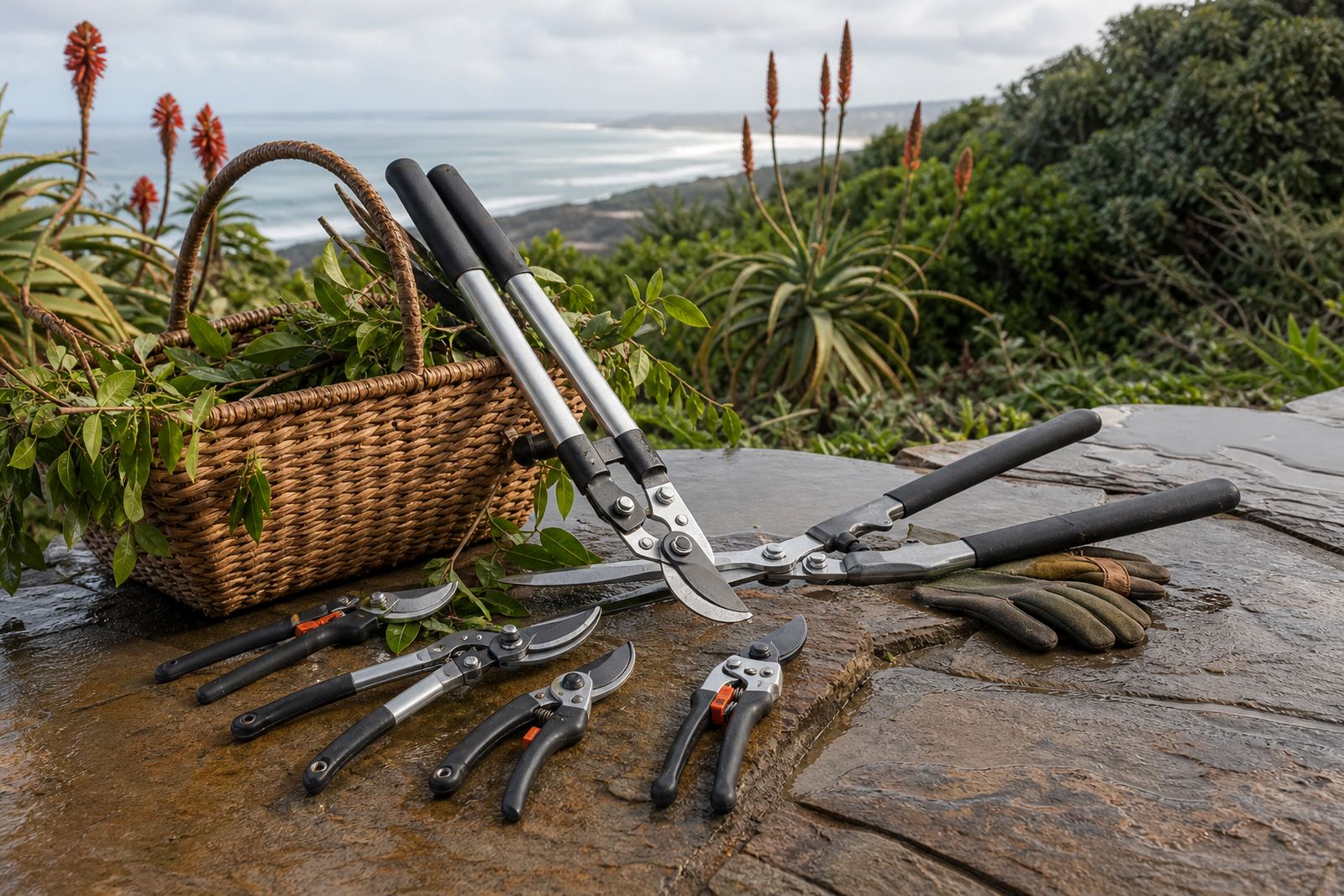
For spheres, cones and shaped shrubs, most teams use a simple kit rather than one oversized tool. Fine trimming is usually done with hand pruning shears. Slightly thicker shoots call for loppers. Hedge tools are useful where the form needs a broader sweep, but they must be handled carefully so you do not flatten the shape.
At Cut Tools Garden, the typical topiary set for South African use includes cutting tools that are easy to handle for long sessions and strong enough for regular maintenance. If the garden has mature shrubs with hard stems, add a lopper with a longer handle so the cut can be made without forcing the wrist. For repeated touch ups, keep a spare pair of shears on hand for the team, especially on larger properties where time is tight.
- Light shaping: fine pruning shears for outer growth and detail work
- Mid growth: loppers for thicker stems that sit inside the shape
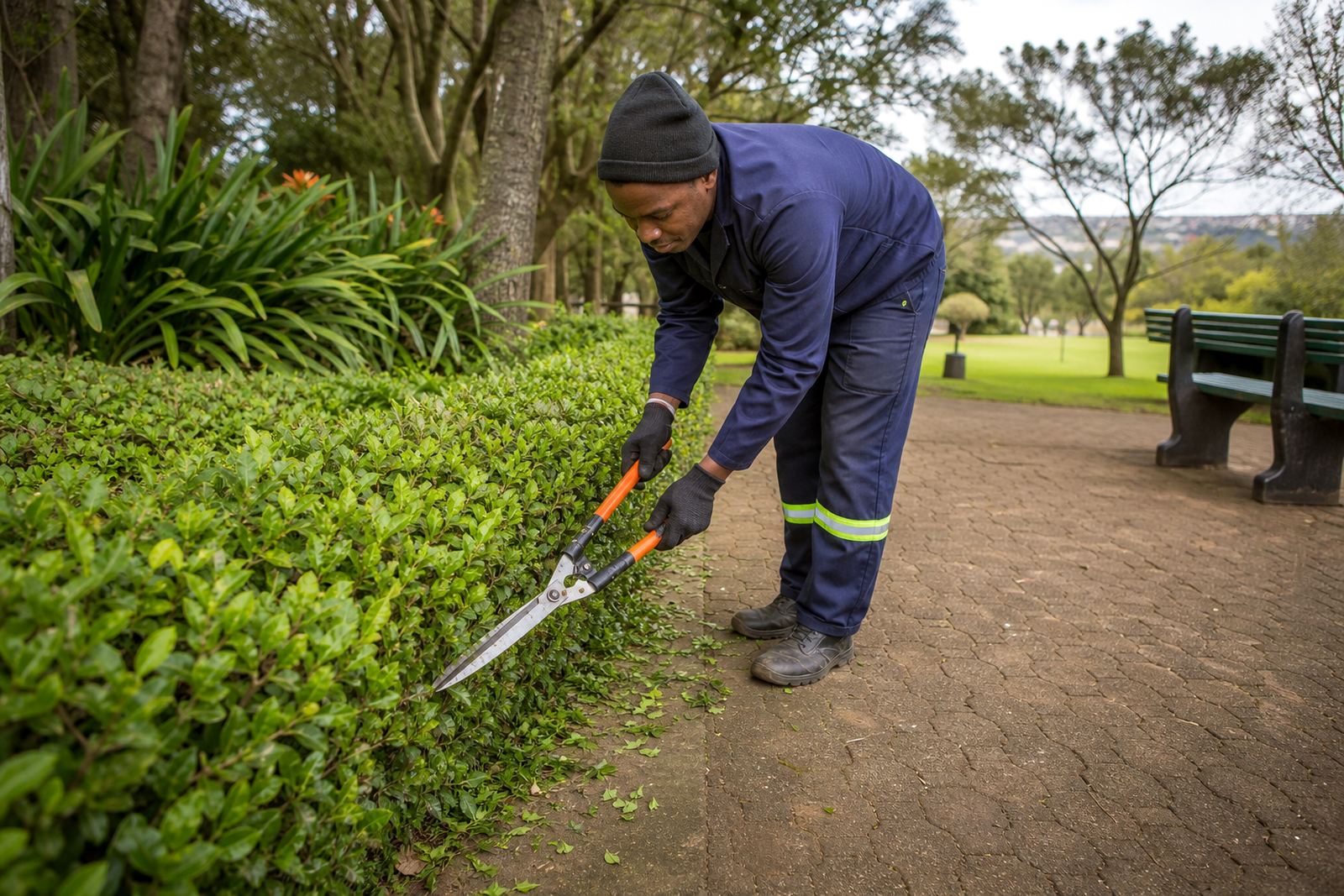
- Long runs: hedge tools for gentle planing, not hard cutting
- Support care: sharpening, pivot adjustment and spring replacement
- Field use: spare grips and a cleaning cloth for dusty or wet sites
Layout planning for neat lines and even balance
Before the first cut, walk the line and look at the plant from three sides. Topiary shows mistakes quickly because the eye picks up uneven curves, narrow shoulders and flat patches. Marking the intended height and width with a light guide can help, especially on paired shapes near a gate or driveway.
For cone forms, work from the top down and keep the base slightly wider so the plant gets enough light. For spheres, trim in small passes around the outside rather than cutting one face too hard. Decorative shrubs with multiple stems need special care around the centre, where airflow and light can be blocked if the shape becomes too dense.
On larger properties, it helps to plan the route before starting. Trim the most visible shapes first, then move to side beds and back corners. That keeps the finish consistent across the site and prevents a rushed final pass. In busy retail parks or sectional title gardens, the order of work matters because access may be limited by parking, residents, or municipal timing rules.
- Check the shape from a distance before each round of cuts
- Use a light touch on new growth to avoid bald patches
- Keep the bottom slightly wider than the top for healthy light access
- Trim in stages rather than trying to correct everything at once
Common mistakes that spoil the finish
The biggest mistake is using the wrong tool for the thickness of the stem. If a stem is too hard for shears, forcing it will crush the cut and leave the plant looking ragged. Another common issue is cutting too deeply into old wood on a shrub that does not respond well to heavy reduction. That can leave gaps that take months to recover.
Dirty blades also cause trouble. Sap, dust and rust slow the cut and can move disease between plants. In coastal gardens, a tool left wet in a shed can go rusty in a few days. In dry inland areas, fine dust and sand can work into the pivot and make the action stiff. A quick wipe down after use saves money later on.
People often forget hand comfort too. If the grip is too narrow or the spring is tired, the user starts squeezing harder and the cut becomes uneven. That is where servicing helps. A simple adjustment or spring replacement is often cheaper than buying new tools straight away.
Serving home gardeners and landscape crews across South Africa
Cut Tools Garden supplies garden pruning shears, loppers and hedge tools from Mkondeni, Pietermaritzburg to home gardeners and landscapers in Durban, Johannesburg, Pretoria, Cape Town and Gqeberha. Local stockists in Pietermaritzburg, Hilton and Howick help smaller buyers get the right tool without waiting too long, while larger teams often place ongoing orders for site work and fleet care plans.
For clients who use tools every week, our servicing support covers blade sharpening, secateur servicing, lopper servicing, hedge shear servicing, spring replacement, grip replacement, pivot adjustment, rust removal, deep cleaning, parts fitting and tool inspections. That matters on larger contracts where a dead spring or a loose pivot can slow the whole crew. A serviced tool also cuts cleaner, which is better for plant recovery after trimming.
If you manage an estate, a school, a retail property or a private garden with shaped shrubs, budget for both tools and upkeep. Basic hand shears for light topiary work can start around R250 to R600. Good quality loppers often sit between R450 and R1,200. Hedge tools for regular shaping may range from R350 to R1,500 depending on size and comfort features. Servicing is usually far cheaper than replacement, and most clients spend a modest amount each season to keep the kit sharp and ready.
A sensible budget for trimming, maintenance and replacements
Topiary work does not need a huge tool budget, but it does need planned spending. A homeowner with three to six shaped shrubs might only need one pair of shears and one lopper, with an annual service and an occasional spring or grip replacement. A landscaping team working across multiple sites will need extra stock, regular inspections and a few backup tools for busy weeks and load-shedding delays that interrupt workshop time.
As a rough guide, set aside R500 to R1,500 for a basic home topiary kit, R2,000 to R5,000 for a small professional set, and more if you want spare units for a crew. Add a maintenance allowance of around R150 to R450 per tool service depending on the repair needed. If a hedge tool is badly rusted or blades are chipped, replacing parts early is usually better than pushing it into another season.
For the best result, choose tools that match the plant size, keep the blades clean and do the shaping in steady passes. That gives you neater lines, less strain on the hands and a finish that holds its form longer between trims. It also makes every round of maintenance easier, which is what matters when the work is done week after week.