Why coastal gardens need different tool care
In Durban, Gqeberha and other coastal areas, pruning tools face a mix of humidity, salt spray and fine dust that gets into the pivot and spring. If you leave sap on the blade or store tools in a damp garden shed, rust starts quickly and cutting edges go blunt sooner than expected.
For home gardeners and landscaping teams, that means the right tool is only half the job. The other half is keeping the blades clean, lightly oiled and stored somewhere dry after use. On busy properties near the sea, this can mean the difference between a clean cut and crushed stems that take longer to heal.
- Salt air speeds up corrosion on exposed metal parts
- Moist air can cause grips and springs to deteriorate faster
- Sandy gardens push grit into moving joints and blade faces
- Fresh cuts need sharper blades so plants recover properly
Typical pruning kit for coastal yards
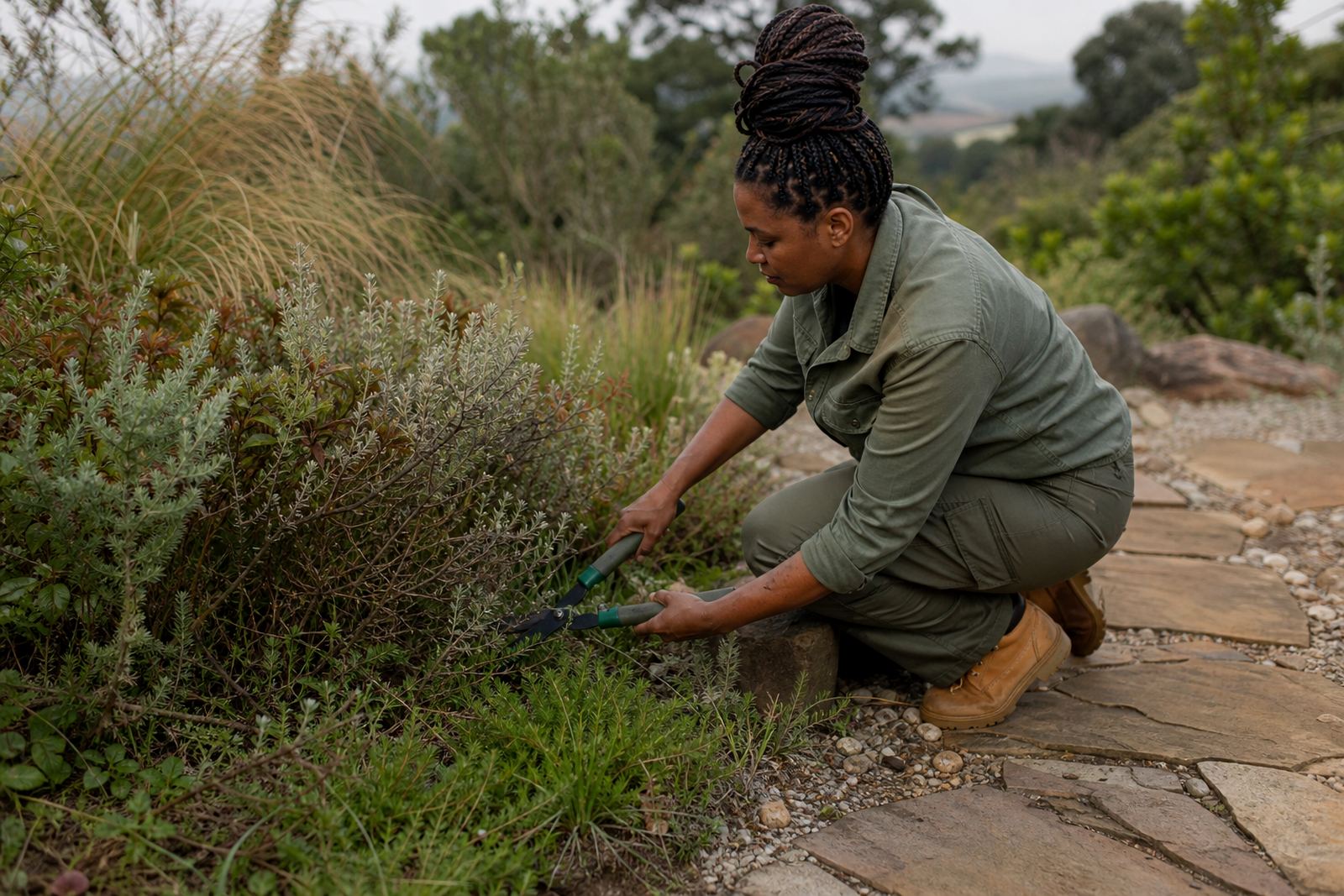
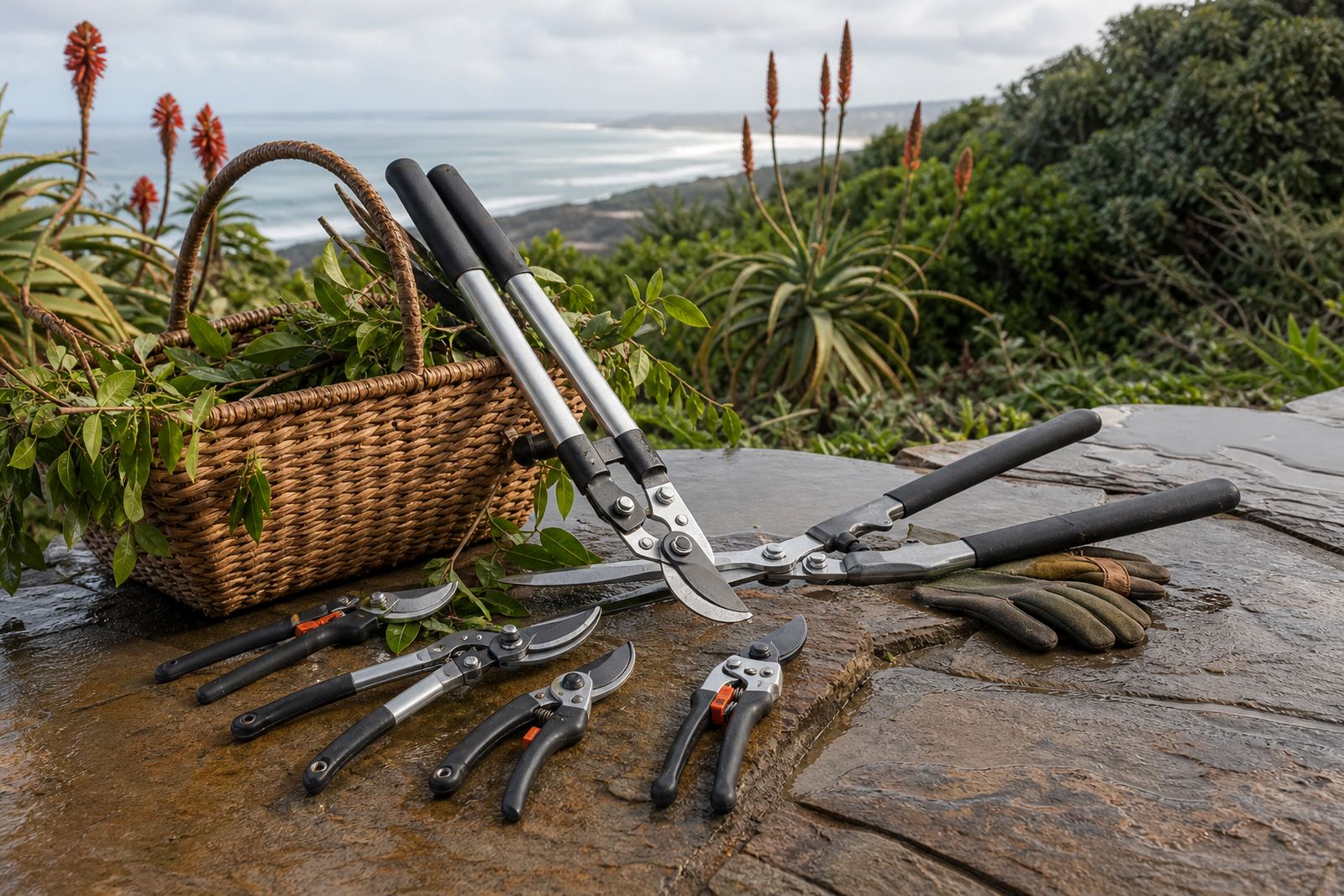
A practical coastal kit usually starts with a good pair of secateurs for light stems, a lopper for thicker branches and hedge tools for shaping informal screens or formal borders. For many gardens in Pietermaritzburg's warmer pockets or on the coast, that one set handles most routine work from roses and fruit trees to clipped hedges and overgrown shrubs.
If you manage a larger property or a body corporate garden, it helps to keep a second set for heavier work. That way the cleaner tools stay available for fine pruning, while the workhorse set handles dense growth, older wood and tougher stems without slowing the day down.
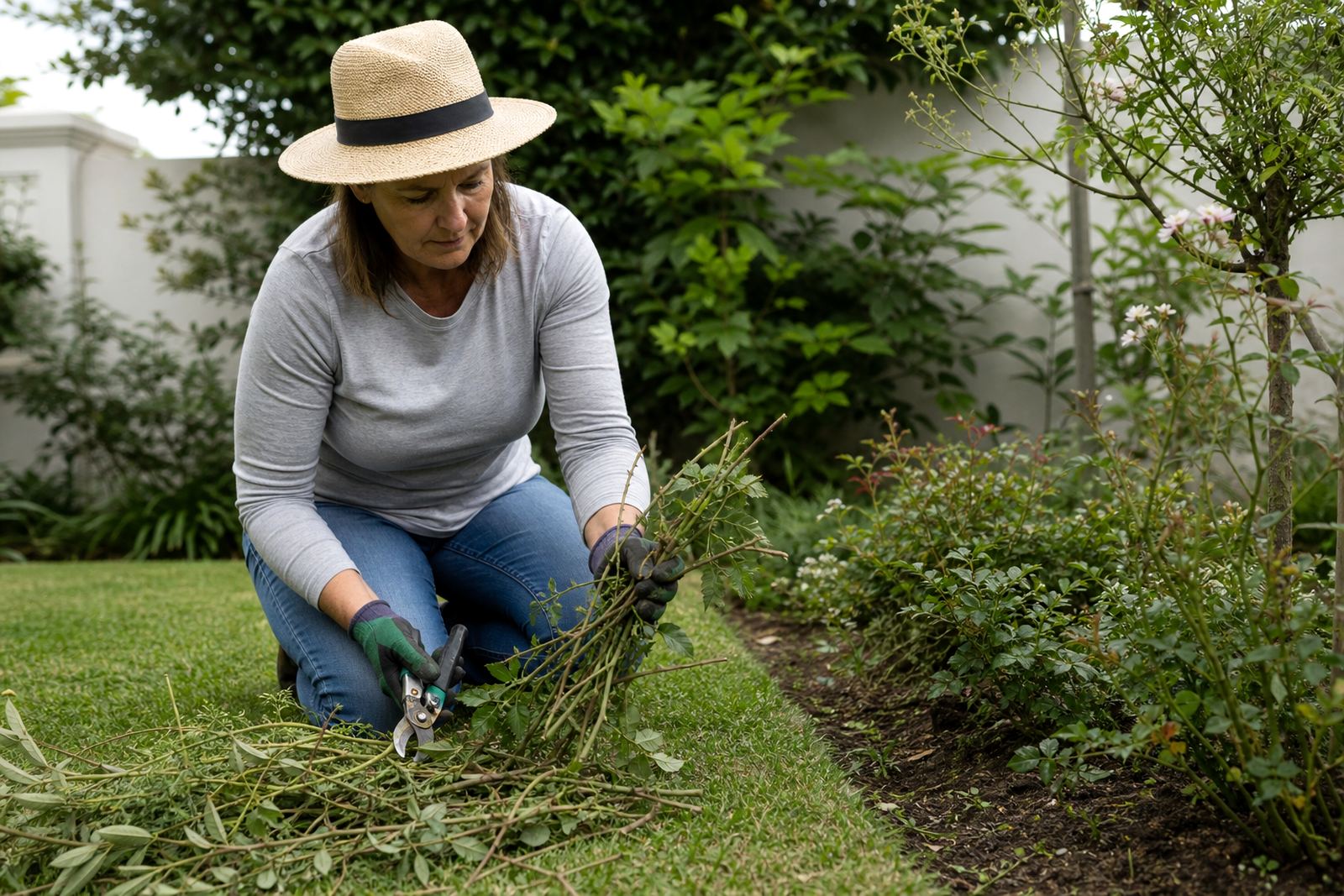
- Secateurs for stems up to about 15 mm
- Loppers for branches around 20 mm to 35 mm
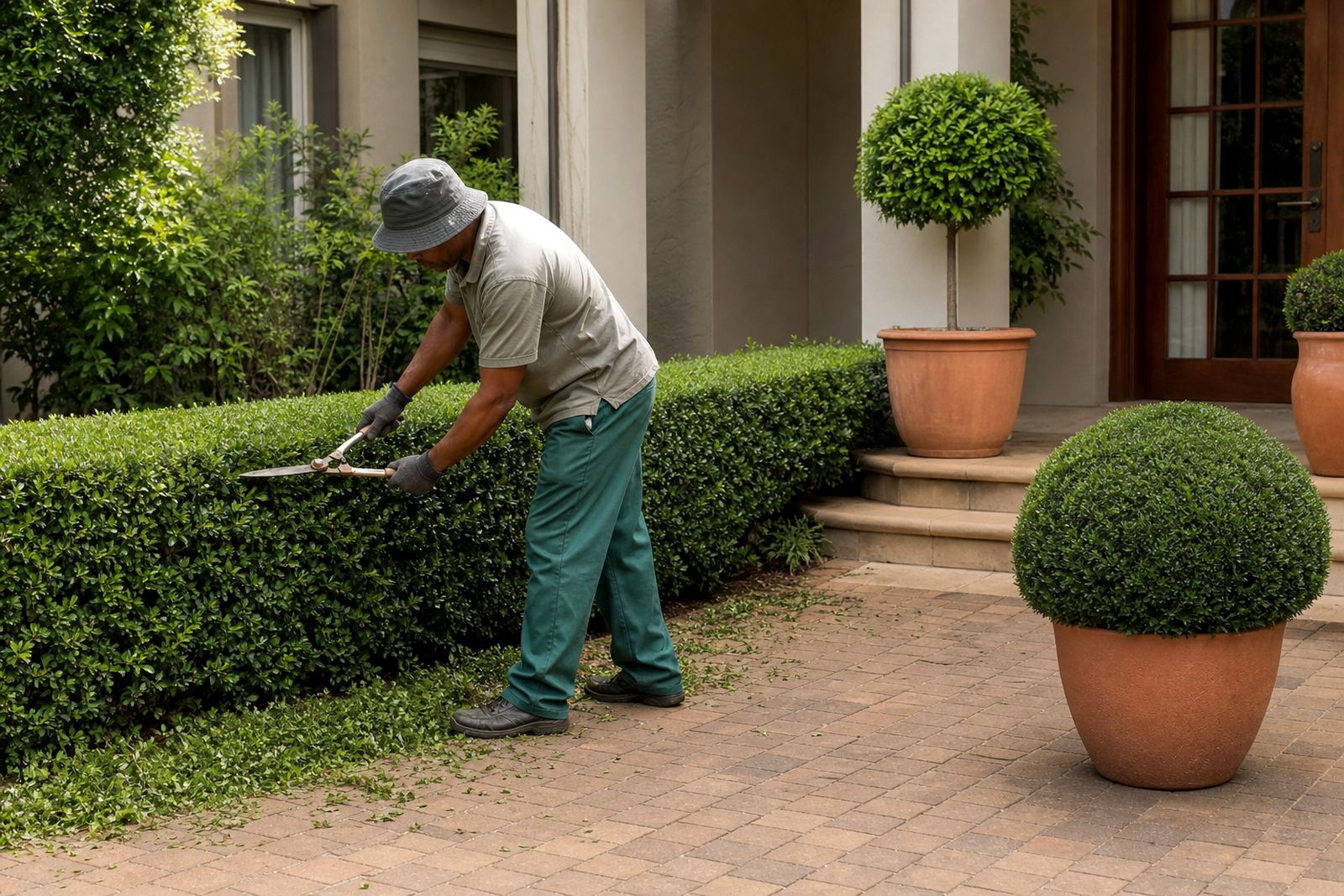
- Hedge shears or hedge tools for long, even cuts on soft growth
- Spare spring, pivot and grip parts for quick upkeep
How to plan the pruning layout at the coast
Coastal gardens often grow fast because of warmth and rainfall, so pruning works best when it is scheduled in smaller, regular rounds. In summer, many properties need more frequent hedge trims and deadheading, while in cooler months you can focus on shaping, clearing crossing branches and opening plants for airflow.
Good planning also means working from the driest part of the garden first. Start with hedges and shrubs near the driveway or patio, then move to beds and trees. If salt wind comes off the sea, avoid leaving tools on damp paving or grass between jobs, because even a short break can leave moisture on the blades.
- Trim hedges before they get too wide and woody
- Prune after rain once foliage has dried off
- Keep tool wipe-down cloths in the garden cart or truck
- Store tools indoors or in a ventilated lock-up, not on the floor
Common mistakes that shorten tool life
One common mistake is using the wrong tool for the branch size. A secateur forced through thick stems will nick the blade and strain the spring, while a blunt lopper can crush wood instead of cutting it cleanly. Another mistake is leaving tools dirty after pruning sap-heavy plants such as hibiscus, bougainvillea or fruit trees.
Some gardeners also overlook the handles. Coastal moisture can make rubber grips sticky or split over time, and loose pivots are easy to ignore until the cut starts wobbling. In our experience, a small service now is cheaper than replacing a tool set later.
- Do not cut hard woody stems with lightweight shears
- Do not pack wet tools into a vehicle boot after work
- Do not let sap harden on the blade overnight
- Do not ignore loose pivots, springs or worn grips
Budget ranges for home gardeners and crews
Budget depends on how often the tools are used and how much maintenance they need. A simple home gardener setup for a coastal townhouse or small suburban garden can start around R350 to R900 for a basic mix of pruning tools. A more durable set for regular use by a larger household or gardener can sit between R900 and R2 500.
For landscaping teams, the spend is usually higher because the tools need more service and replacement parts. A practical working kit with multiple shears, loppers and hedge tools can range from about R2 500 to R8 000, depending on quantity and condition. If you add sharpening, spring replacement or pivot adjustment, that can be far less than buying all new gear.
For coastal work, it often pays to set aside a small service budget every few months. That can cover blade sharpening, rust removal, grip replacement and inspections before the busy growing season starts.
Servicing that keeps coastal tools cutting clean
Cut Tools Garden supports pruning equipment with blade sharpening, secateur servicing, lopper servicing, hedge shear servicing, spring replacement, grip replacement, pivot adjustment, rust removal, deep cleaning, parts fitting and tool inspections. For crews and homeowners near the coast, regular servicing keeps the action smooth and helps tools last longer in humid conditions.
If you are planning for a larger garden or a managed site, fleet care plans can help keep multiple tools in rotation. That is useful for landscapers working across Durban, Johannesburg, Pretoria, Cape Town and Gqeberha, where different sites and weather conditions put different demands on the same kit. A sharp, clean tool makes pruning faster and the finish neater, especially when you are dealing with salt, wind and fast growth.