Pruning indigenous plants with the plant's growth habit in mind
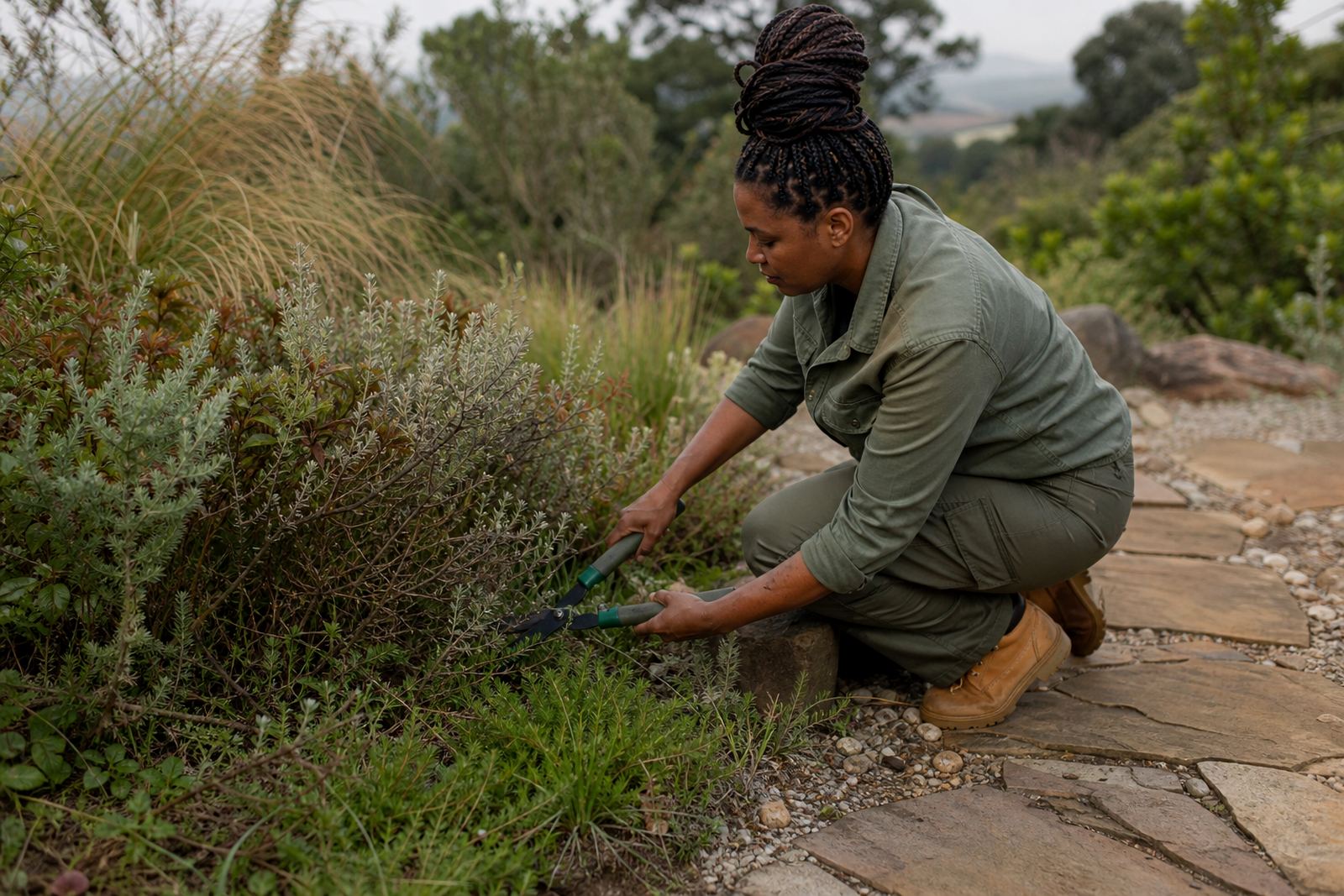
In Pietermaritzburg, Durban and other humid parts of KwaZulu-Natal, indigenous shrubs and hedges can put on strong growth after summer rain, then slow down in cooler months. That makes timing important. With indigenous planting, the job is usually about selective cutting, not hard trimming. You are removing crossing stems, dead tips and the odd shoot that pushes too far into a path or boundary line. If you cut too much at once, the plant can look bare for months and in some cases it will respond with weak, leggy regrowth.
The best results come from observing how the plant grows before touching the tool. Some species flower on old wood, some on new growth, and some want only a light shape-up every few months. A good rule is to step back often and keep checking the outline from the driveway side, the boundary side and the garden side. That makes it easier to keep a natural finish instead of a square, clipped look that does not suit the plant.
Typical tools for light shaping and careful thinning
For home gardeners and landscapers working across South Africa, a small set of tools is usually enough for most indigenous pruning jobs. The key is sharp, well-balanced equipment that cuts cleanly and does not crush stems. Around coastal areas, rust can build up quickly so tools need to be wiped down after use and stored dry. In load-shedding periods, manual tools are also practical because they keep the work moving without depending on power.
- Secateurs for stems up to about 20 mm
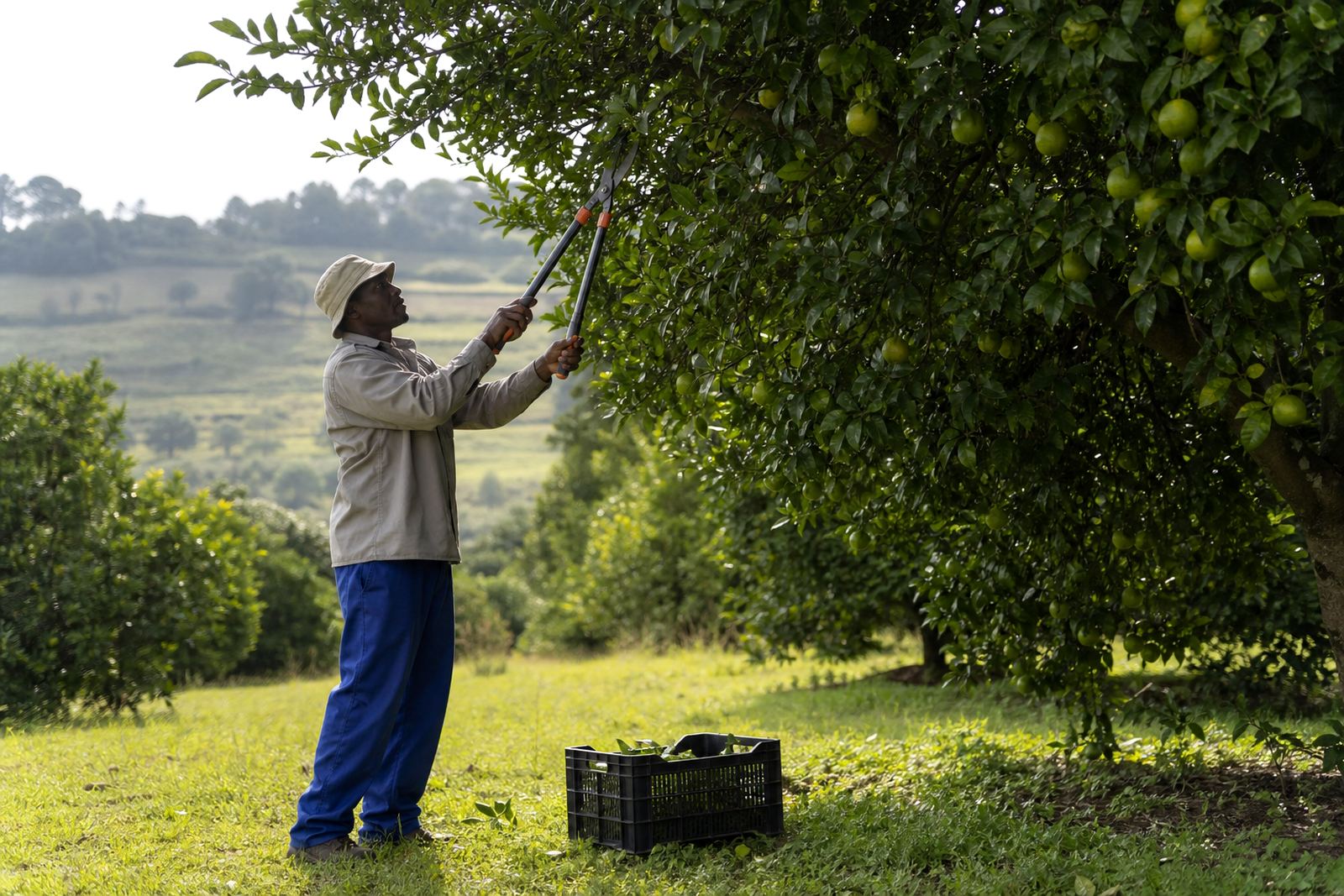
- Loppers for thicker shoots and awkward reaches
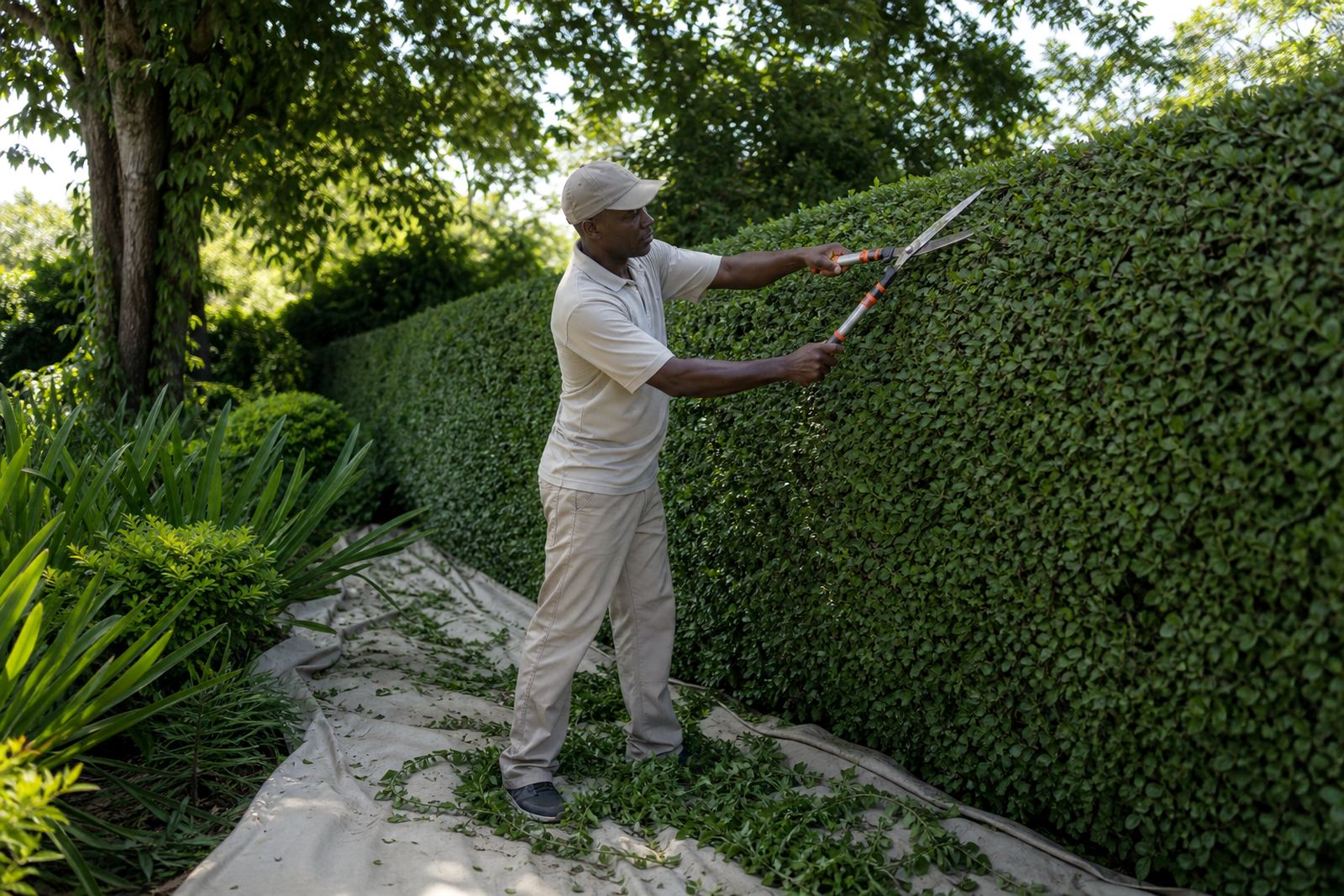
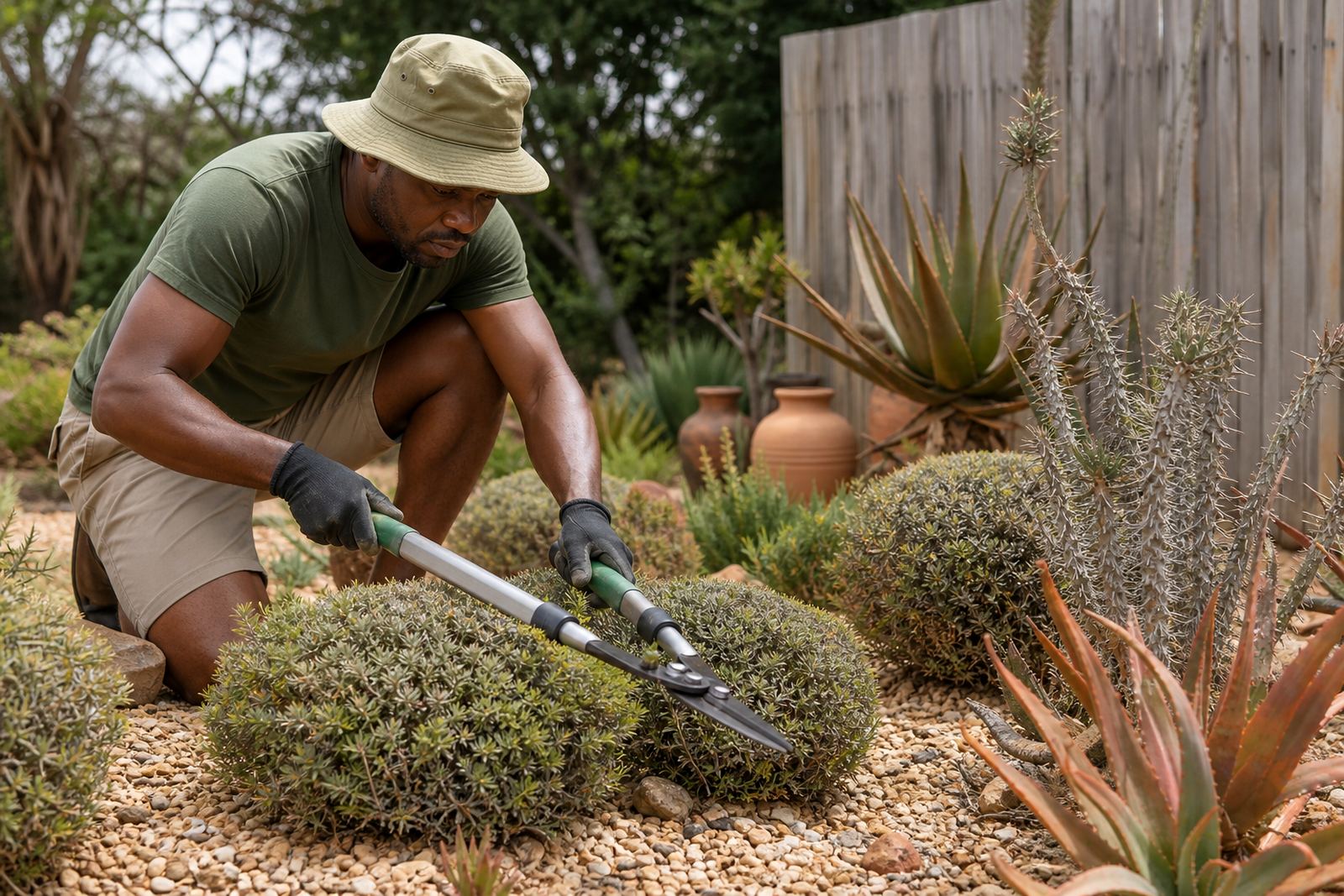
- Hedge shears for light surface shaping, not hard cutting
- Hand file or sharpening stone for keeping edges keen
- Cleaning cloth, oil and a bucket for sap and debris
For larger properties in Hilton, Howick or the Durban suburbs, a second pair of secateurs and an extra set of blades on hand can save time. If you are managing a wider property, it helps to keep one tool set for soft growth and one for rougher work. That reduces wear and avoids constantly swapping between tasks.
How to plan the work around beds, paths and boundaries
Good pruning starts with layout. Before you begin, identify what the plant is doing in the space. Is it screening a boundary, framing a path, softening a wall or forming a mixed indigenous hedge? The answer affects how much to remove. A screen plant can keep a looser outline, while a pathside planting may need a clean edge for safety. In municipal street-facing gardens, keep growth back from pavements and sight lines so you are not pushing branches into walkways or drainage channels.
A practical method is to work in sections. Tackle one bed at a time and avoid cutting all plants to the same height unless that is the actual design. Keep a small pile-up area for cuttings so you can see what has been removed, then clear it away before moving on. This matters for landscapers too because it helps with time control and waste handling. In Gqeberha and Cape Town, where wind and salt can dry out exposed growth, pruning should often be paired with watering and mulch after the plant has been tidied.
- Mark the outer line with string only if you need a temporary guide
- Keep pathways clear by removing low shoots first
- Do not cut flowering tips unless the plant needs shaping more than blooms
- Leave enough leaf mass for the plant to recover quickly
Common mistakes that damage indigenous plants
One of the biggest mistakes is overcutting. People often try to make indigenous plants look like formal topiary, then wonder why they lose shape or stop flowering. Another common problem is using blunt blades that tear stems. That leaves rough wounds and invites dieback, especially in humid weather. If the tool is sticking or crushing, it needs servicing not more pressure.
Another error is pruning at the wrong time. After heavy rain or during active flowering, some species are busy putting energy into growth or seed set. Cutting then can set them back more than expected. It is also easy to ignore pests and rot around old cuts. Check for blackened tips, mealy buildup and brittle stems as you work, because pruning is the right moment to spot trouble early. In coastal gardens, a quick rust clean after each session is just as important as the cut itself, otherwise the tools start working poorly and the finish becomes messy.
Budget ranges for home gardens and larger sites
Budgets vary depending on whether you are maintaining a small backyard in Pietermaritzburg or a larger landscape in Johannesburg or Pretoria. For a simple home setup, a good pair of secateurs, a mid-size lopper and a hedge shear can usually be assembled for about R650 to R1,800 depending on handle length, blade quality and comfort features. If you want spare blades or a sharpening stone, allow another R150 to R450.
For regular upkeep, servicing is often cheaper than replacing tools too soon. Blade sharpening, spring replacement, grip replacement and pivot adjustment can keep a good set going for years. Smaller servicing jobs may start from around R120 to R250 per item, while deeper cleaning or rust removal can run higher if the tool has been neglected. Landscapers managing several properties may also prefer fleet care plans so the tools stay ready through the season and nobody loses time with a blunt lopper on a Monday morning.
- Starter home tool set: R650 to R1,800
- Extra blades and care items: R150 to R450
- Basic servicing: from about R120 per item
- Heavier cleaning or parts fitting: priced after inspection
When to call for servicing instead of buying again
If the tool does not close cleanly, needs repeated squeezing or leaves shredded cuts, it may need servicing rather than replacement. This is especially true for higher-quality pruning shears and loppers that still have sound handles and frames. A proper inspection can show whether the problem is a dull blade, a tired spring, loose pivot, rust in the joint or worn grip material. In many cases the fix is simple and far more affordable than starting from scratch.
For gardeners who prune often, the best routine is to clean the tool after each session, sharpen it before it feels dull and store it dry between jobs. That suits the South African climate, from the damp coast to the drier inland areas. It also keeps cuts cleaner, which helps the plant recover faster and keeps the work easier on the hands. If you are working across several sites, keeping one serviced set in reserve can save the day when the main set is out of action.