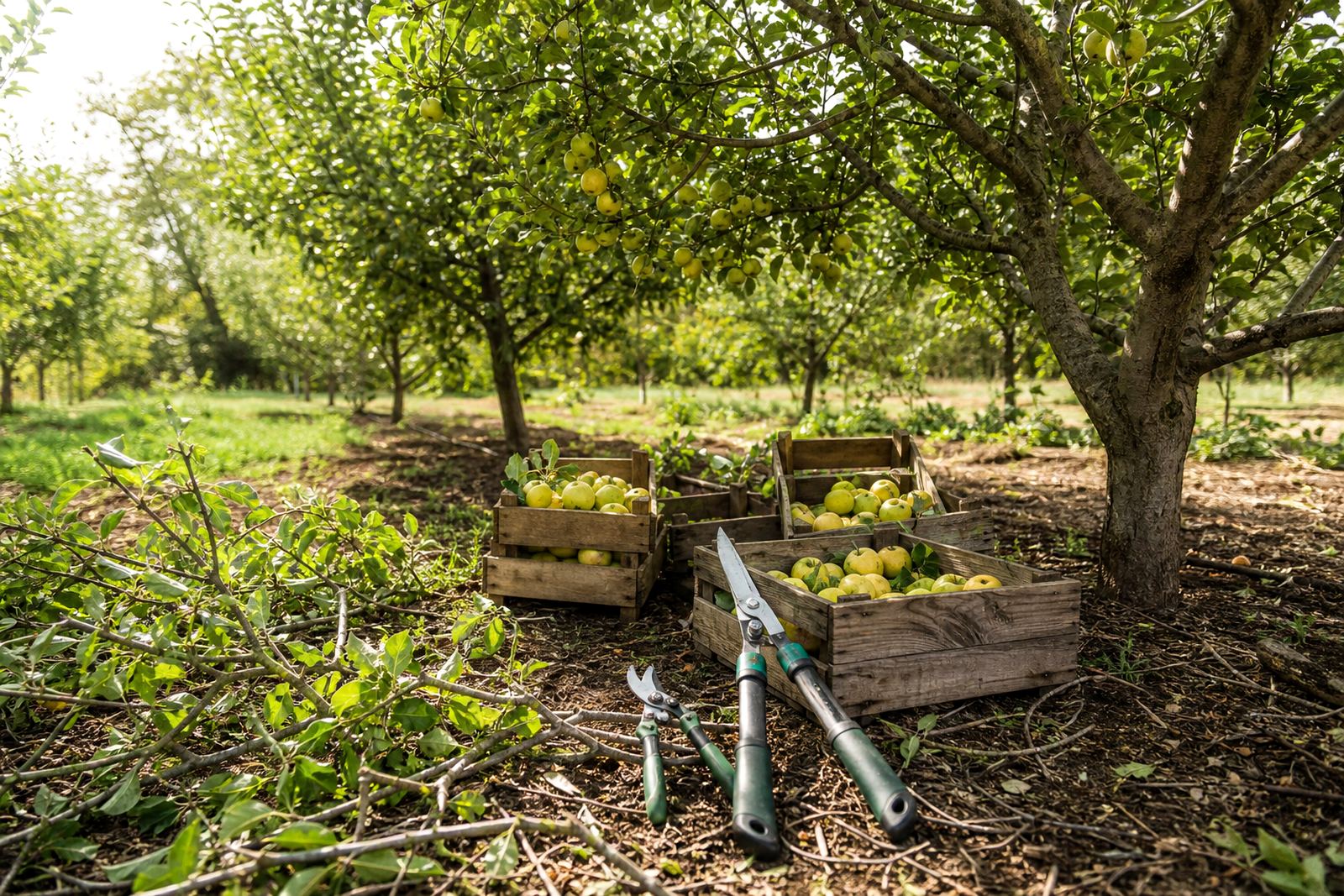
Home Orchard Brief in Mokopane
The client was a private home orchard owner in Mokopane, Limpopo, with a mix of fruit trees planted close together along a boundary wall and a narrow service path. The brief was simple on paper but exacting in practice: open the canopy, remove weak growth, clean up deadwood and make the trees easier to manage through the dry winter and the hotter months ahead.
The orchard had a few practical constraints. Water pressure was limited, the ground was uneven in places, and access between trees was tight enough that long poles would have caused more damage than good. The owner also wanted the work done without leaving shredded cuts, because the trees had already shown signs of stress from past rough pruning. We planned the job around hand tools that give control at close range.
Why Orchard Hand Tools Were the Right Fit
For this job we used pruning shears, bypass loppers and hedge tools suited to fine shaping rather than heavy clearing. The focus was on precise cuts and clean handling, especially on younger fruit wood where bruising can slow recovery. The tools were selected for the type of growth in the orchard, with enough reach for mid-level branches but still light enough for repeated use over a long session.
- Pruning shears for live shoots and small fruiting wood up to about 20 mm
- Loppers for thicker branches up to about 35 mm
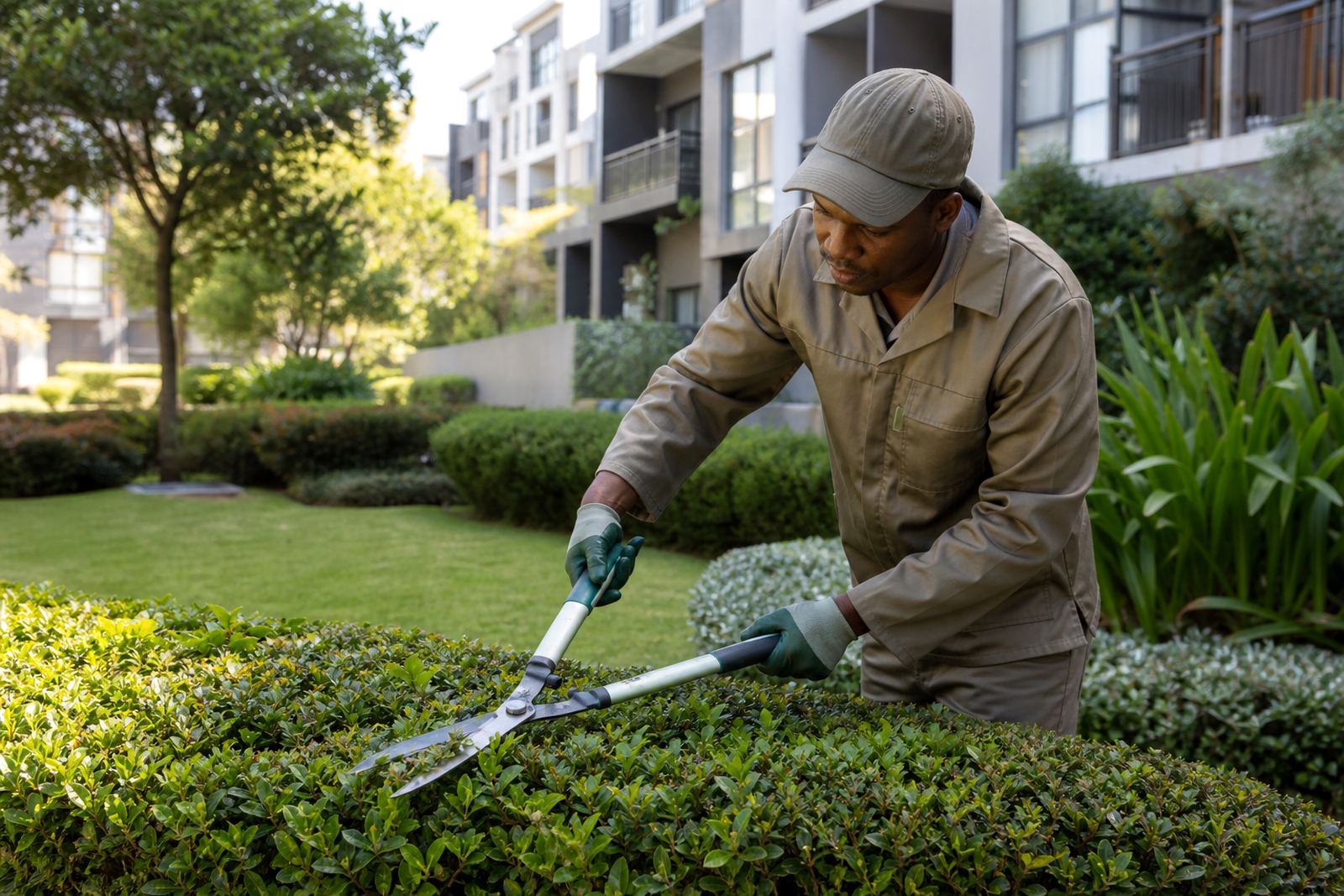
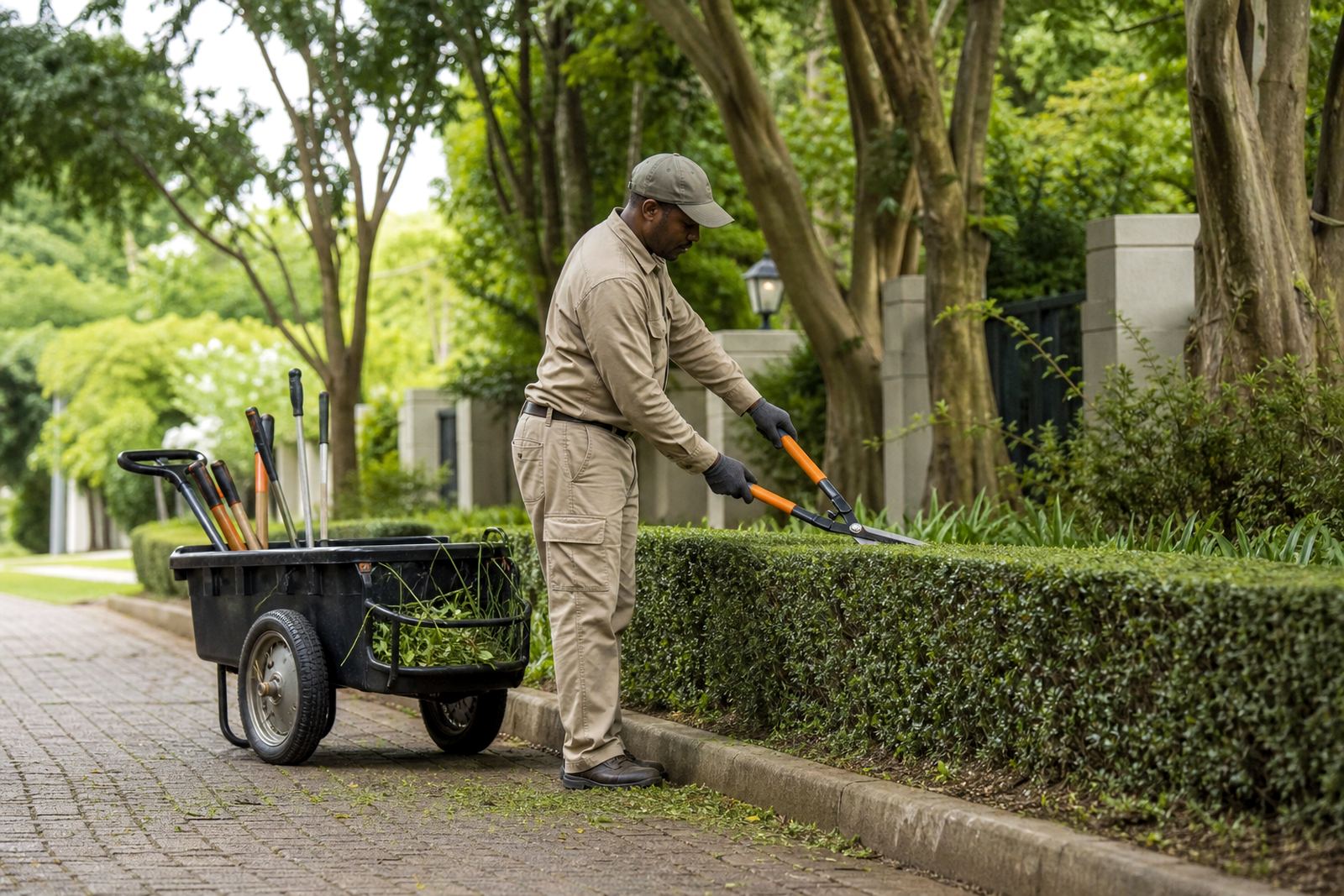
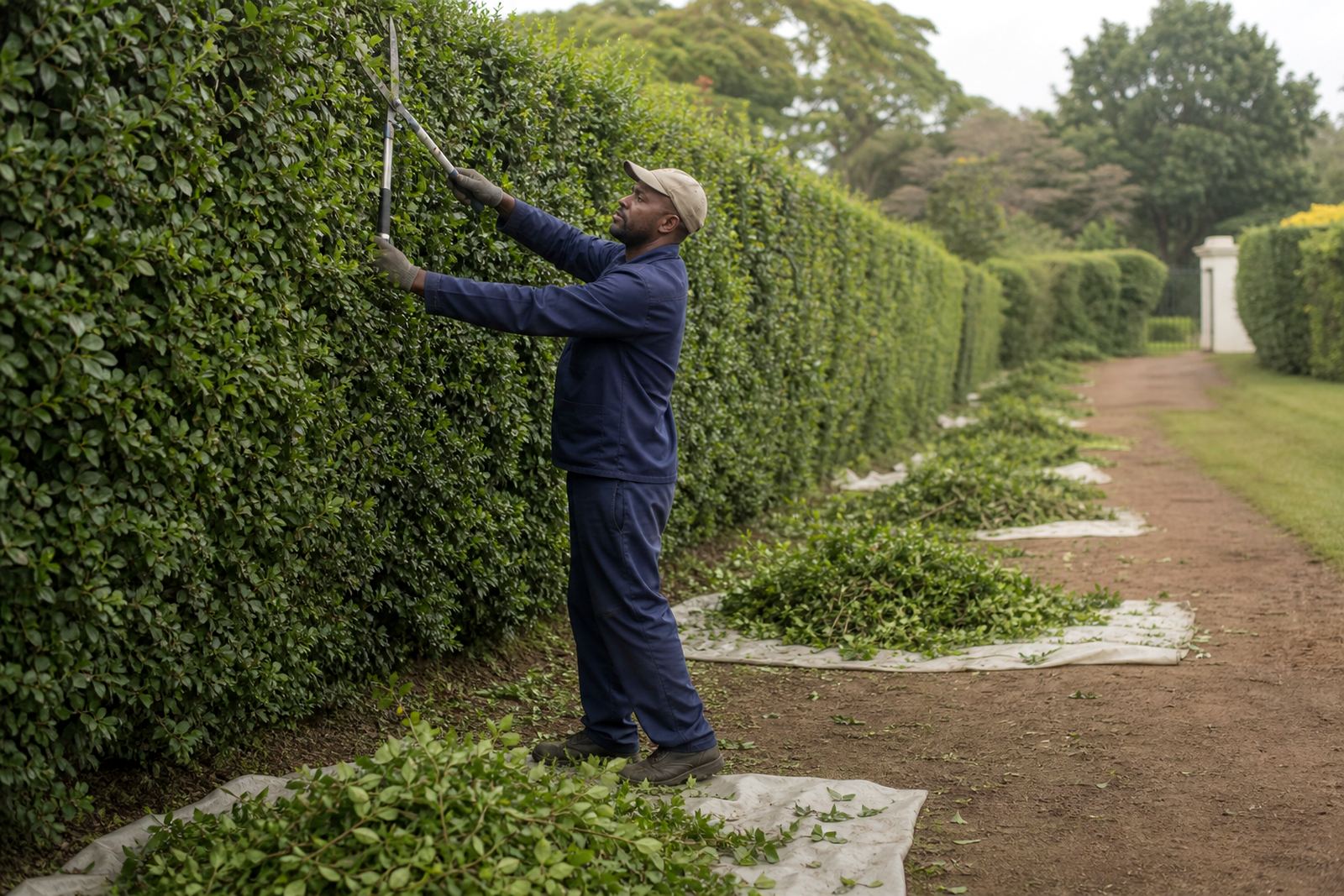
- Hedge tools for tidying the outer lines and light shaping
- Serviced pivots and checked springs for easier day-long handling
- Grips inspected for comfort during repeated cutting work
Because the site was in a warm inland area, blade condition mattered. Dust and sap build-up can dull a tool faster than people expect, especially when the work stretches over several trees. We started with sharp blades, then checked them again after the first round of thinning so the cuts stayed clean and did not crush the stems.
What We Supplied and Did On Site
We supplied a working set of orchard hand tools from our Pietermaritzburg base and carried out the pruning in stages. First came the inspection, then deadwood removal, then selective thinning on the interior growth, and finally the tidy-up cuts on the outer canopy. The trees were not stripped back hard. Instead we took out crossing branches, inward growth and congested shoots so air and light could move through the canopy better.
- Initial tree inspection and cut plan by tree
- Selective thinning to improve sunlight penetration
- Removal of dead, damaged and rubbing branches
- Clean-up of low growth near pathways and walls
- Final debris gather and quick tool wash-down between sections
The work was done with care around the fruiting points, because a good orchard cut is not only about removing growth. It is about keeping the tree balanced for the next flush. The owner asked for a practical finish rather than a cosmetic one, so the final shape was neat but natural, with no unnecessary shortening of healthy branches.
Two Week Timeline and Working Pattern
The project ran over two weeks. Week one was used for the initial assessment and the heavier clean-up on the most crowded trees. Week two focused on refinement, with lighter cuts where the first pass showed where more light was needed. This staged approach helped avoid over-pruning and gave the client time to review the work before the final pass.
We kept the pace steady because orchard work is easier to judge when you step back between sections. On the first day the difference in light was already clear. By the end of week two the trees had a more open framework and the paths between them were easier to move through, even with buckets and ladders in use.
Results for the Orchard and the Homeowner
The orchard ended up with cleaner branch lines, better airflow and a more manageable height at the points that mattered most. Fruit clusters were easier to see and the weaker growth that had been pulling energy from the stronger limbs was removed. The owner also had a much simpler job ahead for watering, mulching and picking later in the season.
- Improved light movement through the centre of each tree
- Less rubbing damage from branches crossing in the wind
- Better access for hand picking and inspection
- Reduced risk of brittle, untidy regrowth after rough cuts
- Cleaner working space around walls and narrow paths
For a home orchard, those gains are practical rather than flashy. It means fewer surprises when the fruit starts setting, and less time spent wrestling with awkward growth. The result was tidy, productive and easier to maintain through the next round of seasonal care.
What We Would Do Again on Similar Properties
If we were called back to another home orchard in Mokopane or a similar inland town, we would follow the same pattern: inspect first, cut in stages, and match the tool to the branch rather than forcing the job. That approach gives better control, fewer crushed stems and less unnecessary stress on the tree. It also makes it easier to work around tight spaces, which is common in private gardens and small orchards.
For properties facing heat, dust and irregular watering, we would again recommend a tool set that stays sharp, is comfortable in the hand and can be serviced quickly after use. A good cut tool is not only about power. It is about control, balance and making sure the tree recovers well after the work is done.
Service Support for Orchard Tools and Garden Teams
Alongside supplying pruning shears, loppers and hedge tools, we also support blade sharpening, secateur servicing, lopper servicing, hedge shear servicing, spring replacement, grip replacement, pivot adjustment, rust removal, deep cleaning, parts fitting, tool inspections and fleet care plans. That matters for homeowners, landscapers and garden teams who need tools ready when the weather changes or the work queue gets busy.
In places like Mokopane, where dry air, dust and seasonal growth can work against tool life, regular care helps keep cuts cleaner and the job faster. It also saves money over time because a well-maintained tool lasts longer and performs more consistently when the garden needs attention most.
Key facts
| Project type | Home orchard thinning and clean-up |
|---|---|
| Location | Mokopane, Limpopo |
| Timeline | 2 weeks |
| Tools used | Pruning shears, bypass loppers, hedge tools |
| Branch capacity | Up to about 35 mm with loppers |
| Outcome | Improved airflow, easier picking and neater canopy structure |