The Hillcrest brief and what the garden needed
The client was a homeowner in Hillcrest, KwaZulu-Natal with a mixed shrub border that had filled out over time and started pressing into paths, lawn edges and a small parking area. The request was for a cleaner profile, better light between plants and a result that would stay tidy for longer between visits. The brief also had a practical angle, because the garden needed to be easier to maintain during the hotter months when growth runs fast in this part of Durban.
The shrubs were a mix of evergreen ornamentals and flowering varieties, with different growth habits and stem thicknesses. Some had become leggy from earlier light trimming, while others had dense outer growth and bare lower sections. We assessed each plant group before touching the blades, then planned the work around shape, stem size and how much green material could be removed without shocking the plants.
- Location: Hillcrest, KwaZulu-Natal
- Property type: private residential garden
- Planting: mixed shrubs, border planting and path-side growth
- Main goal: neater lines with lower follow-up maintenance
Constraints on site and the approach we used
Like many Hillcrest gardens, this one had a few practical limits. Access was narrow in places, so bulky cutting gear would have been awkward. There were also paving edges, a low wall and a planted bed close to the boundary, which meant every cut had to be controlled. The garden was also exposed to periods of coastal humidity and summer rain, so we checked for soft growth and any early signs of rust or die-back before starting the cut.
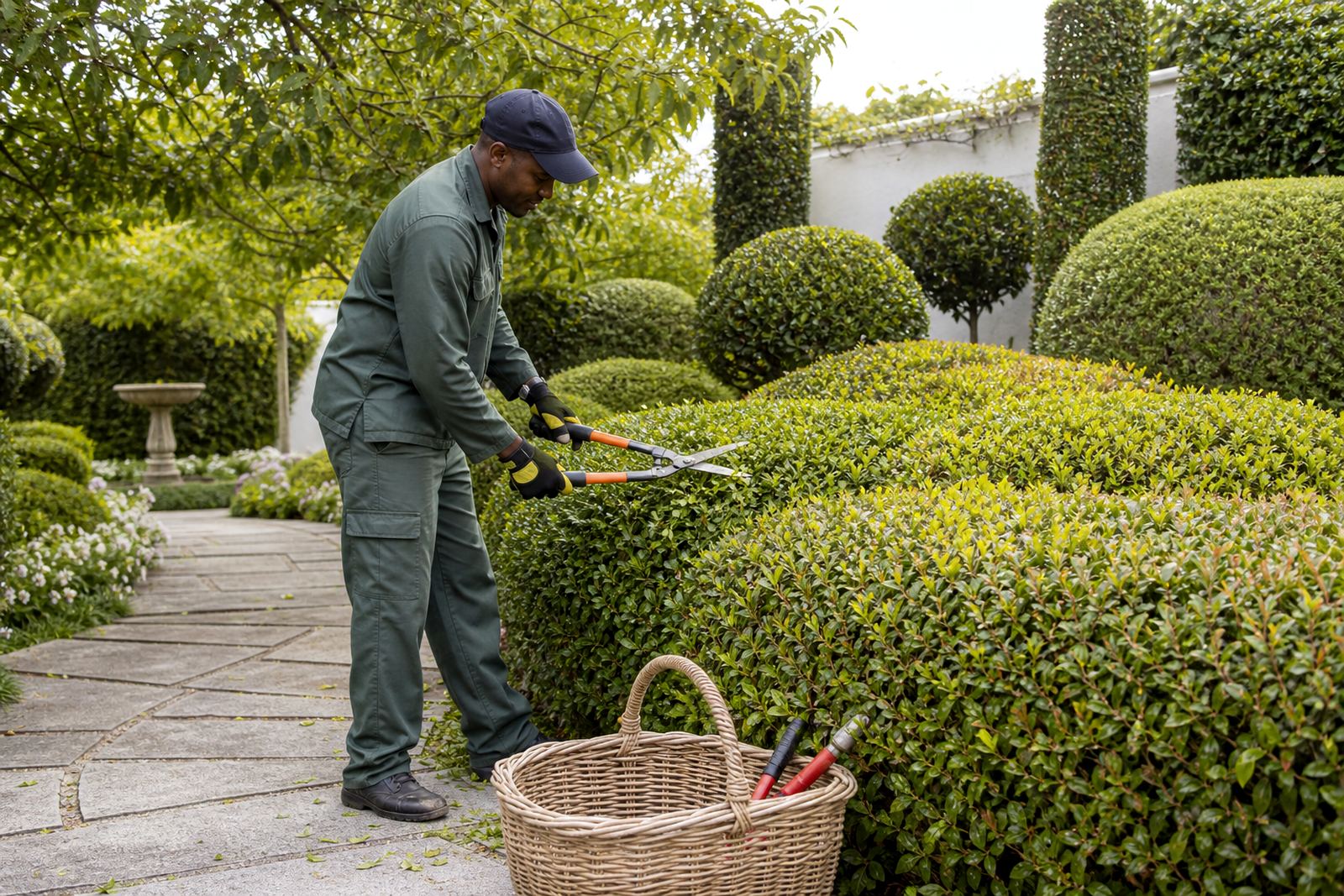
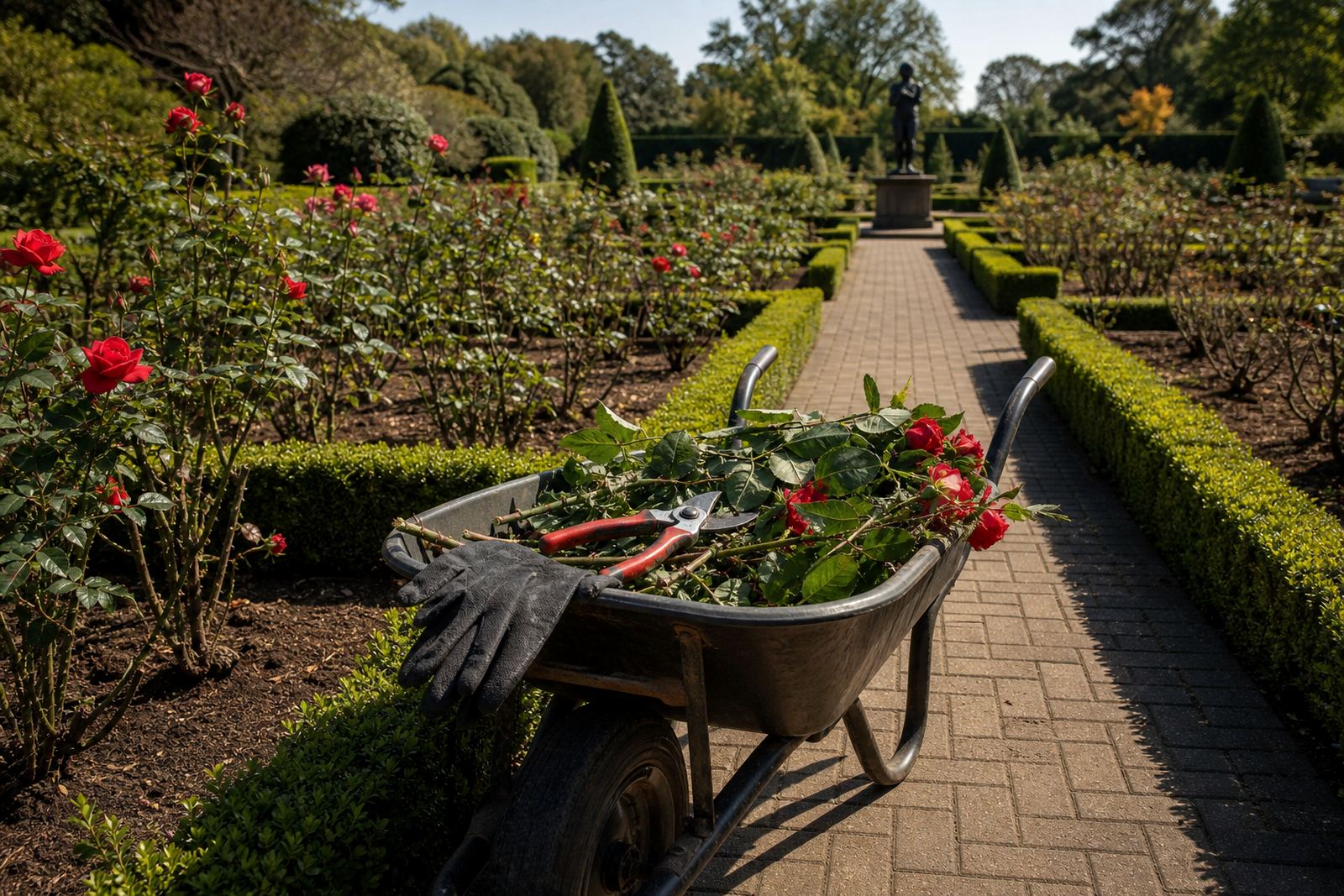
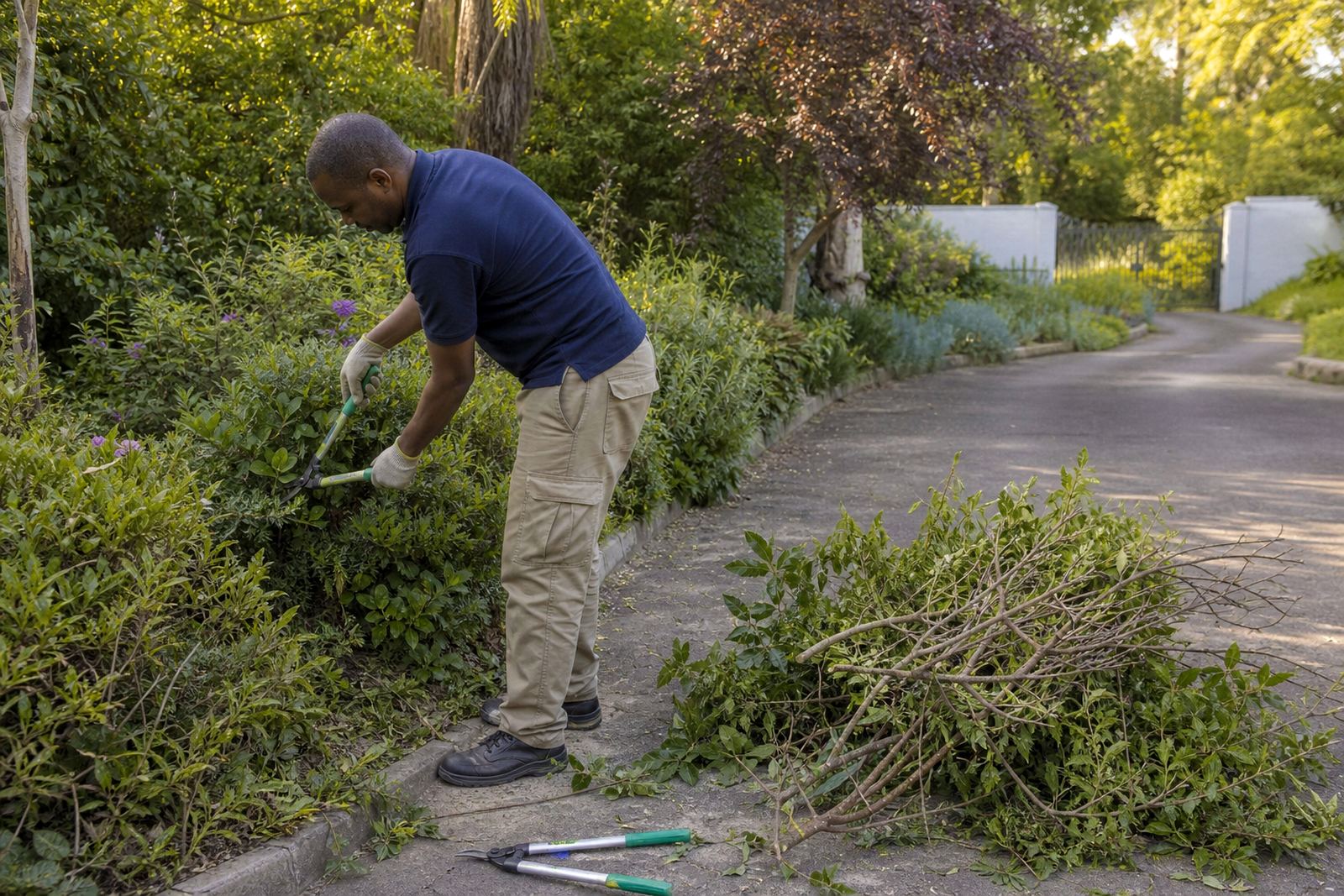
We used hand-pruning tools for fine shaping, bypass secateurs for clean cuts on thinner stems, and loppers for thicker woody branches that needed more leverage. Hedge tools were used only where a stronger line was required, because mixed shrub beds need a lighter touch than formal hedging. A simple tarp and collection system kept the work area tidy and reduced mess on the paving. It sounds basic, but that matters on a lived-in property where people are moving in and out, and there is not much room for cuttings to sit around.
- Cutting method: selective pruning, not hard shearing across all shrubs
- Tools used: secateurs, loppers, hedge tools and hand clean-up tools
- Working care: protect paving, walls and planted edges
- Waste handling: cuttings gathered and removed in stages
What we supplied and how the work ran
Our team supplied the pruning tools needed for a mixed shrub job, plus servicing support before and after the cut so the blades stayed true and the pivots moved freely. In our line of work, a sharp tool is not a luxury, it is part of getting a proper finish. Dull blades crush stems and leave rough cuts that take longer to recover, especially on older shrubs and plants with softer wood. We also checked springs, grips and pivot tension so the tools could be used comfortably over a full day.
The work ran over one week, with the first day focused on assessment and selective reduction, and the second visit used for refining the shape once the shrubs had settled after the initial cut. That staggered approach helped us avoid overcutting. We removed dead tips, thinned crossing branches, reduced width where the shrubs were encroaching, and lifted the lower portions where airflow was poor. On a few stems we had to deal with light surface rust on older tools before servicing, which is common in KwaZulu-Natal when equipment has been stored in damp conditions.
- Timeline: 1 week from first assessment to final clean-up
- Service support: blade sharpening, pivot adjustment and deep cleaning
- Repair support: spring replacement and grip replacement where needed
- Finish: even line, healthier spacing and cleaner cut surfaces
The shape, the cuts and the finish
The main finish was a controlled reshape rather than a dramatic reduction. That gave the shrubs a neater outline and kept enough growth for recovery. We aimed for gentle tapering at the top on the taller pieces and a slightly fuller base where the plants were already established. This kept the border looking balanced from the driveway and from the main living area. It also reduced the risk of exposed woody stems showing too much after the next dry spell.
We paid attention to the line along the path, because that was where the overgrowth had been most noticeable. The result was a cleaner edge with more walking space and less brushing against leaves. The lawn side was trimmed back to a consistent depth, and the access points between beds were opened up so future pruning is easier. The client asked for something that would not need weekly fuss, and that was exactly the direction we took. The shape is tidy but not over-worked, so it will hold its form better between visits.
- Profile achieved: neater side line with a controlled top line
- Access improved: easier movement along paths and between beds
- Maintenance benefit: less overhang, fewer snag points and simpler follow-up care
Why the result holds up better in KwaZulu-Natal conditions
In Hillcrest, plants can put on growth quickly when the weather turns warm and damp. That means a hard cut can backfire if it is not timed right or if it leaves too much exposed wood. We kept the pruning measured so the plants could recover without a flush of weak, awkward regrowth. The cleaner structure also helps after heavy rain, because air can move through the shrubs more freely and damp patches dry quicker.
The client wanted a garden that would still look presentable if they missed a maintenance cycle or two, and the shape we left behind supports that. It is easier to trim a well-structured shrub than to rescue a bluntly sheared one later. The work also made it simpler to see where future cuts should be made, which saves time and reduces waste. That is a practical advantage for homeowners and for landscapers managing several properties in one run.
- Better airflow through the shrub line
- Reduced chance of tangled regrowth after rain
- Cleaner framework for future seasonal maintenance
What we would do again on a similar shrub refresh
If we were called back to do the same kind of job in Hillcrest or elsewhere in South Africa, we would follow the same sequence: inspect first, cut in stages, then refine after the plants have had a little time to settle. That approach gives a better outcome than trying to finish everything in one pass. We would also use the same mix of servicing and cutting support, because well-maintained tools are what make the fine work possible. A sharp blade, correct pivot tension and a comfortable grip all matter when you are shaping a mixed border for an extended period.
For this project, the result was cleaner lines, easier access and a garden that now reads as intentional rather than overgrown. The client got the freshened look they wanted without losing the character of the planting. In our experience, that is the right balance for a residential property. You want the garden to look ordered, but still natural enough to suit the home and the setting.
- Best practice: staged pruning with a final detail pass
- Tool care: sharpen before the job and inspect again after use
- Outcome to aim for: tidy shape, healthy regrowth and simpler upkeep
Key facts
| Project | Hillcrest Shrub Refresh |
|---|---|
| Town | Hillcrest, KwaZulu-Natal |
| Client type | Private residential homeowner |
| Timeline | 1 week |
| Tools used | Secateurs, loppers and hedge tools |
| Core result | Cleaner lines and easier future maintenance |