What replacement springs do for hand pruners
Replacement springs restore the spring-back action in hand pruners so the handles open smoothly after each cut. When a spring weakens, bends or snaps, the tool starts feeling sticky and you need more hand effort for every cut. That extra strain slows work down and can make clean pruning harder, especially on busy jobs or for users cutting all day.
In practical terms, a fresh spring helps the blades reset between cuts, which improves rhythm and reduces fatigue. It also helps keep the tool feeling balanced in the hand. For gardeners in Pietermaritzburg, Durban and coastal areas where tools are used often in humid conditions, spring wear can happen faster if the tool is not cleaned and dried properly.
Replacement springs are suitable for many common hand pruner styles used on roses, shrubs, fruit trees and light general garden work. They are a small part, but they make a noticeable difference to the way the tool performs. If the handles feel slow to return or stay half open, the spring is usually the first part to check.
Spring types, sizes and fitment checks
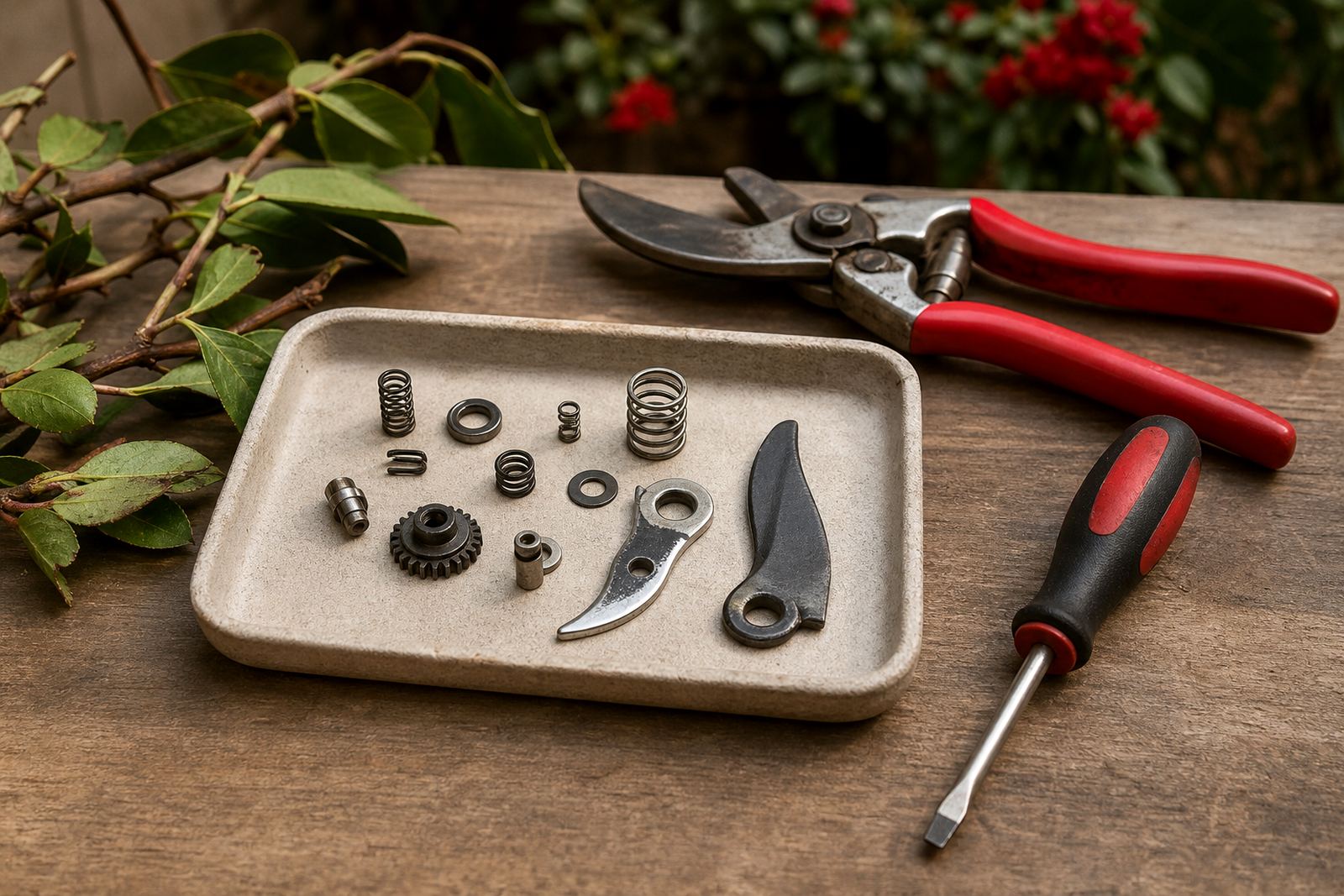
Not every pruner uses the same spring shape or length, so matching the correct type matters. Some tools use coil springs, while others use flat or wire style springs. The wrong fit can cause the handles to sit awkwardly, or the spring may jump out of place during use. For that reason, it helps to compare the old part before ordering a replacement.
Typical checks include the overall length, wire thickness, loop shape, mounting points and the amount of tension needed to open the handles. On some models, the spring sits between the handles. On others it hooks around a pivot area. If the spring is too short, too long or too strong, the tool can feel stiff or fail to close properly.
- Measure the old spring from end to end once removed.
- Check whether the spring is coil, wire or flat style.
- Look at how the ends lock into the tool frame.
- Compare the opening force before and after fitting.
- Inspect nearby pins, pivots and washers for wear too.
For landscapers with several pruners in service, it is worth keeping a few matching springs on hand. That avoids downtime when one tool stops opening correctly during the middle of a job.
Where replacement springs suit best
Replacement springs suit tools used on regular pruning rounds, hedge trimming touch-ups and garden maintenance where the tool opens and closes many times in a day. They are useful in home gardens, nurseries, estate maintenance teams and landscaping crews working in Durban, Pretoria, Cape Town and Gqeberha. If a tool is used for light to medium pruning, the spring often gets tired before the blades are fully worn.
These springs are a good fit for hand pruners used on soft growth, deadheading, light fruit tree work and small ornamental shrubs. They also help when tools are shared between workers, since repeated use usually shows up first in the spring and pivot area. A fresh spring can make an older pruner feel much better without replacing the whole unit.
- Hand pruners for roses, shrubs and light stems
- Bypass style cutters used in fine pruning
- Garden maintenance kits kept for daily use
- Tools stored in fleet kits for landscaping teams
In coastal towns, corrosion can shorten spring life if tools are left damp after use. Cleaning and drying after work, especially after rain or irrigation, helps the spring stay active for longer.
Fitting the spring and keeping the tool working properly
Most replacement springs are fitted by removing tension carefully, opening the handles and positioning the spring into its housing or hook points. Some tools need a pin or screw loosened first. Others can be refitted by hand with simple care. If the tool uses a tight pivot or a spring under pressure, it is better to work slowly so parts do not fly off or bend.
After fitting, test the open-and-close action several times before returning the tool to service. The handles should open with even pressure and close neatly without binding. If the tool still feels rough, the pivot may need attention or the blades may need cleaning. A spring alone will not fix a seized pivot or heavy rust buildup.
There is no power or gas requirement for this part. It is a manual tool component and works entirely through mechanical tension. That makes it suitable for work sites where power cuts, load-shedding and outdoor field use are part of daily life. You can keep the tool ready without depending on charging or fuel.
When fitting springs for a team, label the pruners after service so the correct tool stays with the correct user. That small habit helps with tracking wear and makes repeat servicing easier.
Care, servicing and longer spring life
Springs last longer when the full tool is kept clean and dry. After pruning, wipe off sap and soil, then store the tool out of damp air where possible. Sap can harden around the pivot and spring area, making the action stiff and putting extra load on the part. In humid coastal areas, a light clean after every shift is worth the effort.
Regular servicing should include blade sharpening, pivot adjustment, rust removal and a look at the spring itself. If the spring is working against a bent handle or worn pivot, it will wear out quicker. A proper inspection catches those problems before the tool stops working in the middle of a job. This is especially useful for maintenance teams managing several tools at once.
- Wipe blades and springs after each use.
- Apply a light tool oil to moving points only.
- Store in a dry bag or toolbox, not on wet concrete.
- Check for rust spots, cracks and stretched coils.
- Book servicing when the action starts feeling uneven.
For heavy users, fleet care plans can help keep multiple tools in order across seasons. That gives better control over wear and lowers the chance of sudden failure during peak cutting periods.
What to check before placing an order
Before ordering a replacement spring, check the tool type, the spring style and the way it mounts. A photo of the old spring next to the pruner can help a lot. If the original part is missing, measure the space where the spring sits and note how the handles open. Even small differences in shape can change the fit.
It also helps to inspect the full tool for related wear. If the blade has side play, the pivot is loose or the handle is cracked, replacing only the spring may not solve the full problem. In those cases, parts fitting or a deeper inspection may be the better option. That saves time later and gives a cleaner result.
- Tool make and model if known
- Spring shape, length and wire thickness
- Left or right hand fit where relevant
- Photo of the old spring and mounting points
- Any extra wear on pivots, blades or handles
Clients in Pietermaritzburg, Hilton, Howick and across South Africa can use the enquiry form on our contact page to ask about the right spring before ordering. If you are unsure, send the tool details and we can help narrow it down.
Key facts
| Product type | Replacement spring for garden hand pruners |
|---|---|
| Common styles | Coil, wire and flat spring options |
| Typical use | Restores smooth handle opening and closing action |
| Suitable for | Home gardeners, landscapers and maintenance teams |
| Installation | Manual fitment, no power or gas needed |
| Care | Keep clean, dry and lightly oiled after use |