Courtyard planting that needed careful, regular shaping
The work came from a property owner in Durban who keeps a compact courtyard garden with clipped shrubs, dense boundary hedging and a few potted feature plants. The brief was practical: keep growth under control without bruising stems, tearing leaves or leaving ragged cuts that invite disease. The garden sits close to the coast, so tool care had to take humidity and corrosion into account right from the start.
The client wanted a set-up that would suit small weekly maintenance tasks as well as heavier seasonal cutting. That meant choosing the right tool lengths, blade profiles and grip styles for mixed planting. It also meant thinking about storage between jobs, because coastal air can dull blades and mark metal faster than many homeowners expect.
- Location: Durban, KwaZulu-Natal
- Garden type: compact courtyard with clipped hedges, shrubs and container planting
- Main risk: salt air, moisture build-up and fast blade corrosion
- Priority: clean cuts with less strain on hands and wrists
What the job needed to cope with in Durban
Coastal gardens ask more of hand tools than inland properties. In this case the planting was close to walls and paving, so the team needed compact tools that could work safely without knocking tiles, pots or irrigation fittings. The client also wanted tools that remained comfortable during longer sessions, since courtyard hedges tend to need frequent light trimming rather than one big cut every few months.
Another constraint was access. The garden had narrow paths and tight corners, so bulky gear was not practical. We planned around small turning spaces, limited storage and the need for quick clean-down after use. That is where tool balance matters. If a hedge shear feels front-heavy, the user tires sooner and cuts become less accurate. For a Durban courtyard, that shows up fast.
- Short-reach hedge tools for confined paths
- Bypass cutting action for live stems and soft growth
- Longer loppers for thicker branches above shoulder height
- Corrosion-aware servicing schedule for coastal conditions
Tools supplied and serviced for the trim cycle
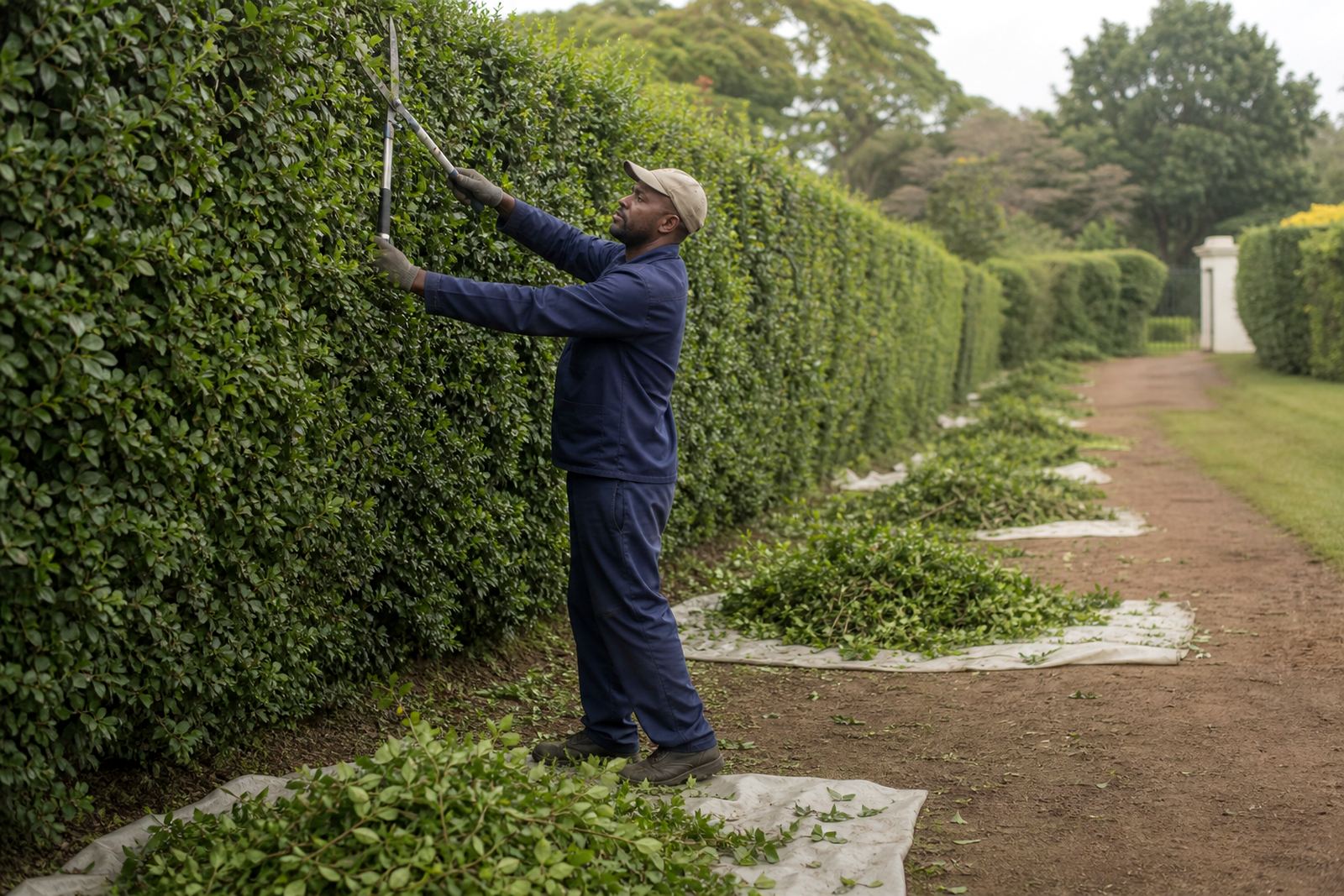
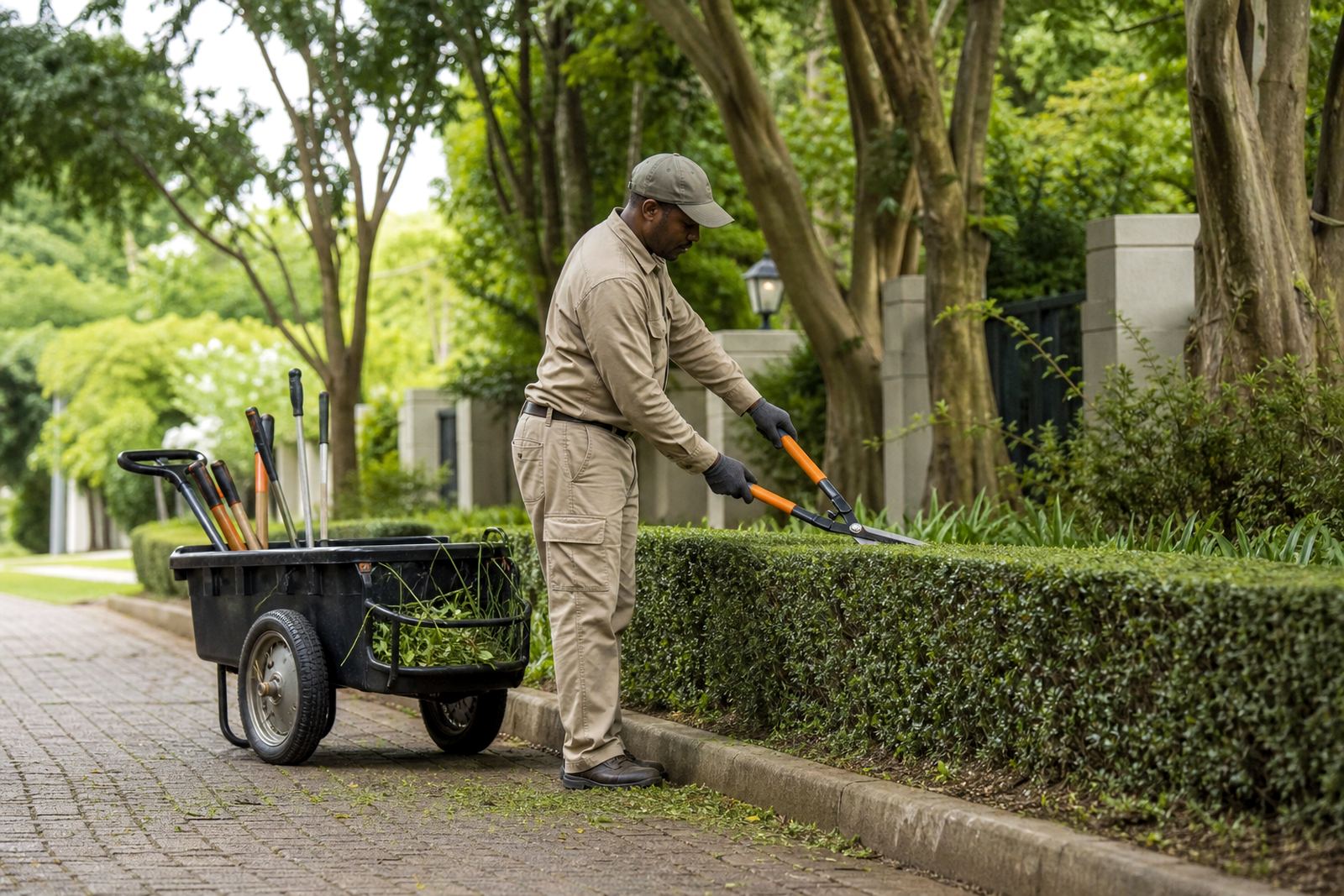
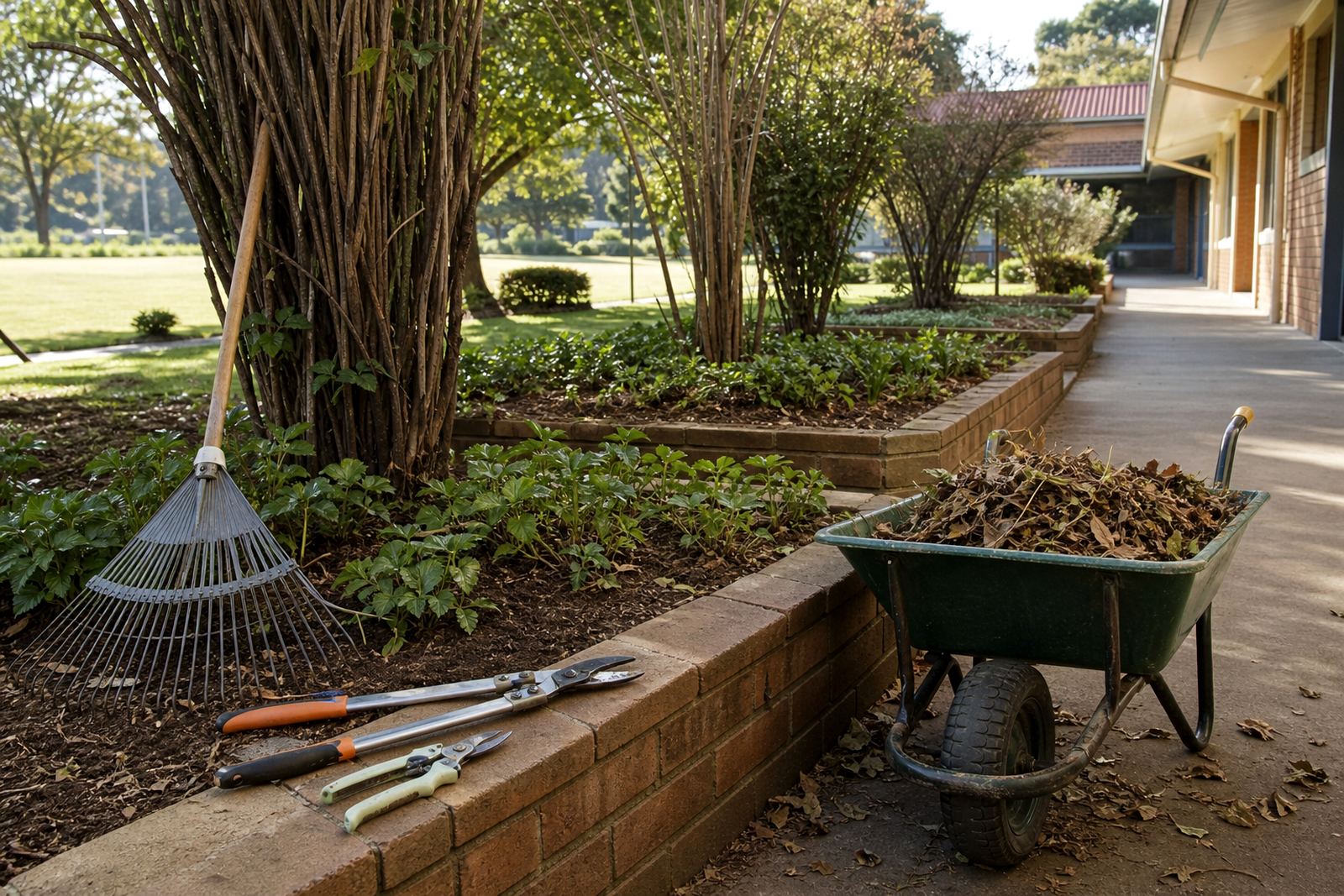
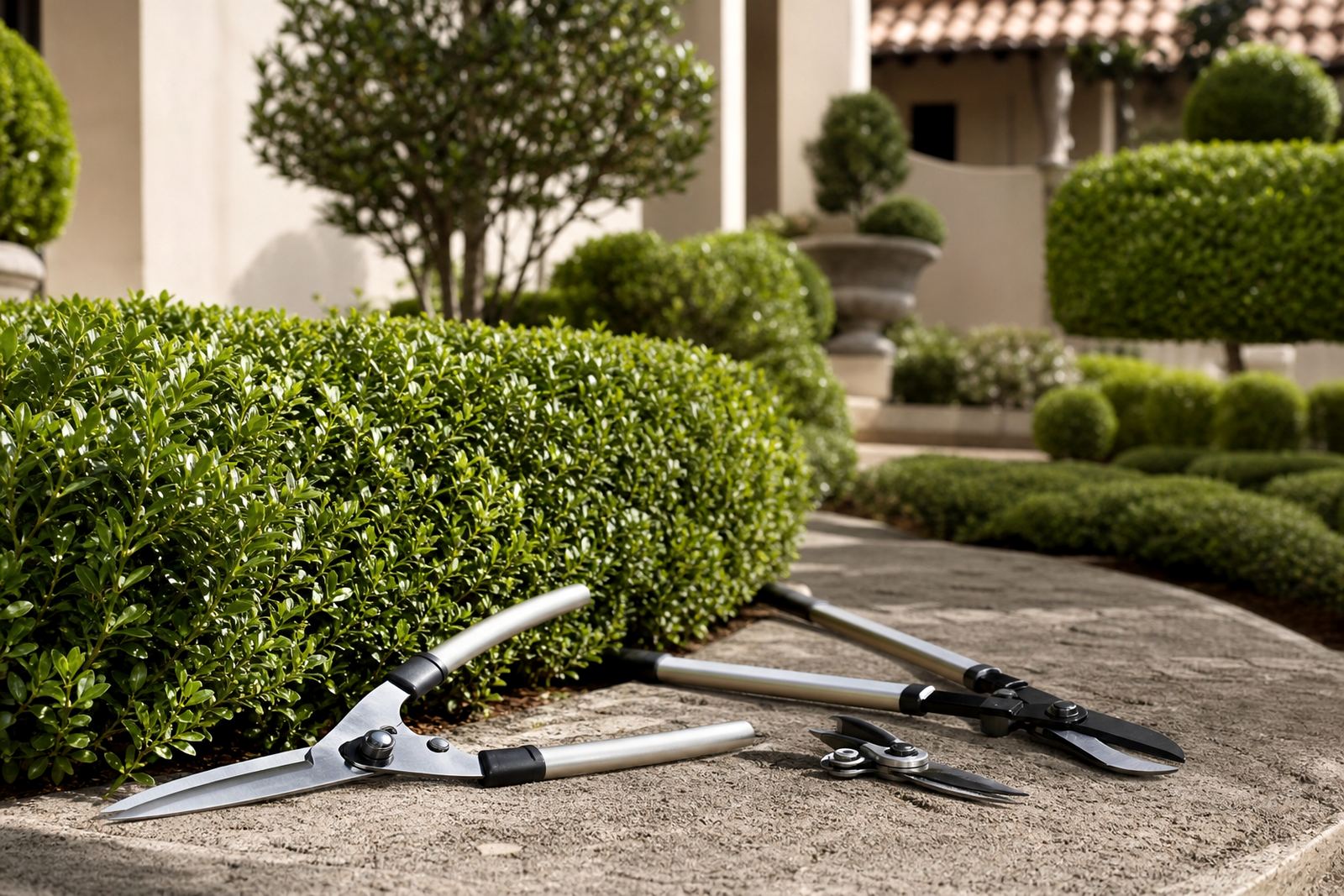
We supplied garden pruning shears, loppers and hedge tools selected for a mix of fine shaping and medium pruning. The secateurs were set up for clean bypass cuts on soft growth and smaller twigs, while the loppers handled thicker woody stems where extra leverage was needed. The hedge tools were chosen for controlled trimming on compact hedging, with a blade length that gave enough reach without becoming awkward in a courtyard.
Before handover, the tools were inspected, cleaned and adjusted. We checked pivot tension, blade alignment and grip condition, then carried out sharpening where needed. Springs that had lost snap were replaced, and any early rust marks were removed before they spread. On a coastal property this is not overkill, it is basic maintenance that saves money later.
- Blade sharpening for cleaner cuts and less plant stress
- Pivot adjustment for smoother opening and closing
- Spring replacement on tired secateurs
- Rust removal and deep cleaning after exposure to moisture
- Grip replacement where hands had been slipping during wet work
A two-week turnaround from first inspection to working kit
The project ran over two weeks. In week one we assessed the tool mix against the planting and the way the courtyard was used. That included checking what would be cut most often, where access was tightest, and which tools would spend time stored in a humid area. We then serviced the selected items and set them up for balanced handling.
In week two the client tested the tools during an actual trim session. A few minor adjustments were made after the first cut, mainly around pivot tension and grip comfort. That follow-up mattered because a tool can feel fine in the hand at the counter, but once you are trimming for an hour in Durban heat, the feel changes. By the end of the second week the kit was working as intended and the client had a clear care routine for after each use.
- Week 1: inspection, selection and servicing
- Week 2: on-site use, minor adjustments and sign-off
- Daily care: wipe dry, remove sap and store out of damp air
- Storage tip: keep blades lightly oiled if they will sit unused for several days
Results on the courtyard hedges and edging plants
The difference showed up quickly. Cuts were cleaner, hedge lines were easier to keep straight and the user reported less hand fatigue after longer sessions. The loppers gave better reach on thicker stems at the back of the courtyard, and the secateurs made the finer shaping work more controlled. The client also noted that the cleaned and sharpened blades did not snag on softer growth the way the old tools had been doing.
Because the tools had been serviced rather than just replaced, the job stayed cost-conscious. The client was able to keep the same kit in circulation and only change the parts that actually needed attention. That is useful for home gardeners and landscapers alike, especially when there are several properties to maintain and equipment budgets need to stretch.
- Cleaner cuts with less tearing on tender shoots
- Better comfort during longer trim sessions
- Reduced effort on thicker branches and awkward angles
- Lower replacement cost through servicing and parts fitting
What we would do again for a coastal trim job
For a Durban courtyard like this, we would follow the same approach again. Start with a tool inspection, match the tool length to the available space and service everything before the first major cut. Coastal gardens punish neglected blades quickly, so prevention matters more than waiting for a tool to fail. If the work involves regular hedge shaping, we would also keep a standing maintenance plan in place rather than only responding when something seizes up.
For future similar jobs, we would recommend a simple fleet care plan for homes with more than one gardener or for landscapers who move between sites in Durban, Pietermaritzburg and nearby towns. That keeps blade condition, spring tension and grip wear under control. It also makes day-to-day work safer and quicker, which is what matters when the weather changes and the growth does not wait.
- Use corrosion-conscious servicing on all coastal tools
- Keep spare springs, grips and pivot parts on hand
- Sharpen before the busy growing season starts
- Schedule inspections after periods of heavy rain and humidity
Key facts
| Project | Durban Courtyard Trim |
|---|---|
| Town | Durban, KwaZulu-Natal |
| Tool types | Pruning shears, loppers and hedge tools |
| Key servicing | Blade sharpening, pivot adjustment, rust removal, spring replacement |
| Timeline | 2 weeks |
| Outcome | Cleaner cuts, easier handling and better coastal durability |